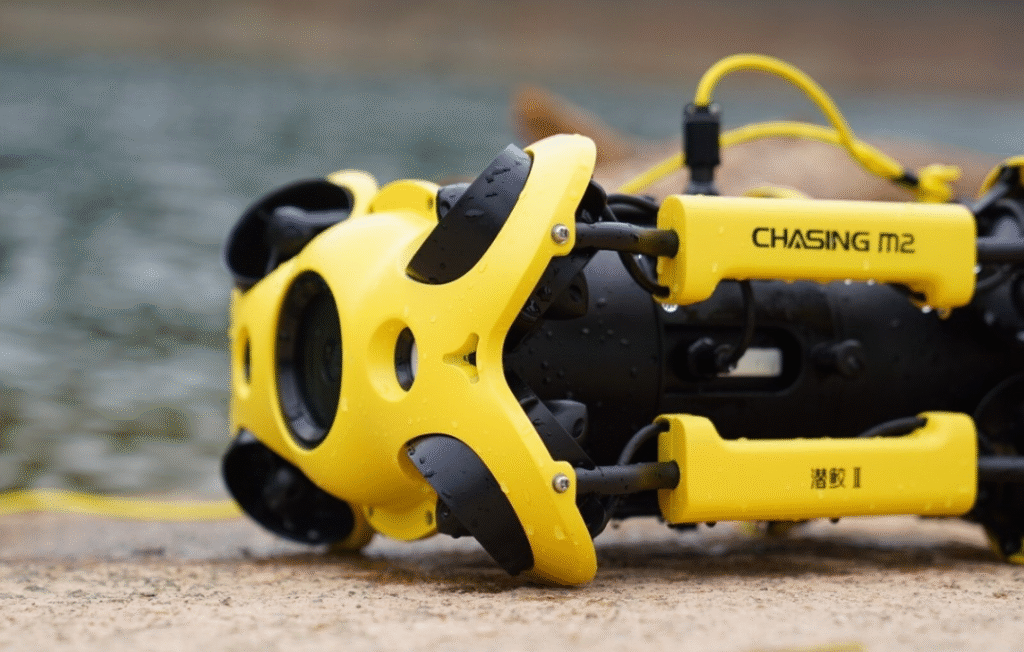
How CHASING Underwater ROVs Inspections Easier
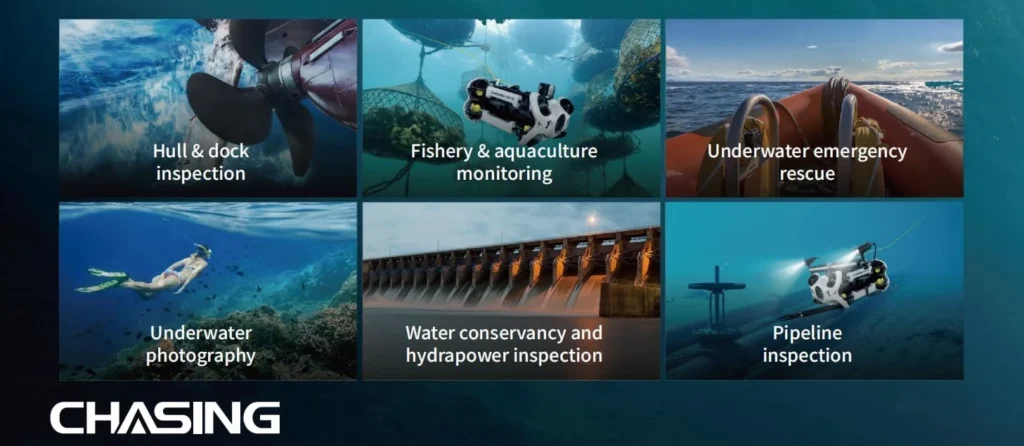
If you’ve ever managed a boat, a fishing vessel, or a piece of marine infrastructure, you already know the headache that comes with anything below the waterline. You can’t see it. You can’t easily get to it. And yet it’s usually the part that matters most — the hull, the propeller, the pilings holding up a dock. For years, the only real way to check on any of that was to send a diver down, wait, and hope the report came back clean. That’s still true in plenty of cases. But it’s not the only option anymore, and that’s largely thanks to compact underwater ROVs like the ones CHASING builds.
The Problem With "Out of Sight, Out of Mind"
Everything below the waterline is fighting a slow, quiet battle against the environment. Saltwater corrodes metal. Barnacles and algae latch onto hulls and props. Currents knock debris into places it shouldn’t be. None of this happens dramatically — it creeps. A small patch of corrosion today can turn into a real structural concern a year from now if nobody’s looking.
The trouble is that “nobody’s looking” is the default state for most underwater surfaces, simply because checking them is a production. Divers need certification, scheduling, safety support, and the right conditions. For a lot of boat owners and even mid-sized operations, that’s a lot of friction just to answer the question “is everything down there okay?”
That friction is exactly what underwater ROVs are chipping away at.
So What Actually Is an Underwater ROV?
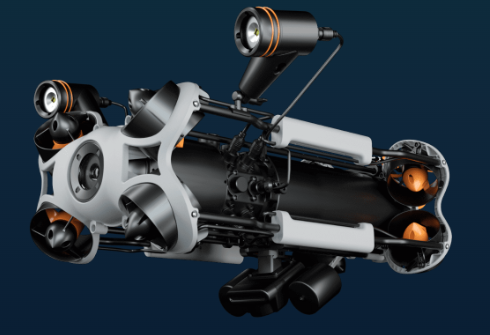
Strip away the acronym and it’s a pretty simple idea: a small, tethered or wireless vehicle that goes underwater while you stay dry and in control from above. You lower it off the side of a boat, a dock, or even a kayak, and steer it around using a controller and a live video feed. No wetsuit, no dive tanks, no waiting for a diver’s schedule to open up.
CHASING’s ROVs are built around cameras, LED lighting, and thrusters that let the vehicle move precisely in tight or murky spaces — under a hull, along a piling, into the shadow of a dock. Depending on the specific model, you can also add accessories for things like grabbing small objects or capturing more detailed footage. The whole point is to hand an operator eyes underwater without requiring them to be underwater.
Where This Actually Helps: Ships and Larger Vessels
A ship’s hull takes a beating simply by existing in the ocean. Marine growth builds up. Paint wears thin. Impacts happen at docks or from floating debris that nobody notices until later. Propellers and rudders, which are constantly moving through water and often through silt or debris, tend to show wear faster than most other components.
Instead of scheduling a diver every time there’s a routine check to run, crews can send a CHASING ROV down first. It can trace the hull line, hover near the propeller, and check around the rudder and thrusters, all while someone watches a live feed from the deck. If something looks off — a crack, heavy fouling, a chunk of debris wedged somewhere it shouldn’t be — that’s the moment to call in a diver for a closer look or a repair. The ROV doesn’t replace that step; it just tells you whether that step is necessary in the first place.
Where This Actually Helps: Smaller Boats
You don’t need a commercial fleet for this to matter. Fishing boats, workboats, and recreational vessels all have the same blind spot below the waterline, just on a smaller scale.
Say you hit something submerged on your way back to the marina — a log, a shopping cart, who knows. Instead of guessing whether it’s safe to keep running the boat, you can drop a small ROV in the water and get a look at the hull and prop within minutes. Same idea before a long trip: a five-minute check can save you from finding out about a problem the hard way, halfway across open water.
There’s also a documentation angle that’s easy to overlook. Footage from an inspection doesn’t just answer the question in the moment — it’s something you can send to a mechanic, a marina, or an insurance adjuster later without them needing to see the boat in person first.
Beyond Boats: Docks, Bridges, and Marine Infrastructure
Boats aren’t the only things sitting in water year-round. Docks, seawalls, bridge supports, and pipelines all deal with the same submerged, hard-to-inspect reality — except they’re usually bigger, more permanent, and harder to justify pulling a diving crew out for on a routine basis.
This is another spot where an ROV earns its keep. An inspection team can guide the vehicle along a dock’s underwater structure, check the base of a bridge support, or look for debris buildup around a pipeline, all without arranging a full diving operation. It’s not a substitute for a certified structural inspection when something genuinely needs closer evaluation — but as a first-pass visual check, it covers a lot of ground quickly and cheaply.
The Safety Argument Is a Big Deal
It’s easy to focus on convenience, but the safety side of this is arguably more important. Diving isn’t inherently dangerous when it’s done right, but it does carry real risk — currents, cold water, poor visibility, confined spaces near hulls or pilings, even contaminated water in some industrial settings. Every dive is a small logistics and safety operation of its own.
Using an ROV for the initial look means the person doing the inspecting never actually enters the water. They stay on deck or on the dock, controller in hand, watching the same footage a diver would eventually see anyway. If the inspection turns up something that genuinely needs a diver’s hands, that dive can be planned with far more information than “we think there might be a problem down there somewhere.”
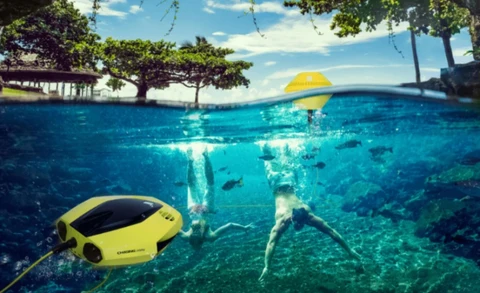
Seeing It Live Changes How You Inspect
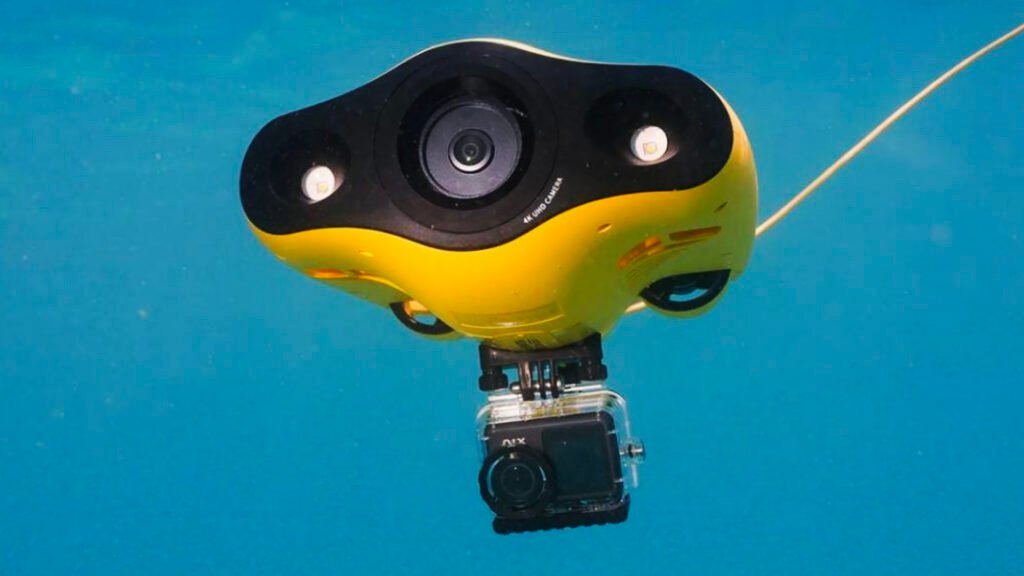
One underrated part of this technology is that the video isn’t delayed. You’re not reviewing footage after the fact and hoping you didn’t miss anything — you’re watching in real time and can reposition the ROV the moment something catches your eye. Good lighting on the vehicle helps here too, since a lot of underwater environments are darker or murkier than people expect, even close to the surface.
That real-time feedback loop also makes it a genuinely useful tool for building a maintenance history. Run the same inspection every few months, keep the footage, and you start to see trends — how fast marine growth is coming back, whether a small scratch is turning into something worse, whether debris keeps collecting in the same spot near a dock piling.
Not a Replacement, More of a Head Start
None of this means ROVs make divers or traditional inspection methods obsolete. There are still plenty of situations that call for a person physically down there, whether it’s a repair, a detailed structural assessment, or something an ROV simply can’t reach. What’s changed is the step before that decision gets made.
Instead of inspections being an occasional, expensive event reserved for when something’s clearly wrong, ROVs make it realistic to check underwater conditions regularly — as a normal part of maintenance rather than a last resort. For ship operators, boat owners, and infrastructure managers alike, that shift toward more frequent, lower-friction underwater visibility is really the point. CHASING’s ROVs aren’t trying to do everything a diver does; they’re trying to make sure a diver only gets called in when it actually counts.