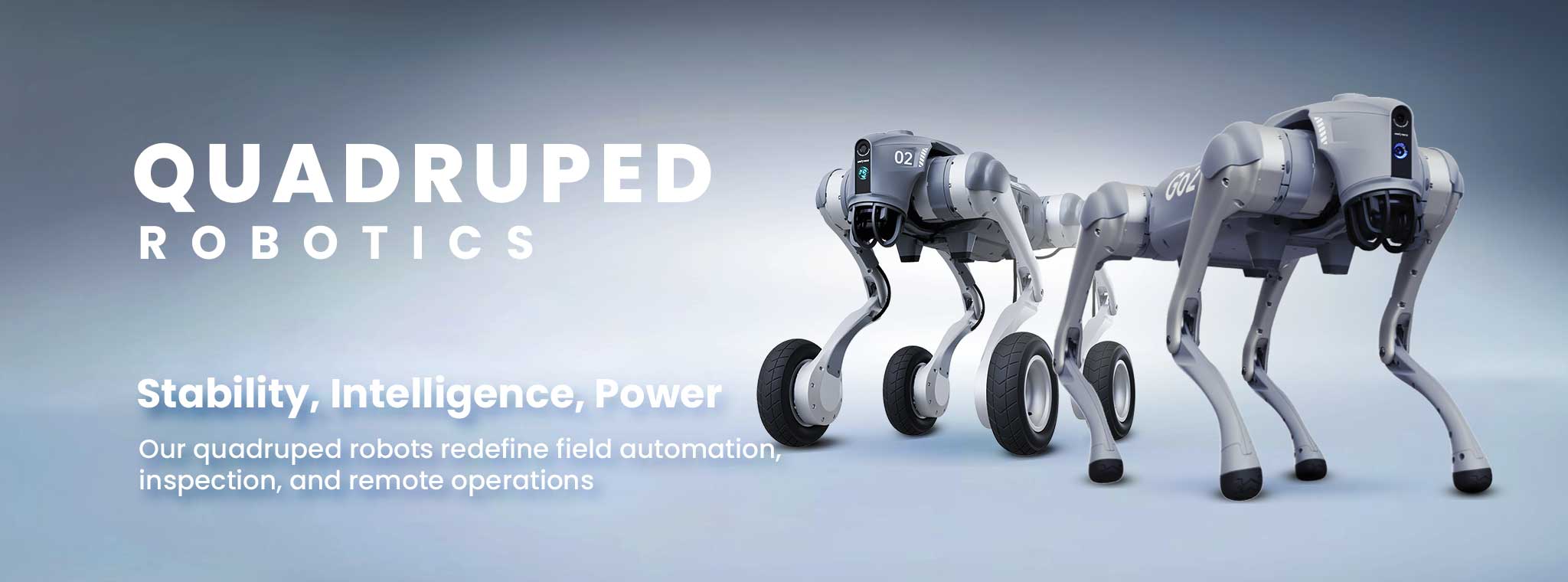
Meet the Future of Mobility: Dronevex Quadrupeds
AI-Driven Awareness and Autonomous Movement
-
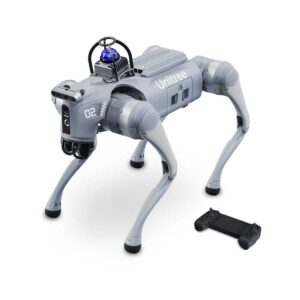
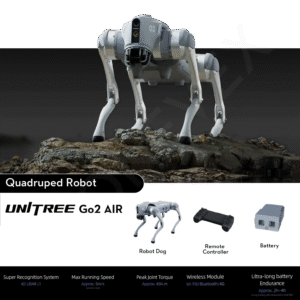
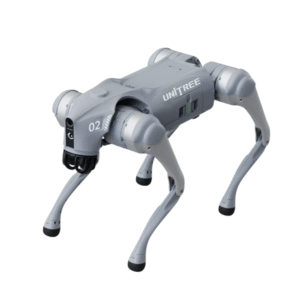
Unitree Go2 Air- Robot Dog (With Controller) – 15000 mAh
₹600,000.00Original price was: ₹600,000.00.₹329,999.00Current price is: ₹329,999.00.
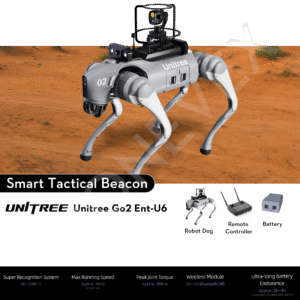
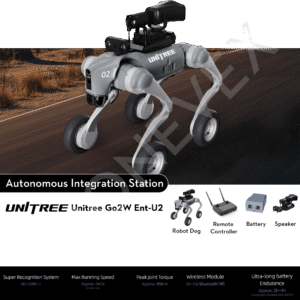
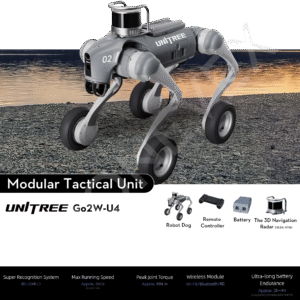
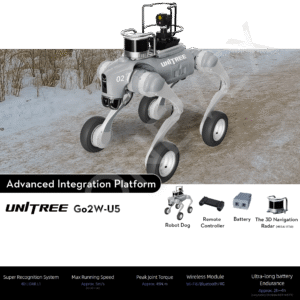
CONTACT DRONEVEX NOW!
Choosing between so many quadruped robots can be confusing. Schedule a free 15-minute consultation for expert guidance, a tailored quote, and reliable delivery.
Quadruped Robots: Intelligent Mobility for the Future of Automation
Quadruped robots are redefining the future of robotics by combining advanced artificial intelligence, precision engineering, and exceptional mobility into a single intelligent platform. Inspired by the movement of four-legged animals, these robots are designed to navigate challenging environments that are often difficult or unsafe for traditional wheeled or tracked robots. Their ability to walk, climb stairs, traverse uneven terrain, avoid obstacles, and maintain balance in dynamic conditions makes them an invaluable solution for industries seeking greater efficiency, safety, and operational flexibility.
At Dronevex, we offer advanced quadruped robots engineered to support a wide range of industrial, commercial, research, and educational applications. Whether you’re looking for an autonomous inspection robot, a robotic platform for research, or an intelligent solution for industrial automation, our quadruped robots combine innovative hardware with intelligent software to deliver reliable performance in demanding environments.
Unlike conventional robotic systems that require smooth, predictable surfaces, quadruped robots are specifically designed to operate where human access may be difficult or hazardous. Their four-legged design provides excellent stability, allowing them to move confidently across gravel, grass, sand, rocky landscapes, construction sites, warehouses, industrial plants, and other challenging terrains. Equipped with sophisticated balance control systems, these robots continuously adjust their posture in real time, enabling smooth and stable movement even when environmental conditions change.
Modern quadruped robots are powered by advanced artificial intelligence that allows them to perceive, understand, and respond to their surroundings. Using a combination of high-resolution cameras, LiDAR sensors, depth cameras, inertial measurement units (IMUs), ultrasonic sensors, GPS, and computer vision technologies, these robots create detailed maps of their environment while identifying obstacles, pathways, and potential hazards. AI-powered algorithms process this information instantly, enabling autonomous navigation and intelligent decision-making without requiring constant human intervention.
One of the greatest strengths of quadruped robots is their versatility. Instead of being limited to a single task, they can be adapted for multiple applications simply by integrating different sensors, payloads, cameras, robotic arms, or specialized equipment. This flexibility allows organizations to deploy a single robotic platform across various departments and operational scenarios, maximizing return on investment while reducing equipment costs.
Industrial inspections are among the most common applications for quadruped robots. Facilities such as manufacturing plants, power stations, refineries, warehouses, mining operations, and infrastructure sites often require regular inspections to monitor equipment health and identify maintenance issues before they become costly failures. Quadruped robots can autonomously patrol these facilities while collecting high-resolution images, thermal data, LiDAR scans, and environmental readings. The information gathered helps maintenance teams detect anomalies early, reduce downtime, and improve operational reliability.
In the energy sector, quadruped robots are increasingly used to inspect substations, pipelines, wind farms, solar installations, and power generation facilities. Many of these environments contain hazardous conditions that can expose workers to unnecessary risks. By deploying robotic inspection systems, organizations can collect accurate data while minimizing human exposure to dangerous environments. Routine inspections can also be performed more frequently, leading to better preventive maintenance and improved asset management.
Construction companies are also adopting quadruped robots to monitor project progress, inspect job sites, document construction activities, and improve safety compliance. Their ability to move through unfinished structures, climb temporary staircases, and navigate uneven surfaces makes them particularly valuable during active construction projects. Combined with 3D mapping technologies and digital documentation tools, these robots help project managers make informed decisions while improving site visibility.
Security and surveillance represent another rapidly growing application for quadruped robots. Equipped with cameras, thermal imaging systems, environmental sensors, and AI-powered analytics, these robots can patrol designated areas autonomously while detecting unusual activity, monitoring restricted zones, and transmitting live video to security personnel. Their mobility enables them to access locations that fixed surveillance systems cannot easily monitor, improving overall situational awareness for large facilities and critical infrastructure.
Research institutions and universities continue to drive innovation through quadruped robotics. These platforms provide researchers with opportunities to develop autonomous navigation algorithms, machine learning models, computer vision systems, robotic manipulation, and multi-robot collaboration technologies. Engineering students also benefit from hands-on experience with advanced robotic systems, helping prepare them for careers in robotics, automation, and artificial intelligence.
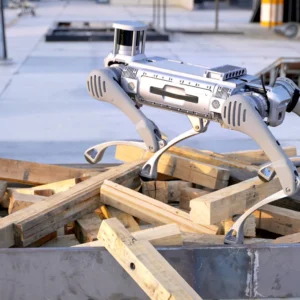
Quadruped robots are equally valuable in disaster response and emergency management. Following earthquakes, floods, industrial accidents, or other hazardous events, these robots can enter unstable environments to assess damage, locate obstacles, collect environmental data, and provide responders with valuable situational awareness before personnel enter affected areas. Their mobility enables them to traverse debris-filled environments where traditional robotic platforms may struggle.
The integration of artificial intelligence significantly enhances the capabilities of quadruped robots. Machine learning algorithms continuously improve navigation, object recognition, path planning, and environmental awareness. Computer vision allows robots to identify equipment, recognize obstacles, detect changes within facilities, and perform automated inspections with increasing accuracy. As AI technologies continue to evolve, quadruped robots are becoming increasingly capable of operating independently while adapting to changing conditions in real time.
Modern quadruped robots also support remote operation and autonomous mission planning. Operators can monitor robot status, view live video feeds, configure patrol routes, collect inspection data, and review reports through intuitive software platforms. Cloud connectivity enables organizations to analyze operational data, maintain inspection records, and integrate robotic workflows into existing enterprise management systems.
Reliability is essential for industrial robotics, and quadruped robots are designed with durability in mind. Many models feature rugged construction, weather-resistant components, advanced battery management systems, and modular architectures that simplify maintenance and upgrades. This robust engineering allows them to perform consistently across demanding operational environments while minimizing downtime.
Safety remains a core consideration in quadruped robot design. Advanced obstacle avoidance systems, collision detection sensors, emergency stop functions, intelligent motion planning, and real-time environmental monitoring help ensure safe operation around people and equipment. These features enable robots to collaborate effectively with human workers while reducing operational risks.
The growing adoption of Industry 4.0 and smart manufacturing initiatives continues to increase demand for intelligent robotic systems. Organizations are seeking automation solutions that improve efficiency without requiring major infrastructure changes. Quadruped robots address this need by providing autonomous mobility within existing facilities, allowing businesses to enhance operations without extensive modifications to their work environments.
At Dronevex, we understand that every organization has unique operational requirements. Our range of quadruped robots is selected to support diverse industries, including manufacturing, energy, construction, logistics, infrastructure, education, research, security, and industrial automation. Whether your objective is autonomous inspection, environmental monitoring, research and development, facility management, or robotic innovation, our experts can help identify the most suitable solution for your application.
In addition to supplying advanced robotic platforms, Dronevex provides technical guidance, product consultation, after-sales support, and access to compatible accessories and components. We believe that successful technology adoption depends not only on selecting the right robot but also on ensuring customers receive the knowledge and support needed to maximize long-term performance.
As robotic technology continues to evolve, quadruped robots will play an increasingly important role across industries worldwide. Improvements in artificial intelligence, battery technology, autonomous navigation, computer vision, edge computing, and robotic perception will continue expanding their capabilities and unlocking new opportunities for automation. Organizations that invest in intelligent robotic systems today are positioning themselves for greater efficiency, improved safety, and enhanced operational resilience in the future.
Whether you’re exploring robotics for the first time or expanding an existing automation program, Dronevex is committed to helping you embrace the next generation of intelligent mobility. Our quadruped robots combine innovation, reliability, and advanced engineering to support real-world applications across some of today’s most demanding industries. Discover how intelligent four-legged robotic platforms can transform inspections, automation, research, and industrial operations while preparing your organization for the future of robotics.