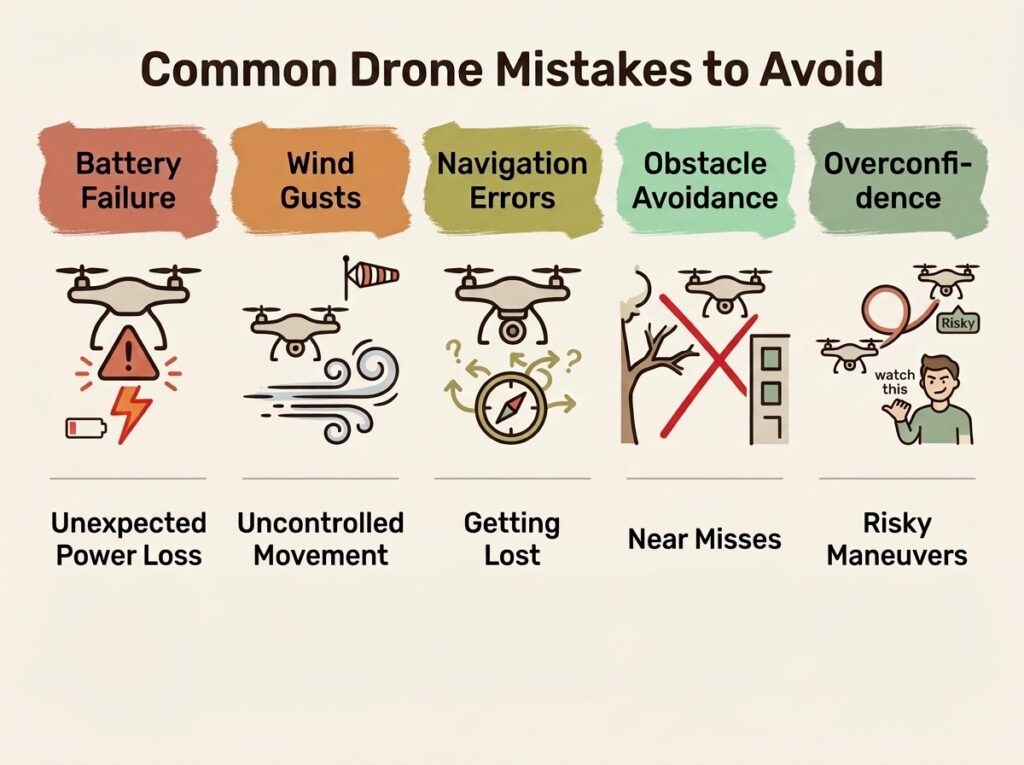
Every drone pilot has a story about the flight that almost went wrong. Maybe it was a battery that died faster than expected, or a gust of wind that pushed things sideways at the worst possible moment. Most of these near-misses come down to a handful of avoidable mistakes, and once you know what they are, they’re genuinely easy to sidestep. Here’s what trips up beginners the most.
Skipping the pre-flight check
It’s tempting to just power on and take off, especially when you’re excited to fly. Don’t. Battery level, propellers, GPS lock, camera, controller; give them all a quick look before you’re airborne. Takes two minutes. Saves you from finding out about a loose propeller at 100 feet instead of on the ground.
Not knowing the rules
No-fly zones, altitude caps, registration requirements; they’re different depending on where you are, and “I didn’t know” doesn’t help much if you get stopped by authorities or, worse, cause an actual incident. A few minutes of research before your first flight in a new area goes a long way.
Ignoring the weather
Wind, rain, low visibility, any one of these can turn a routine flight into a stressful one. Check the forecast. Actually check it, not just glance at whether it looks sunny outside. If conditions look questionable, it’s fine to wait. The footage will still be there tomorrow.
Flying the battery down to nothing
Batteries don’t discharge evenly; they tend to drop fine for a while and then fall off a cliff, especially in wind or cold. Waiting until you’re at 5% before heading back is how emergency landings happen. Head home around 25-30%. Give yourself a buffer, not a photo finish.
Trusting the smart features
Trusting the features a little too much. Obstacle avoidance, GPS hold, return-to-home; all useful, none of them perfect. Sensors miss things. GPS drifts occasionally. Treat these features as a safety net, not autopilot you can ignore. Stay ready to take manual control at any second.
Flying farther than you can see
Line of sight isn’t a suggestion. Once your drone is far enough away that you can’t clearly track what’s around it, you’ve lost your ability to react to anything unexpected; another aircraft, a tree branch you didn’t notice, whatever it might be. Keep it close enough that your eyes are still doing real work.
Jumping straight to advanced shots
Everyone wants the cinematic reveal shot on day one. Resist that. Spend time on the basics first — clean take-offs, steady hovering, smooth turns, controlled landings — in an open space with nothing around to hit. The fancy stuff comes easier once the fundamentals are second nature.
Neglecting basic maintenance
Dust builds up. Screws loosen. Firmware goes out of date. None of it feels urgent until it causes a problem mid-flight. A quick wipe-down and inspection after every few flights keeps your drone running the way it’s supposed to, and it’ll last a lot longer for it.
None of this is rocket science. Most of it is just discipline — the willingness to do the boring five-minute checks before chasing the thrilling and exciting part. Every experienced pilot flying today started out making some version of these same mistakes. The ones who stuck with it just learned to catch them early. It’s really that simple.
Looking for your first drone or need expert guidance? Dronevex offers a wide range of consumer, enterprise, agricultural, and industrial drones backed by professional support and after-sales service.
Contact Dronevex 📞 +91 86453 28452 📧 contact@dronevex.in 🌐 Dronevex
Reach out to Dronevex today and let our team help you choose the right drone and fly with confidence.