Robot Dogs Aren't Toys, They're Guards Now
For years, the phrase “robot dog” conjured images of a novelty gadget doing backflips in a viral video. That image is badly out of date. Across warehouses, data centers, and industrial sites, quadruped robots have quietly moved from internet curiosity to working security staff, and the shift happened faster than most people noticed.
Here is the pain point driving it. Security guarding in India is expensive, inconsistent, and increasingly hard to staff reliably. Night shifts see the highest turnover, the highest fatigue-related lapses, and the highest cost per hour once you factor in overtime and manpower agency margins. A guard walking the same perimeter for eight hours will, at some point, miss something, not because they are careless but because human attention simply is not built for repetitive monotony at 3 a.m.
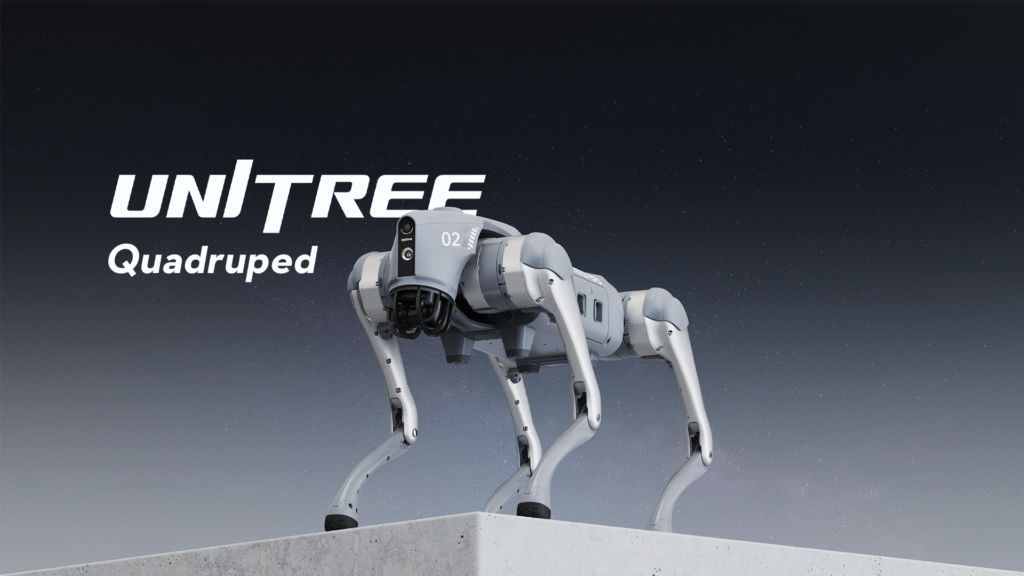
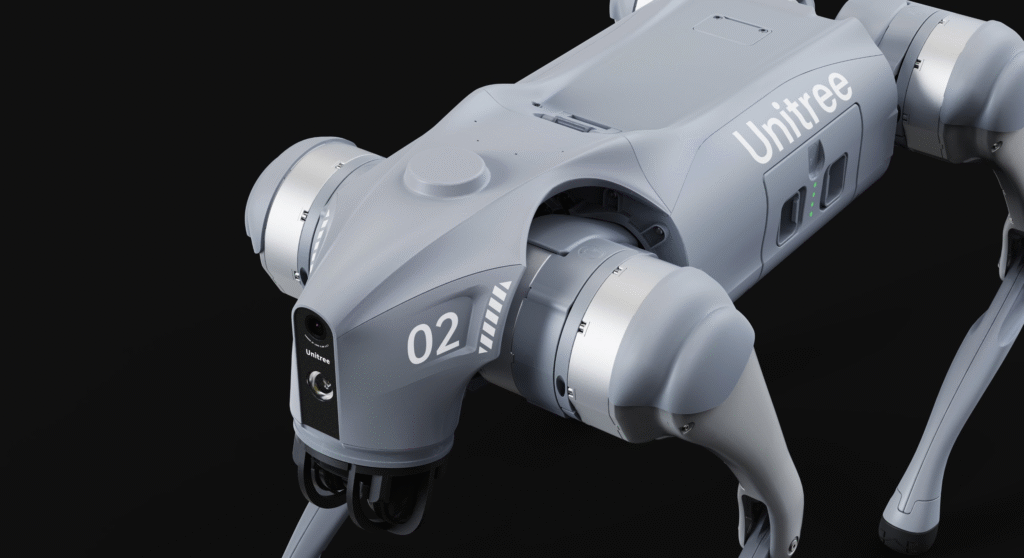
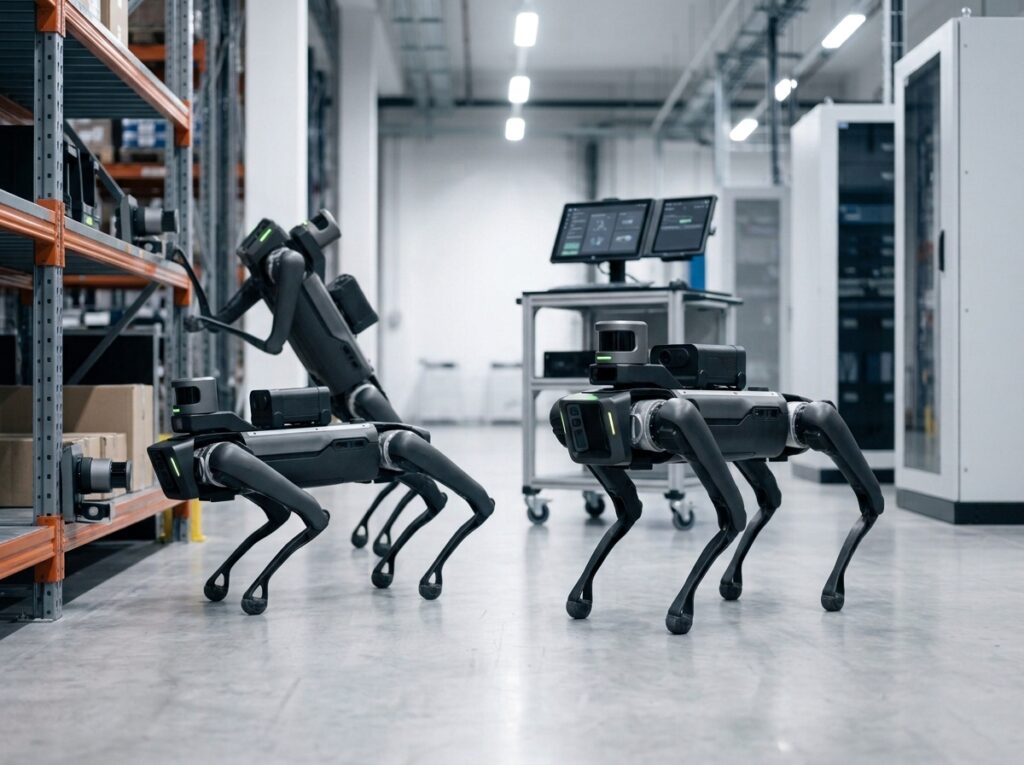
Quadruped robots do not get tired. A unit like the Unitree Go2 or B2 series can be programmed to patrol a fixed route, cover a warehouse floor, or navigate stairs and uneven terrain that wheeled robots cannot handle. Fitted with thermal cameras, gas sensors, or simple RGB feeds, it can flag an open door, an unexpected heat signature, or a person in a restricted zone, and send an alert before a human patrol would have reached that spot.
The economics make sense once you look past the sticker price. A single robot dog running 24/7 patrols replaces the need for multiple guard shifts covering the same routes, while never calling in sick and never needing a break room. For facilities running around the clock, like logistics hubs or manufacturing plants, the payback period on a patrol robot is often measured in months, not years.
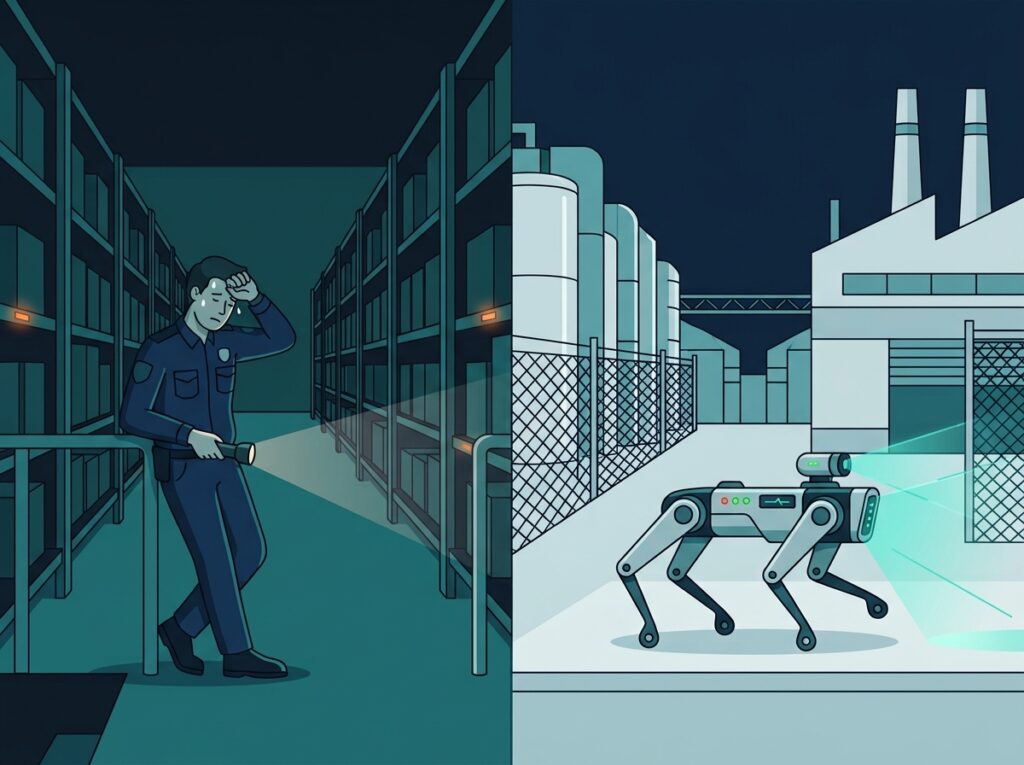
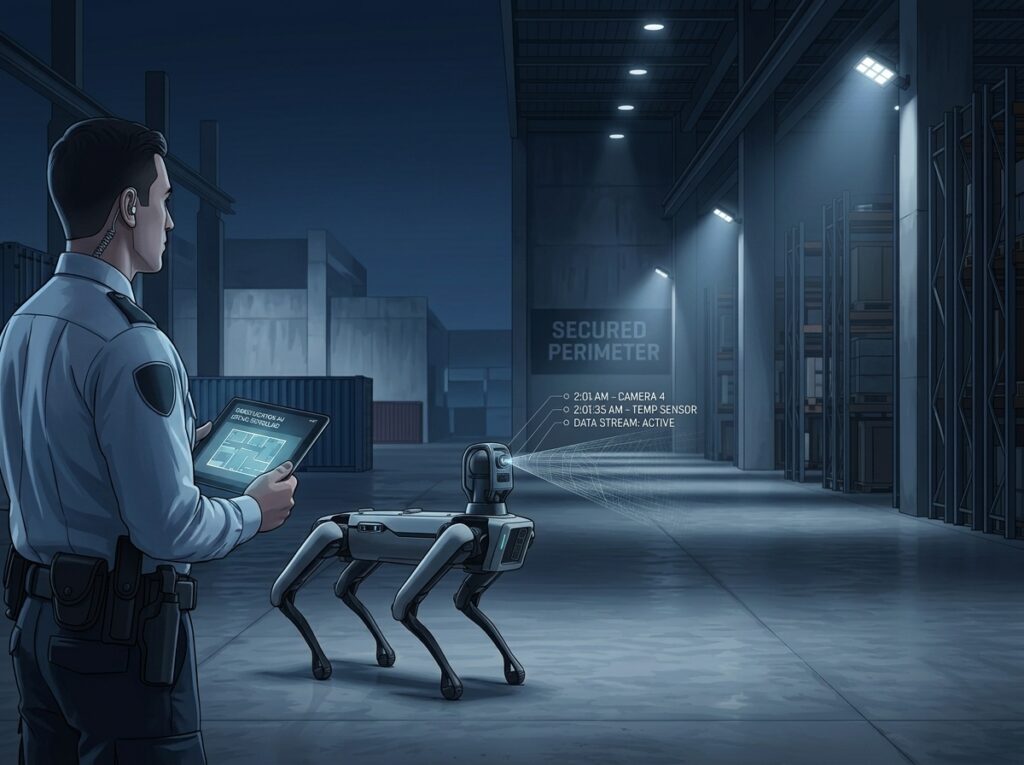
It is not a full replacement for human judgment, and no serious operator is pretending otherwise. A robot cannot make a nuanced decision about an ambiguous situation the way a trained guard can. What it does well is coverage and consistency, the two things human patrols struggle with most. Pair a robot patrol with a smaller human response team, and the combination covers more ground with fewer blind spots than either approach alone.
There is also a data advantage that rarely gets discussed. Every patrol a robot dog runs generates a timestamped, video backed record. If an incident happens at 2 a.m., there is footage and sensor data to review immediately, instead of relying on a guard’s memory of what they saw during a long shift.
Industries adopting this fastest are the ones with large physical footprints and high security stakes: warehousing, ports, energy infrastructure, and manufacturing. As battery life improves and prices continue dropping, expect quadruped patrol robots to move from an early adopter novelty into a standard line item in facility security budgets, the same way CCTV did two decades ago.
Robot dogs were never really about the backflips. They were always about solving a problem that has quietly frustrated facility managers for years, the inability to guarantee consistent coverage without paying for it in overtime and human fatigue. Dronevex supplies Unitree’s quadruped robots to businesses exploring exactly this shift, from research labs to industrial security teams.
CONTACT DRONEVEX NOW!
Looking for the right Robot Dog? Get a quick quote, expert advice, and fast delivery.