The underwater world is still one of the least explored environments on Earth. And until recently, exploring it required expensive diving gear, trained professionals, or industrial-grade remotely operated vehicles (ROVs).
That’s changing fast.
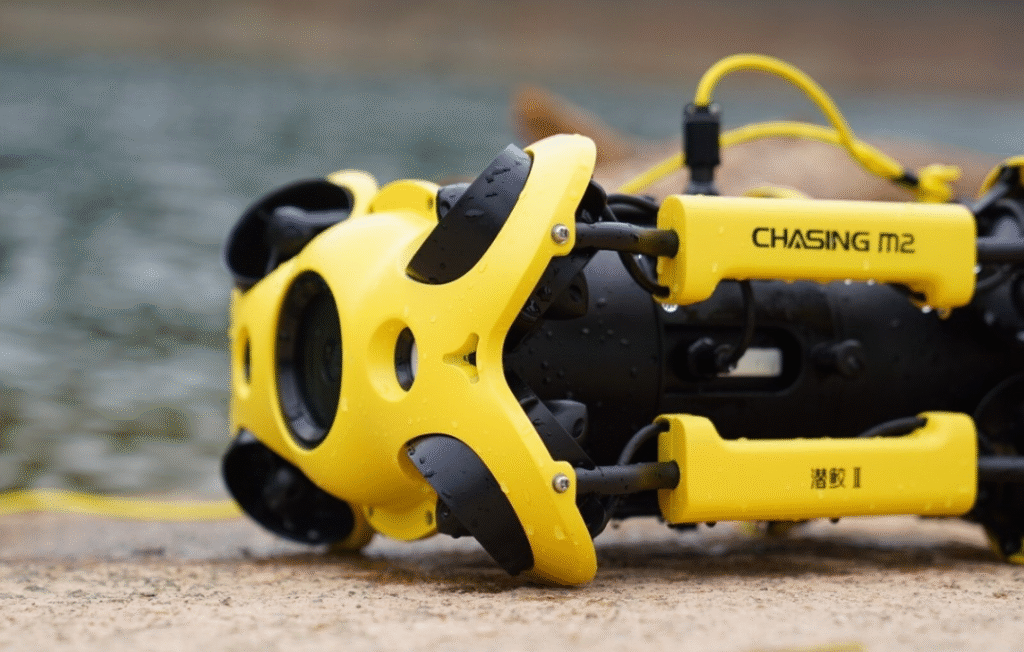
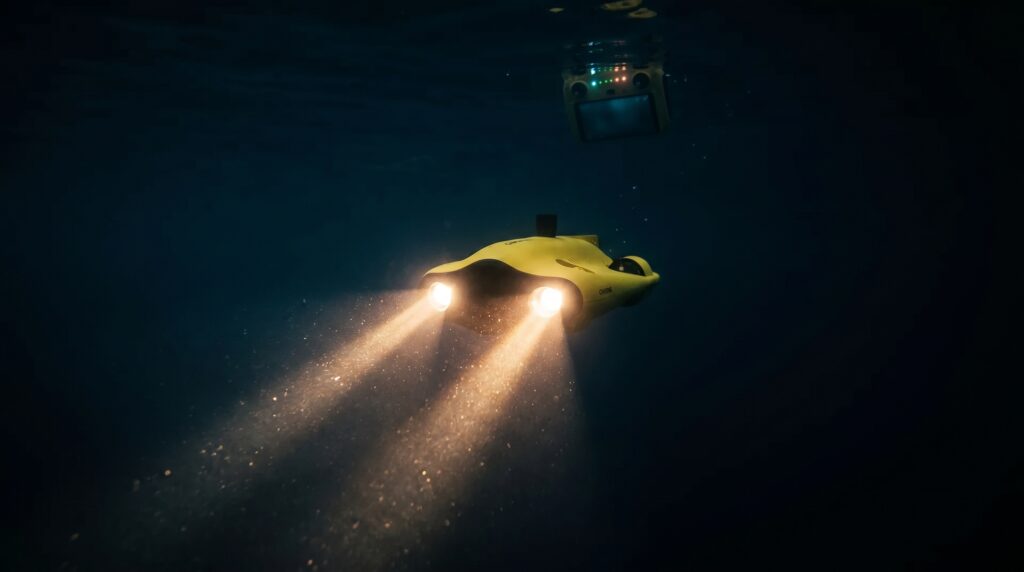
Compact underwater drones are making deep-water filming, inspections, and marine exploration more accessible than ever — and one of the most interesting options right now is the MINI S 100M Underwater Drone from Dronevex.
But here’s the real question:
Is it just another gadget with flashy marketing, or can it actually deliver usable underwater performance?
After looking into its features, real-world applications, and how underwater drones are evolving, the MINI S 100M stands out for one specific reason: it balances portability with professional-level capability.
Why Underwater Drones Are Becoming Popular
Traditional underwater exploration has always had limitations:
- Divers can only stay underwater for limited periods
- Visibility becomes difficult in deeper water
- Manual inspections are risky and expensive
- Marine filming often requires large crews
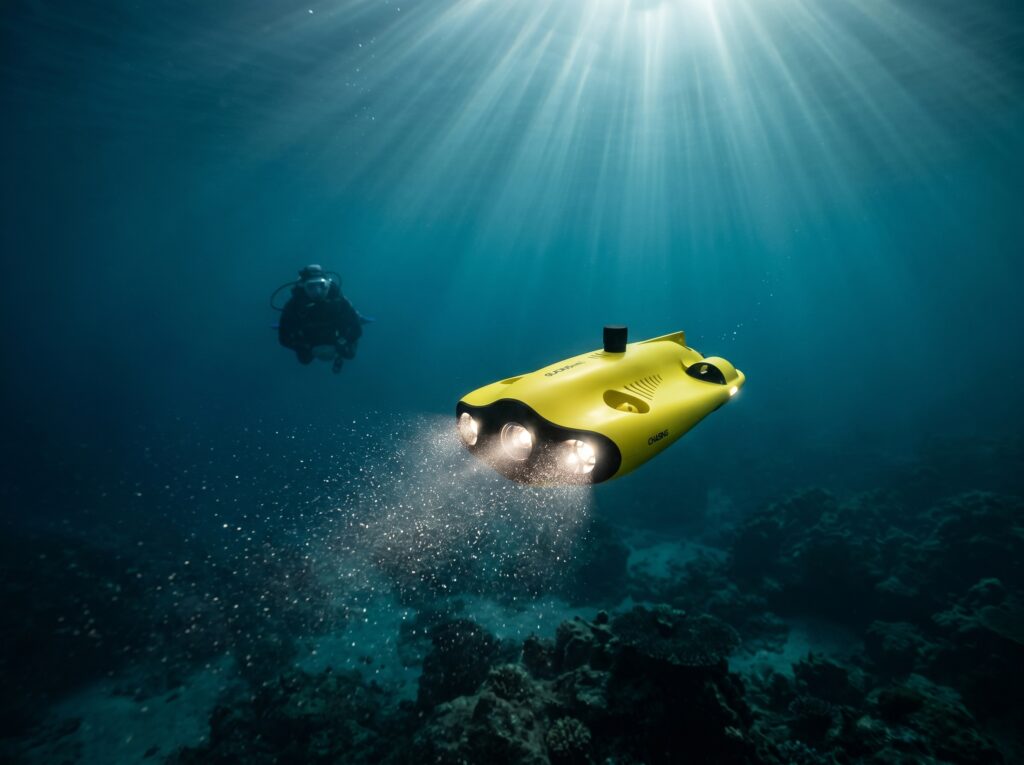
Modern underwater drones solve many of these problems by allowing operators to remotely explore underwater environments while staying safely on the surface.
Unlike aerial drones, underwater ROVs must deal with water pressure, currents, low-light environments, and signal transmission challenges. That’s why most serious underwater drones use tether systems instead of wireless communication. Reddit discussions around underwater ROVs frequently mention how unreliable untethered underwater communication can be in real-world conditions.
This is where the MINI S 100M Underwater Drone takes a practical approach.
What Makes the MINI S 100M Underwater Drone Different?
The MINI S 100M Standard Underwater Drone is designed for users who want professional-grade underwater imaging and maneuverability without carrying a bulky industrial ROV.
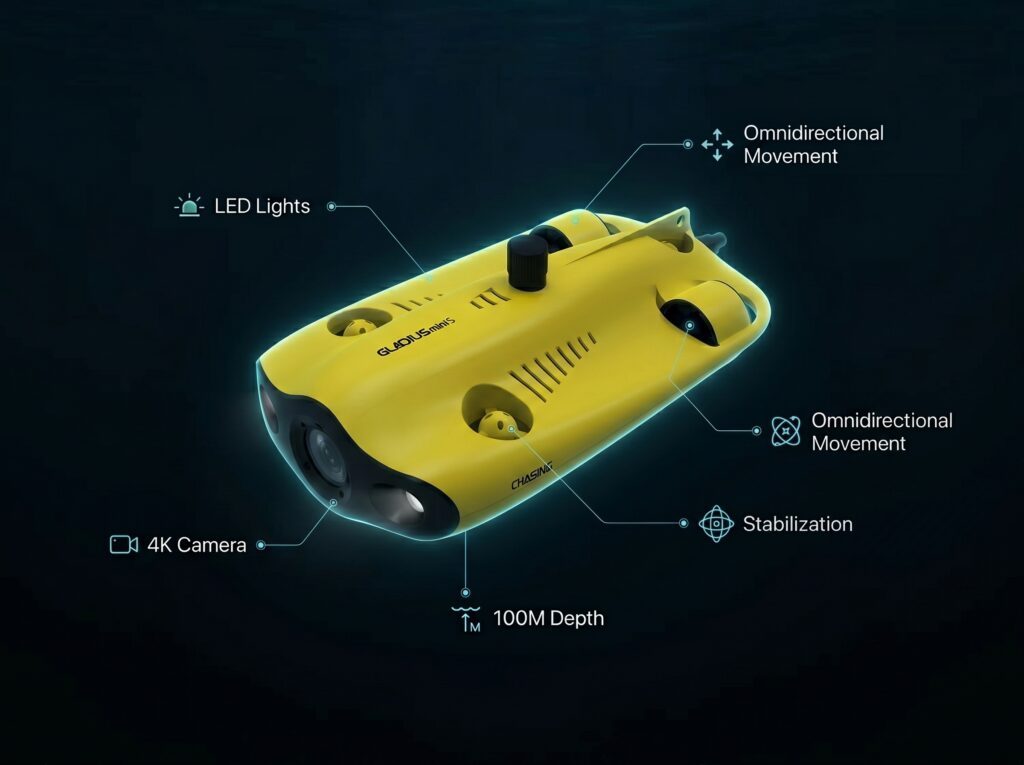
According to Dronevex, the drone offers:
- 100-meter dive depth
- 4K UHD underwater camera
- Electronic Image Stabilization (EIS)
- Dual 4000-lumen LED lights
- 360° omnidirectional movement
- Up to 4 hours of runtime
- Expandable payload support
- Compact portable design
On paper, those specs are impressive. But specs alone don’t tell the full story.
The real advantage is how these features work together underwater.
The 100M Depth Rating Actually Matters
Many consumer underwater drones stay within shallow recreational ranges. A 100-meter capability changes what you can realistically do.
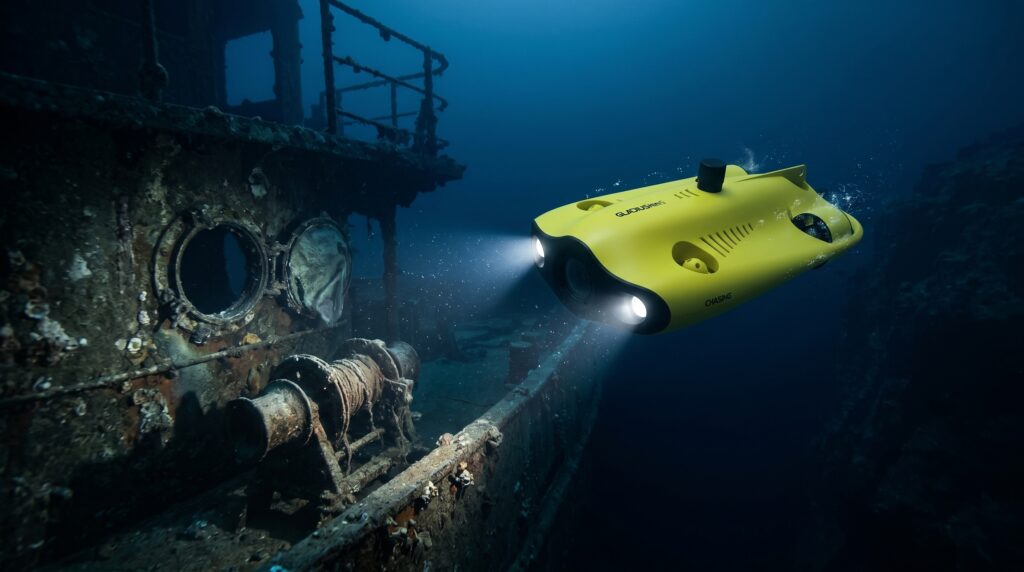
That depth range opens possibilities for:
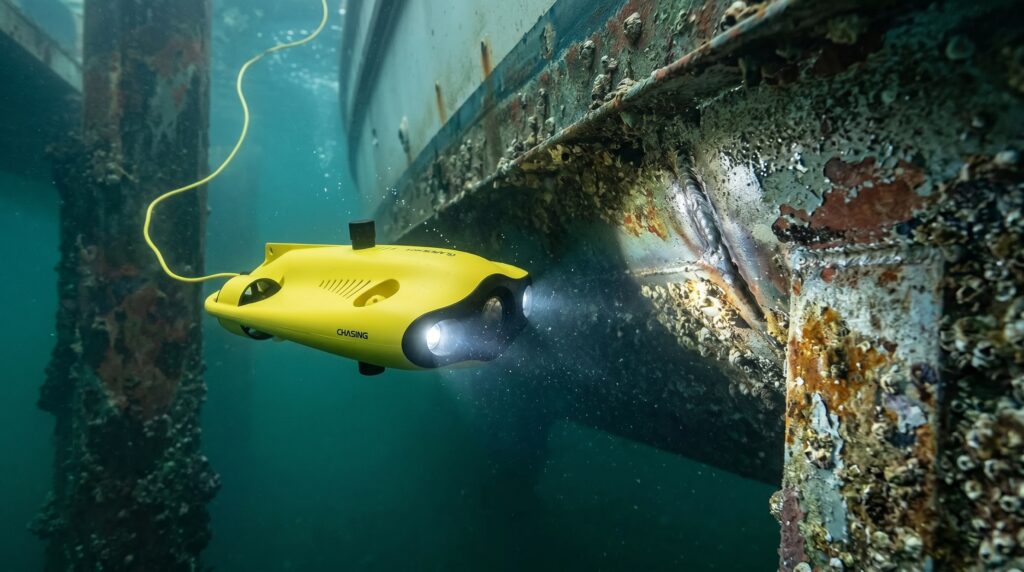
- Boat hull inspections
- Marine ecosystem observation
- Dam and dock inspections
- Underwater content creation
- Search and recovery operations
- Aquaculture monitoring
Interestingly, discussions from underwater drone users on Reddit suggest that 100 meters is already considered serious capability in the consumer/prosumer market. Many hobby-grade models struggle to offer both stability and image quality at depth.
For most users, 100 meters is more than enough for practical field use.
Underwater Video Quality Is Usually the Biggest Problem
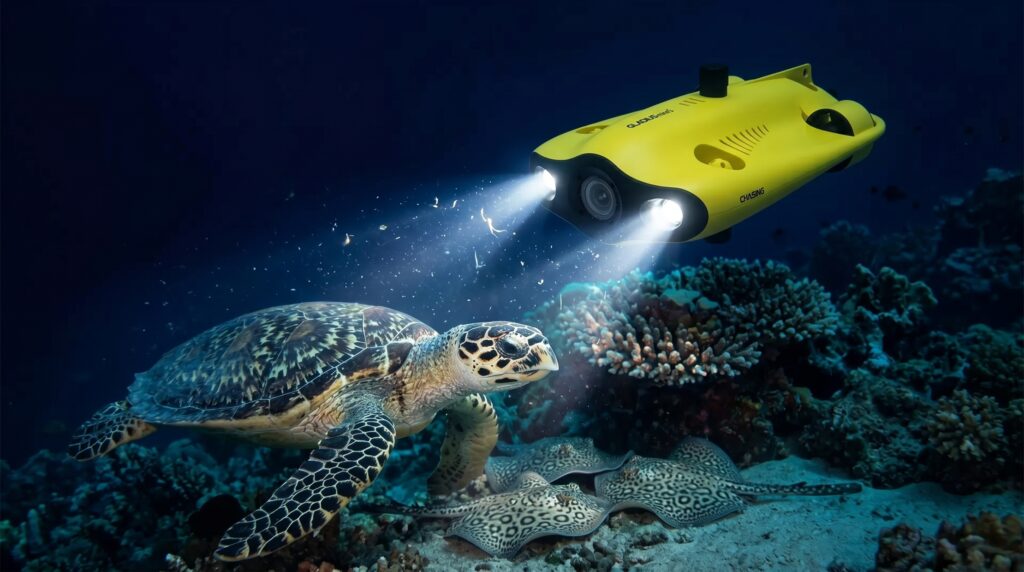
Most people assume underwater drones fail because of movement or battery life.
In reality, the biggest issue is usually visibility.
Water absorbs light quickly. Even crystal-clear water becomes dark and hazy at depth. Add sediment or current movement, and footage can turn unusable fast.
That’s why the MINI S includes:
- 4K UHD recording
- EIS stabilization
- Dual 4000-lumen LEDs
The stabilization matters more than most buyers realize.
Without stabilization, even small underwater currents can ruin footage or inspection clarity. Reddit users discussing underwater ROVs often point out that shaky footage and stirred-up sediment are common problems in cheaper systems.
The addition of EIS makes the MINI S 100M Underwater Drone far more practical for documentation, inspections, and filmmaking.
Built for More Than Just Filming
One thing that separates serious underwater drones from “toy” ROVs is payload expandability.
The MINI S supports accessories like:
- Grabber claws
- GoPro mounts
- Modular attachments
That expands its use far beyond underwater photography.
For Example:
Marine Research
Researchers can monitor reefs, collect samples, or document underwater ecosystems without deploying divers repeatedly.
Aquaculture
Fish farms can inspect nets, monitor fish health, and reduce operational risks.
Boat & Dock Inspection
Instead of sending divers underwater, operators can visually inspect structures remotely.
Search & Recovery
A grabber attachment can assist in retrieving small submerged objects.
This versatility is a major reason why compact ROVs are gaining popularity across industries.
Portability Is an Underrated Feature
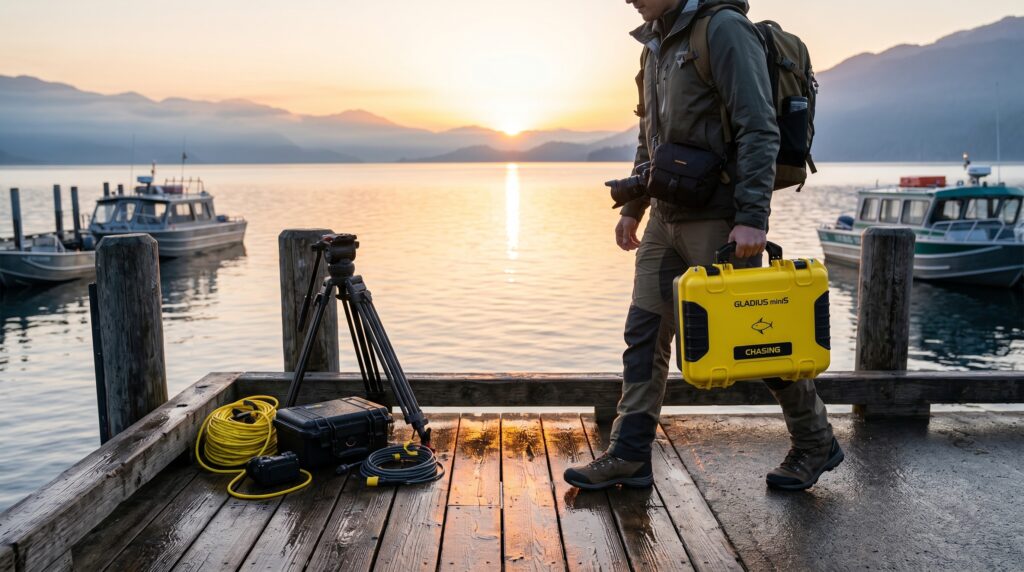
Industrial underwater systems are often bulky, difficult to transport, and require multiple operators.
TheMINI S 100M Underwater Drone is different because it’s designed to stay portable while still offering professional functionality.
Dronevex highlights its compact carry-friendly design and simplified control system, making deployment faster in field conditions.
That matters more than most buyers think.
A drone that’s difficult to transport usually gets used less often.
Who Should Buy the MINI S 100M Underwater Drone?
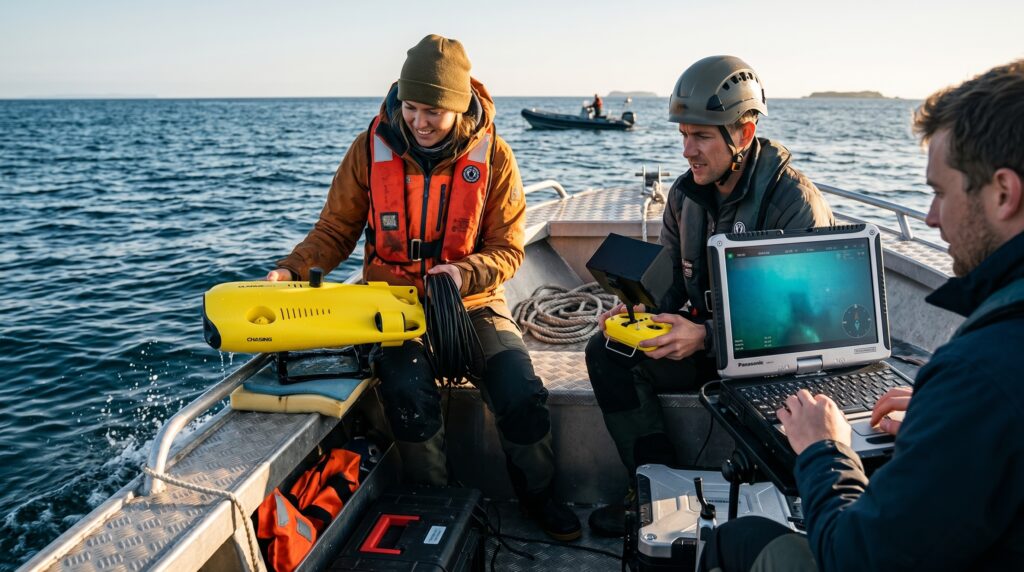
The MINI S 100M Underwater Drone isn’t just aimed at one type of user.
It fits several categories surprisingly well:
Content Creators
If you film travel, marine life, or adventure content, the 4K stabilization and lighting system make underwater shooting much easier.
Inspection Professionals
Dock inspections, hull checks, and infrastructure monitoring become safer and more cost-effective.
Research & Education
Marine biology programs and environmental studies can benefit from real-time underwater observation.
Recreational Explorers
Even hobbyists interested in reefs, lakes, or underwater exploration will appreciate the depth range and maneuverability.
Is It Better Than a Traditional Diving Setup?
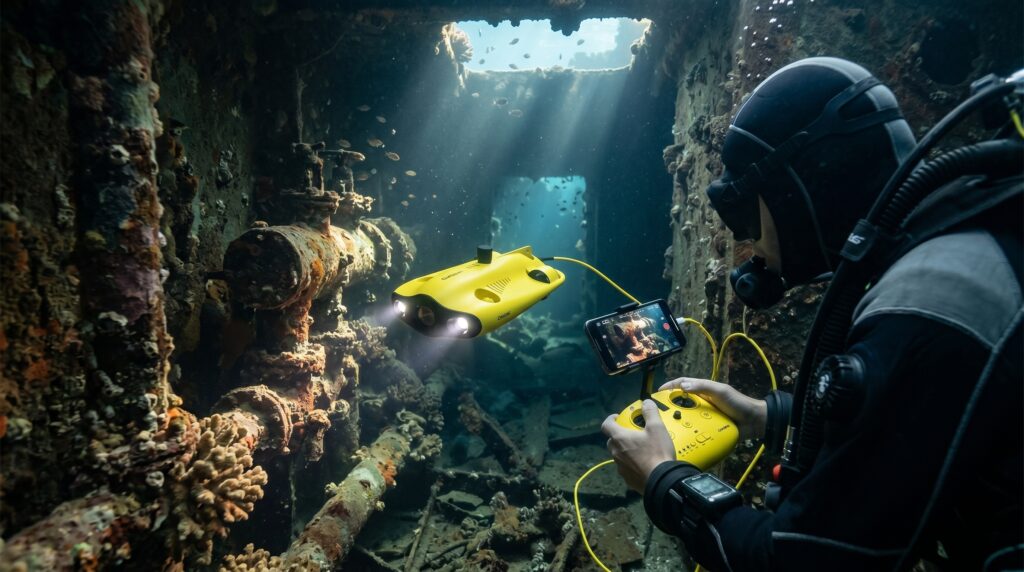
Not necessarily.
But it solves different problems.
Diving gives direct physical access. An underwater drone gives:
- Safety
- Longer operational time
- Remote access
- Better documentation
- Lower operational risk
In many scenarios, using both together is actually the smartest approach.
Final Thoughts
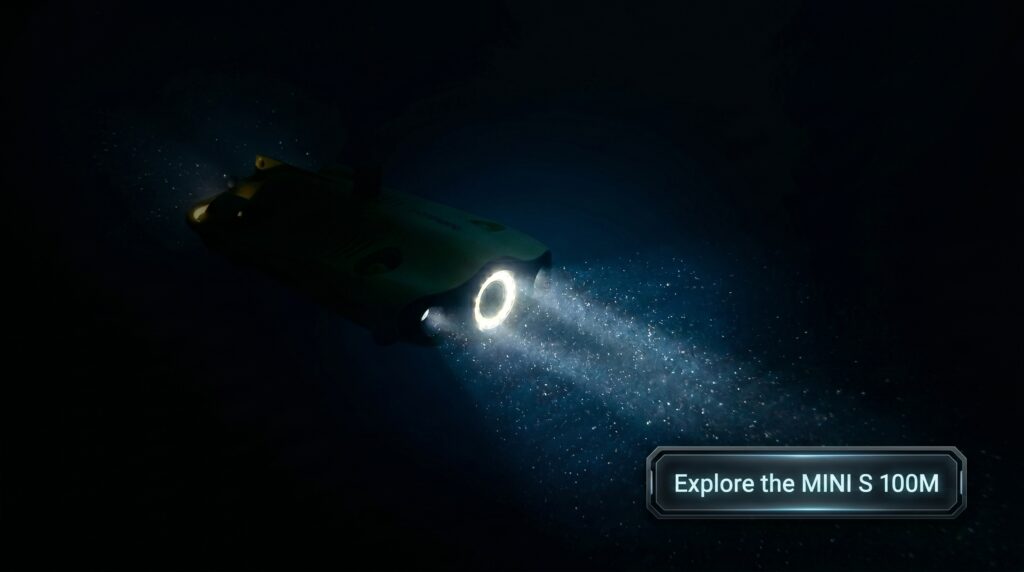
The underwater drone market is still evolving, but the MINI S 100M Underwater Drone feels like one of the more balanced options currently available.
Instead of trying to be a massive industrial ROV, it focuses on what most real users actually need:
- Reliable depth capability
- Stable 4K footage
- Good maneuverability
- Long runtime
- Practical portability
That combination makes it useful for both professionals and serious enthusiasts.
If you’re looking for an underwater drone that goes beyond casual recreation without becoming overly complex or industrial, the MINI S 100M Underwater Drone is definitely worth considering.
You can check the full specifications here:
How deep can the MINI S underwater drone go?
The MINI S underwater drone supports dives up to 100 meters deep, making it suitable for exploration, inspections, and underwater filming.
Does the MINI S underwater drone record in 4K?
Yes, the MINI S features a 4K UHD camera with electronic image stabilization for smoother underwater footage.
What is the MINI S underwater drone used for?
It can be used for underwater exploration, marine research, boat inspections, underwater filming, and search operations.
Is the MINI S suitable for professional underwater inspections?
Yes, its depth capability, stabilization, and portability make it useful for professional inspection work.
Can the MINI S underwater drone be used in saltwater?
Yes, the MINI S underwater drone can operate in both freshwater and saltwater environments. Proper cleaning and maintenance after saltwater use are recommended for long-term durability.
How is an underwater drone different from a regular drone?
A regular drone flies in the air using wireless communication, while an underwater drone operates underwater using thrusters and usually relies on a tether cable for stable communication and control.