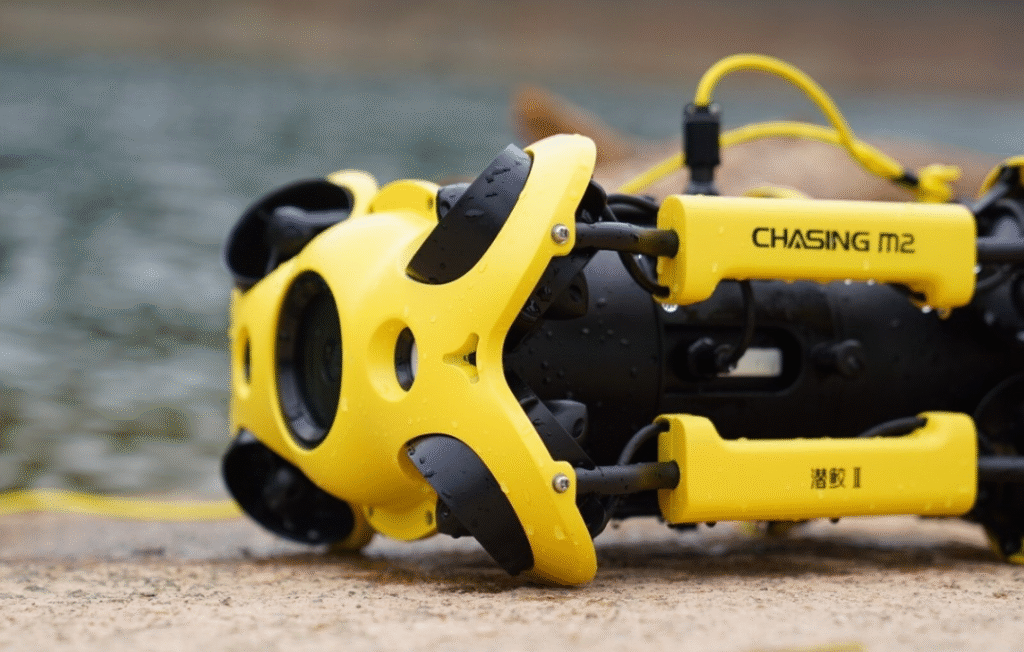
CHASING Drones: The Future of Underwater Exploration
Here’s a number that still catches me off guard every time I hear it: over 70% of the planet is water, and we’ve barely looked at most of it. Not “haven’t studied it thoroughly” — barely looked. Pressure crushes equipment, light disappears within the first hundred feet or so, and sending a person down there has always meant real risk. For most of human history, if you wanted eyes underwater, you needed a diver, and divers come with limits — time, depth, weather, cost.
That’s finally starting to change, and it’s happening faster than most people realize. Underwater robotics has gone from a niche research tool to something you can genuinely buy off the shelf, and CHASING is one of the companies that’s made that shift real. They build underwater drones — ROVs, if you want the technical term — and they’re used by everyone from marine biologists surveying reefs to some guy who just wants better footage of a shipwreck for his Youtube Channel. That’s kind of the point, actually. This isn’t some distant sci-fi promise anymore. You can order one this week and be piloting it off a dock by the weekend.
So what is a CHASING drone, exactly?
Think of a small, tethered robot you control from a boat, a dock, or the shore. Instead of a diver going down, the drone goes down, and it sends video back to you in real time — you’re watching what it’s seeing as it happens. No decompression stops. No tank running low. No getting your leg caught on a piece of rebar forty feet under, which, if you’ve ever talked to a commercial diver, is a genuinely common fear.
They’re built to handle a decent range of conditions — lakes, rivers, harbors, offshore rigs, even the hull of a moving ship in some setups. And they hold their position surprisingly well, even with current pushing against them. That sounds like a small detail until you’re trying to get one clean, steady shot of a hairline crack in a dam wall and the water won’t cooperate.
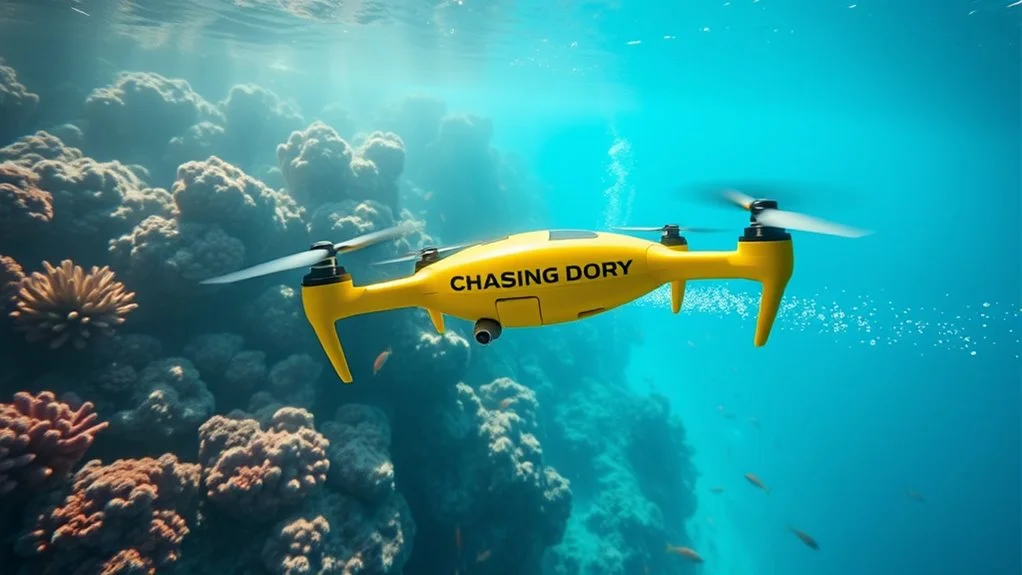
What actually makes them worth using?
Honestly, the camera is what sells most people first, and it’s earned the reputation. Even in murky, low-light water, the footage stays usable — sharp enough to catch corrosion on a pipeline or, on the other end of the spectrum, sharp enough to be worth posting. Good sensors, decent onboard lighting. “Low visibility” doesn’t automatically mean “wasted trip” anymore.
But I’d actually argue maneuverability matters more, even though it gets talked about less. Multiple thrusters let the thing move in almost any direction you’d want — forward, sideways, straight up, straight down. That matters a lot in tight spaces: bridge pilings, the inside of a flooded structure, the underside of a hull. Places where a diver is working against their own buoyancy and running clock, a drone just… sits there. Hovers. Takes its time.
And you don’t need years of training to fly one. Most models pair with a mobile app and a controller that’s not much more complicated than a game console pad, so the learning curve is closer to “flying a camera drone” than “getting certified as a commercial diver.” That’s a big reason the audience has widened so much — teachers, photographers, engineers, hobbyists, researchers who never would’ve picked up scuba gear are now piloting these things regularly.
For people who need more than video, there are add-ons: robotic grippers, sonar, extra lights, measurement tools. At that point it stops being a camera on a leash and starts being a real inspection rig.
Where these are actually being used?
Infrastructure checks. Dams, ship hulls, offshore platforms, water treatment plants. Anywhere engineers used to send a diver to look for cracks or corrosion, a drone can go instead — usually faster, and without shutting anything down while a dive team suits up.
Marine research. Scientists use them to track reef health, watch how animals behave, and map habitats they’d otherwise have to survey manually. They’re quiet, too, so they don’t spook wildlife the way a diver’s bubbles and movement tend to. You end up seeing more natural behavior.
Search and recovery. When the water’s too dark or too dangerous for a diver, a drone can cover the same ground with a live feed instead. That matters a lot for emergency crews working flooded areas or fast rivers where every minute a diver is down there adds risk.
Aquaculture. Fish farms use them to check nets, cages, and feeding systems without constantly pulling staff into the water — less labor, less risk, more routine maintenance actually getting done on schedule.
Photography and film. Probably the most visible use case to regular people. Travel content, documentaries, marine photography — a lot of it now leans on drone footage because it’s stable and good-looking without needing to book an entire dive crew for one shot.
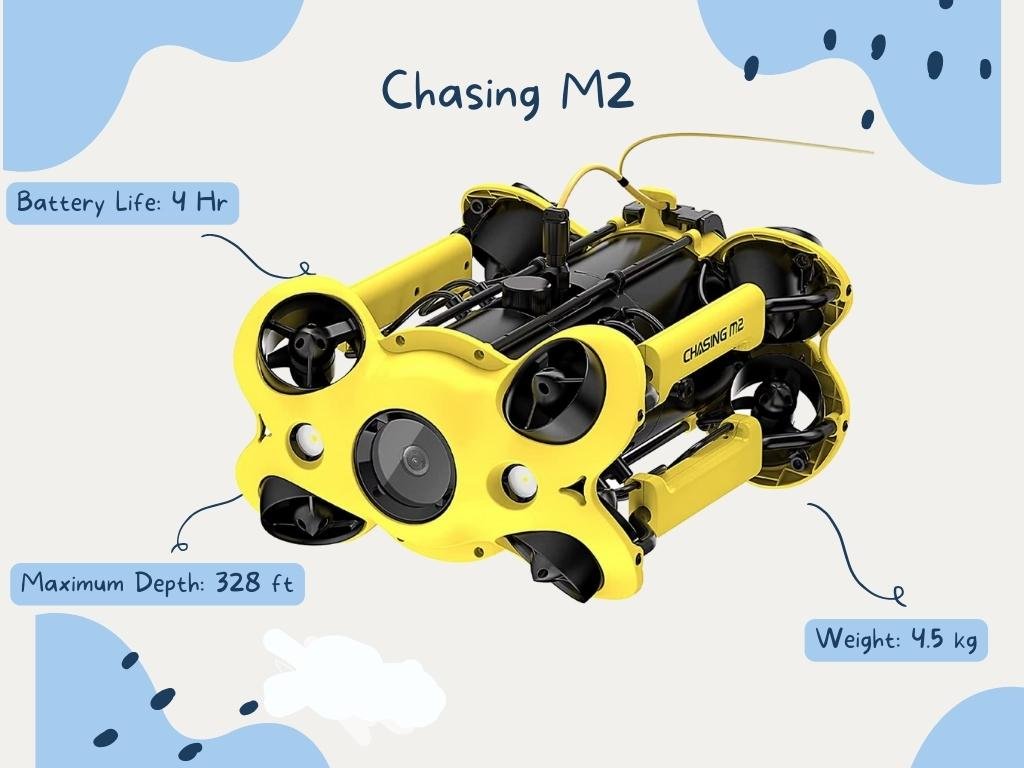
Why companies keep adopting this stuff
It’s not complicated, really. Fewer people in dangerous water, faster inspections, and lower costs over time compared to repeatedly hiring dive teams and chartering boats. The drone itself isn’t cheap, but it pays for itself pretty quickly once you stop paying for the alternative.
The data side matters too, maybe more than people give it credit for. HD footage plus optional sonar gives engineers something they can actually review — frame by frame if needed, shared with a whole team, archived and compared against next year’s inspection. That beats relying on a diver’s memory and a verbal summary after the fact, which, no offense to divers, isn’t exactly a rigorous record-keeping system.
Where this is probably headed
Battery life keeps improving. So does AI-assisted object recognition and underwater navigation. It’s not a stretch to expect future CHASING models to lean harder into autonomy — drones that can run a preset inspection route mostly on their own, flagging anything unusual instead of waiting for a human to notice it on a screen. Pair that with aerial drones and cloud-based reporting, and you’re looking at something close to one connected system watching infrastructure both above and below the waterline. Offshore energy, shipping, large-scale construction — all of that stands to benefit.
Picking the right one
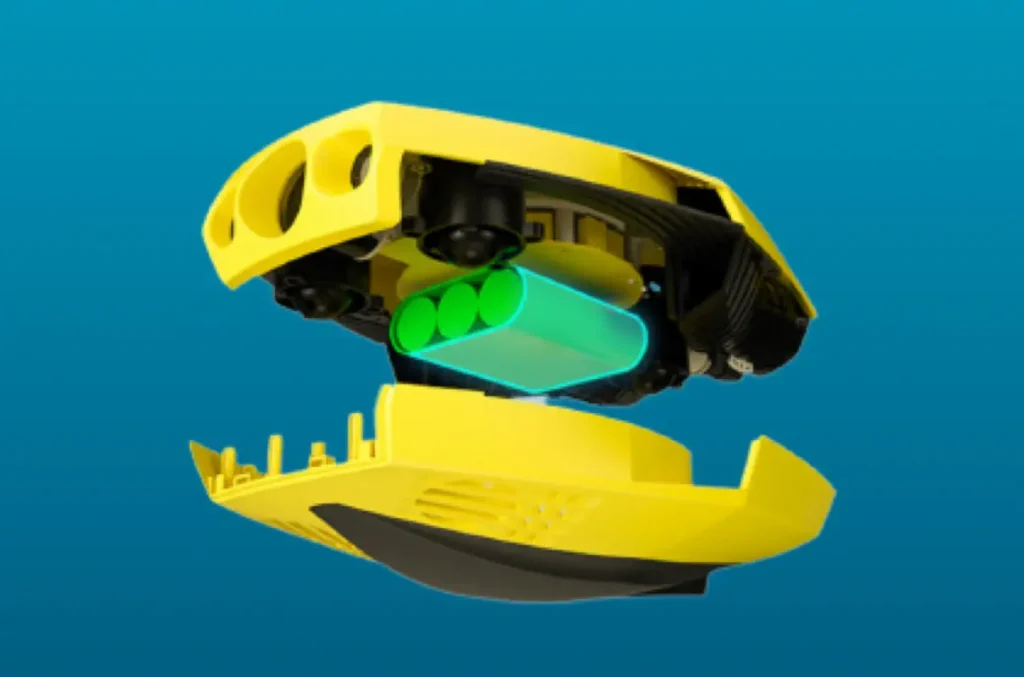
Depends entirely on what you’re doing with it. Inspection work usually wants stronger imaging and sonar, since you’re hunting for small structural problems that are easy to miss. Researchers care more about maneuverability and range, since they’re covering more ground and need it to stay steady when conditions shift. Content creators mostly care about camera quality and stabilization, since the footage is the whole product.
There’s no universal “best” one here. Just the one that fits what you’re actually trying to do.
Bottom line
Underwater work used to mean serious training, serious gear, and a fair amount of risk, full stop. That’s not really true anymore. Whether it’s checking a dam, filming a reef, looking after a fish farm, or searching for something lost underwater, CHASING’s drones are making a part of the world that used to be genuinely hard to reach feel a lot more ordinary — for professionals and curious weekend hobbyists alike.