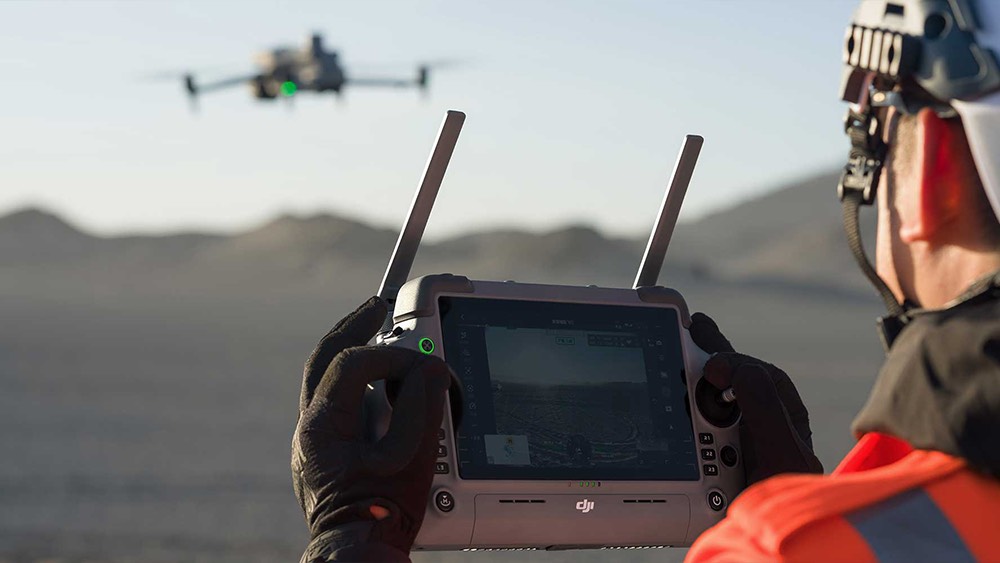
Industrial Applications of Drones are no longer limited to aerial photography or hobby flying. Across India, industries are increasingly adopting drone technology to improve efficiency, reduce operational risks, and collect real-time data faster than ever before.
From large-scale infrastructure projects to precision agriculture and industrial inspections, drones are transforming how businesses operate in sectors that traditionally relied on manual processes. What makes this shift even more important is India’s growing focus on automation, smart infrastructure, and digital transformation.
Industrial drones are now being used not only to save time and operational costs, but also to improve accuracy, worker safety, and decision-making. As regulations continue evolving and enterprise adoption increases, drones are becoming an essential part of modern industrial operations across the country.
In many ways, industrial application of drone technology in India is still in its early growth phase, which means businesses adopting it today are gaining a strong operational advantage.
How Industrial Drones Are Changing Indian Industries
Traditional industrial operations often involve time-consuming inspections, expensive surveys, manual monitoring, and safety risks for workers. Drones simplify these processes by providing aerial visibility, automated data collection, and faster reporting.
Equipped with HD cameras, thermal sensors, LiDAR systems, and AI-powered analytics, modern industrial drones can perform highly specialized tasks with impressive accuracy.
Industries are now using drones to:
- Monitor large facilities
- Inspect dangerous environments
- Conduct aerial mapping
- Track project progress
- Improve surveillance
- Analyze operational data in real time
This combination of automation and aerial intelligence is reshaping multiple sectors in India.
1. Infrastructure Inspection and Maintenance
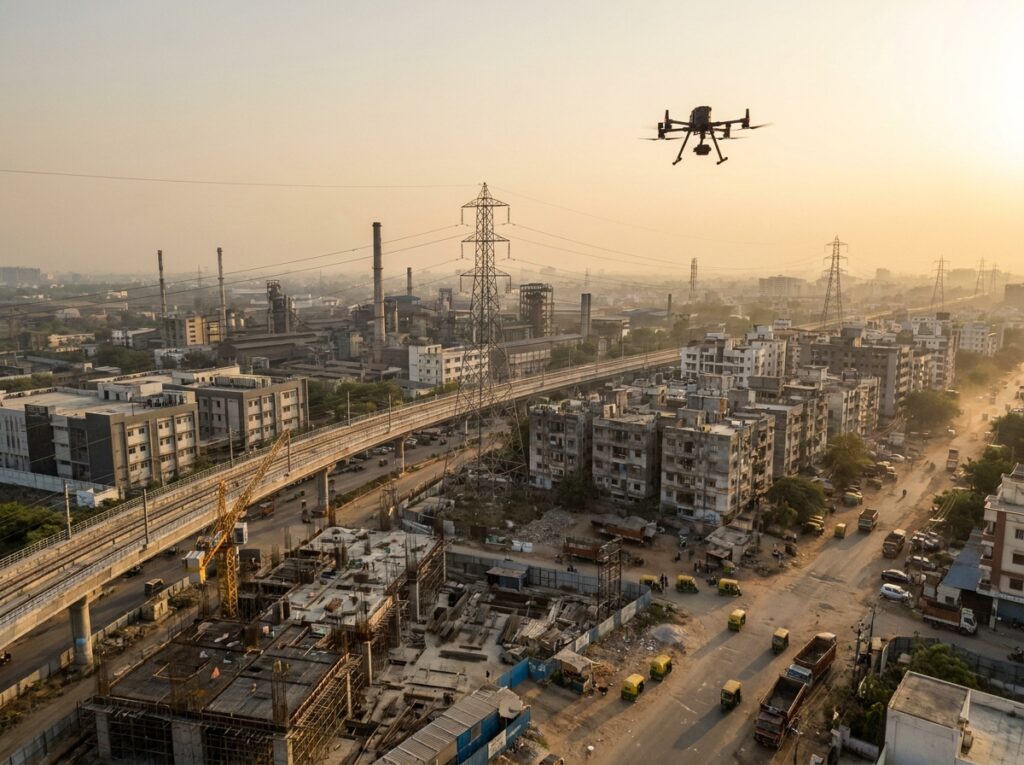
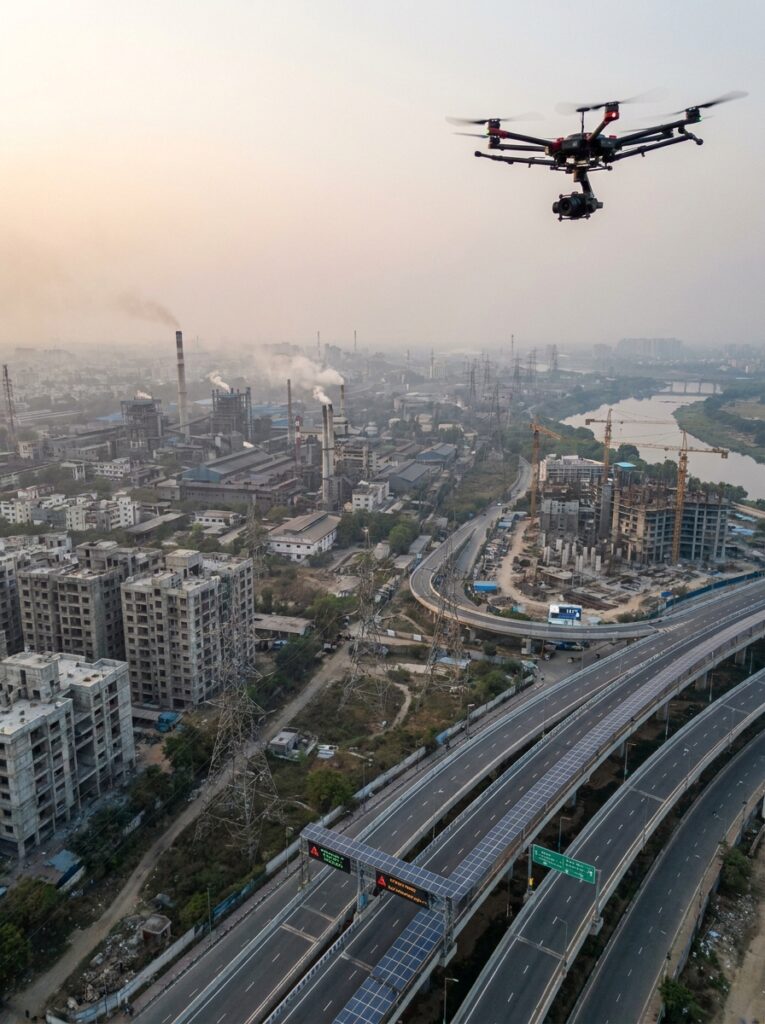
Infrastructure inspection has become one of the most important industrial drone applications in India. Bridges, highways, railway tracks, transmission towers, pipelines, and industrial facilities require regular monitoring to ensure safety and operational efficiency.
Traditional inspection methods are often time-consuming, expensive, and risky for workers. Drones simplify this process by providing high-resolution aerial visuals and thermal imaging without interrupting operations. Engineers can quickly identify structural cracks, corrosion, electrical faults, or equipment damage using drone-generated data.
Industrial drones also help companies reduce maintenance costs through predictive inspections. Instead of waiting for visible failures, organizations can identify issues early and improve infrastructure reliability through proactive monitoring systems.
2. Agriculture and Precision Farming
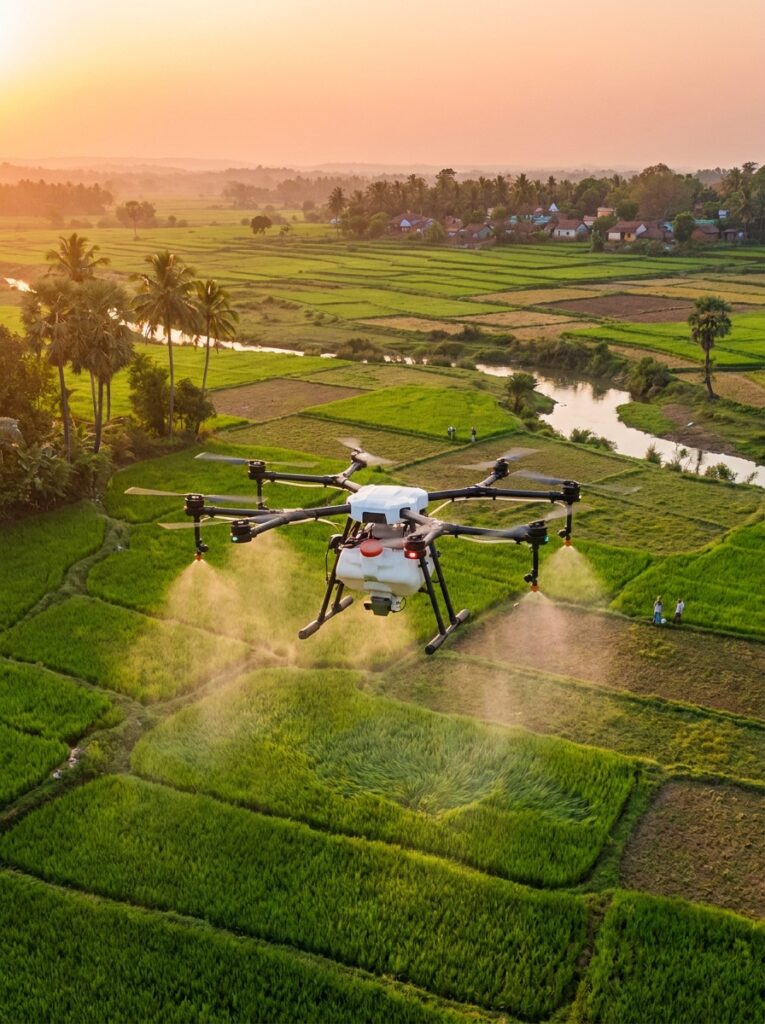
Agriculture is emerging as one of the fastest-growing sectors for industrial drone adoption in India. Farmers and agritech companies are increasingly using drones for crop monitoring, precision spraying, irrigation analysis, and yield estimation.
Drone surveys help farmers identify crop stress, water distribution problems, and soil health conditions more efficiently than manual field inspections. Multispectral imaging allows agricultural teams to monitor plant health and optimize fertilizer usage with greater accuracy.
Industrial applications of drones in India are also helping improve productivity while reducing water usage and chemical waste. As precision farming technologies continue expanding, drones are expected to play a critical role in modernizing Indian agriculture.
3. Mining and Land Surveying
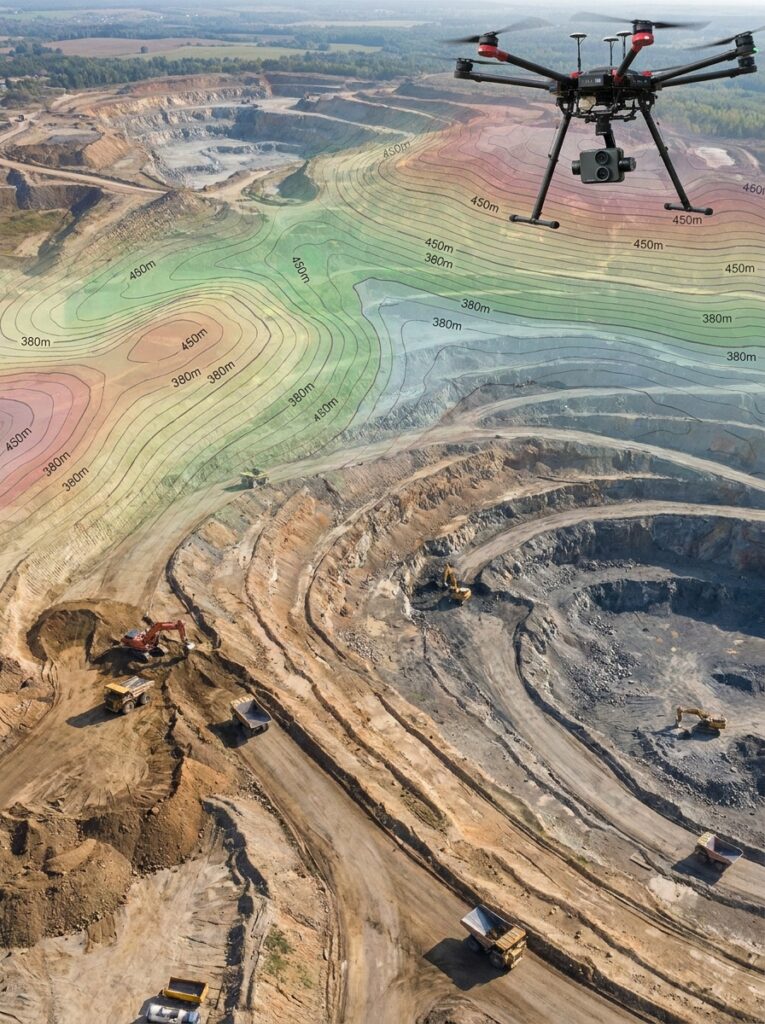
Mining operations require continuous monitoring of excavation sites, stockpiles, terrain conditions, and environmental impact zones. Traditional surveying methods can take several days and may expose workers to hazardous environments.
Drones are helping mining companies perform aerial mapping, topographic analysis, and volumetric calculations much faster and more safely. High-resolution drone data improves planning accuracy and helps operators monitor operational progress in real time.
Industrial drone technology in India is also becoming valuable for large-scale land surveys and infrastructure planning projects. Drone-generated 3D models and terrain maps provide detailed insights that improve project management and resource allocation across industrial sectors.
4. Construction and Project Monitoring
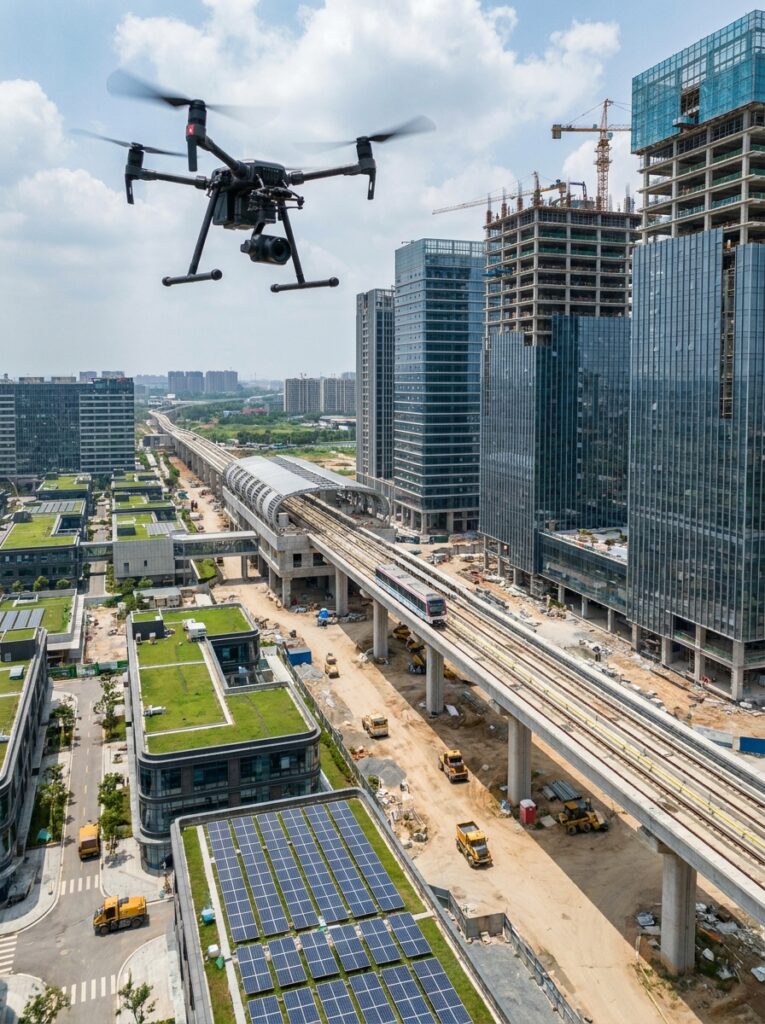
The construction industry is rapidly adopting drone technology for project monitoring and site management. Large infrastructure projects such as highways, metro systems, industrial parks, and smart city developments require continuous tracking throughout the construction lifecycle.
Drones provide project managers with aerial visibility of construction sites, helping teams monitor progress, compare development with original plans, and identify delays early. This improves communication between stakeholders and allows faster decision-making.
Industrial drones also improve worker safety by reducing the need for manual inspections in dangerous construction zones. With India investing heavily in infrastructure development, drones are becoming an essential tool for modern construction management.
5. Oil, Gas, and Pipeline Inspection
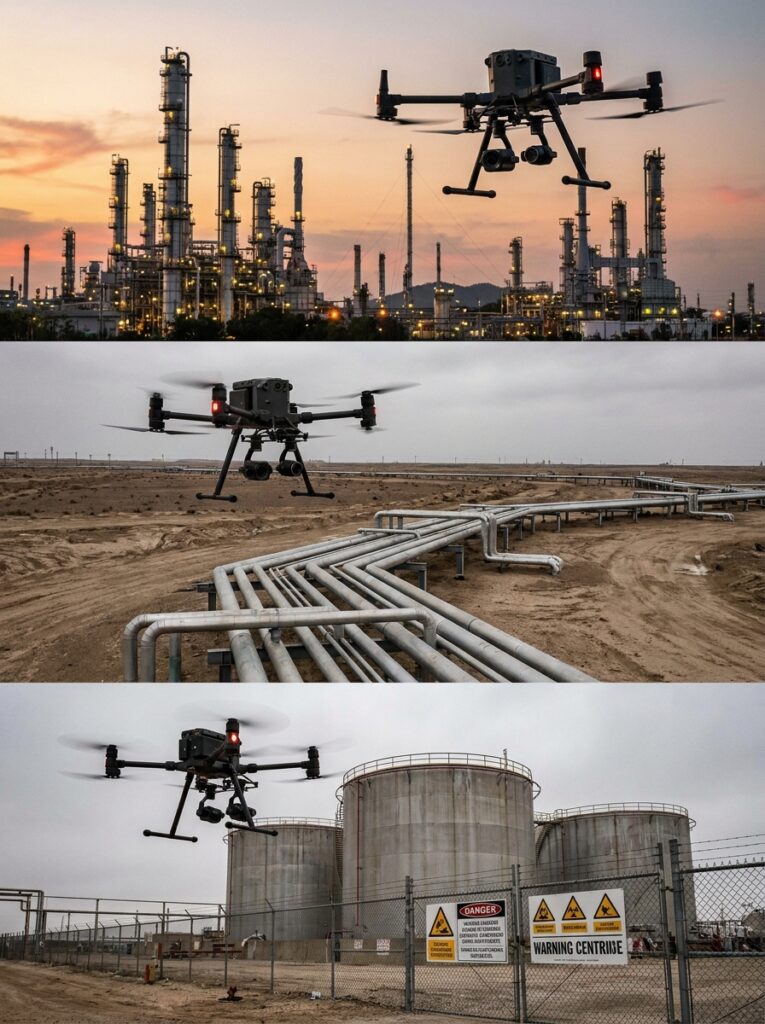
Inspecting oil pipelines, refineries, and gas infrastructure manually can be dangerous, expensive, and operationally challenging. Drones offer energy companies a safer and more efficient alternative for monitoring critical infrastructure.
Industrial drones equipped with thermal sensors and zoom cameras can detect leaks, abnormal heat patterns, equipment failures, and structural damage across large facilities and long-distance pipeline networks. This allows operators to identify issues before they become major operational risks.
Industrial drone applications in India are helping energy companies improve maintenance efficiency, reduce downtime, and strengthen safety standards without interrupting daily operations or exposing workers to hazardous conditions.
6. Smart City Surveillance and Traffic Monitoring
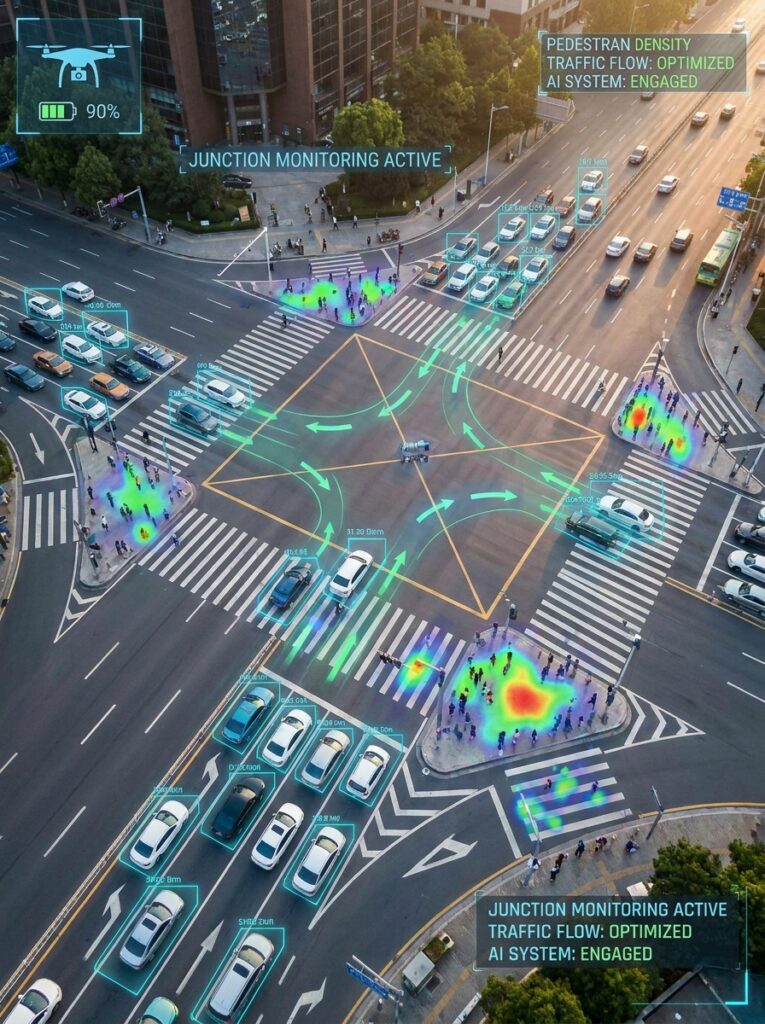
Smart city projects across India are increasingly integrating drones into urban management systems. Drones are now being used for traffic monitoring, crowd management, emergency response, disaster assessment, and public safety operations.
Unlike fixed CCTV systems, drones provide dynamic aerial coverage across larger urban areas and can quickly respond to changing situations. Authorities can monitor traffic congestion, track crowd movement, and coordinate emergency services more efficiently using real-time aerial data.
Industrial drone technology in India is becoming especially important for smart infrastructure projects where fast situational awareness and intelligent monitoring systems are essential for managing complex urban environments.
7. Power Line and Energy Sector Inspections
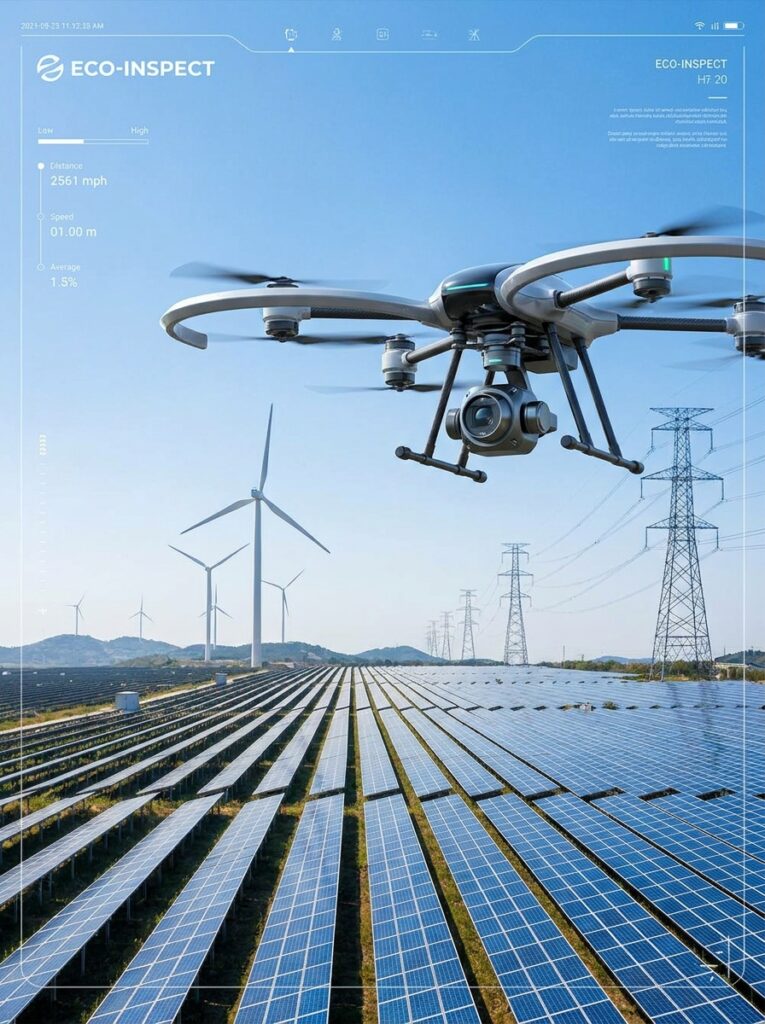
India’s power infrastructure spans massive geographic regions, making manual inspections difficult and time-intensive. Drones are helping utility companies inspect transmission lines, substations, solar farms, and wind turbines more efficiently.
Using thermal imaging and high-resolution cameras, drones can identify damaged components, overheating systems, or vegetation risks near power lines without requiring workers to access dangerous environments directly.
Industrial applications of drones in India are improving preventive maintenance strategies within the energy sector by reducing downtime and enabling faster fault detection. This helps utility providers improve operational reliability while lowering maintenance costs and safety risks.
8. Disaster Management and Emergency Response
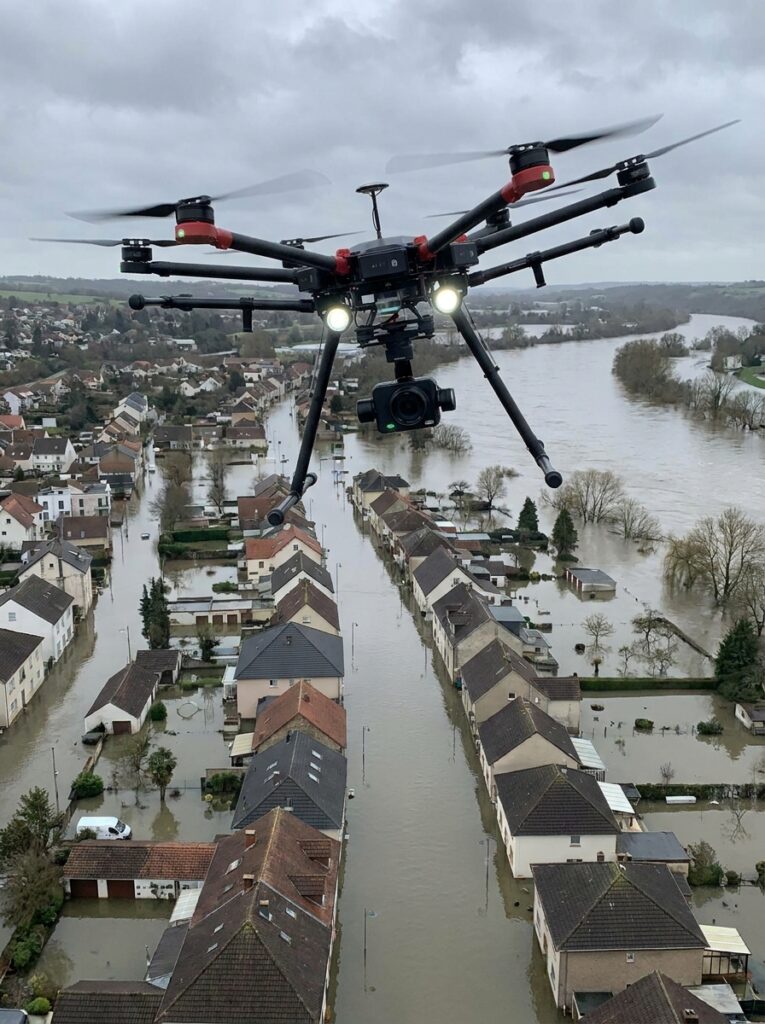
Drones are becoming highly valuable tools for disaster management and emergency response operations across India. During floods, fires, landslides, or industrial accidents, emergency teams require rapid access to accurate situational data.
Drones provide live aerial footage, damage assessment capabilities, and real-time monitoring of affected areas. This helps authorities identify blocked routes, locate affected zones, and coordinate rescue operations more effectively.
Industrial applications of drone technology in India is significantly improving response times during emergencies because drones can quickly access locations that may be difficult or unsafe for human teams to reach during disaster situations.
9. Warehouse Management and Industrial Automation
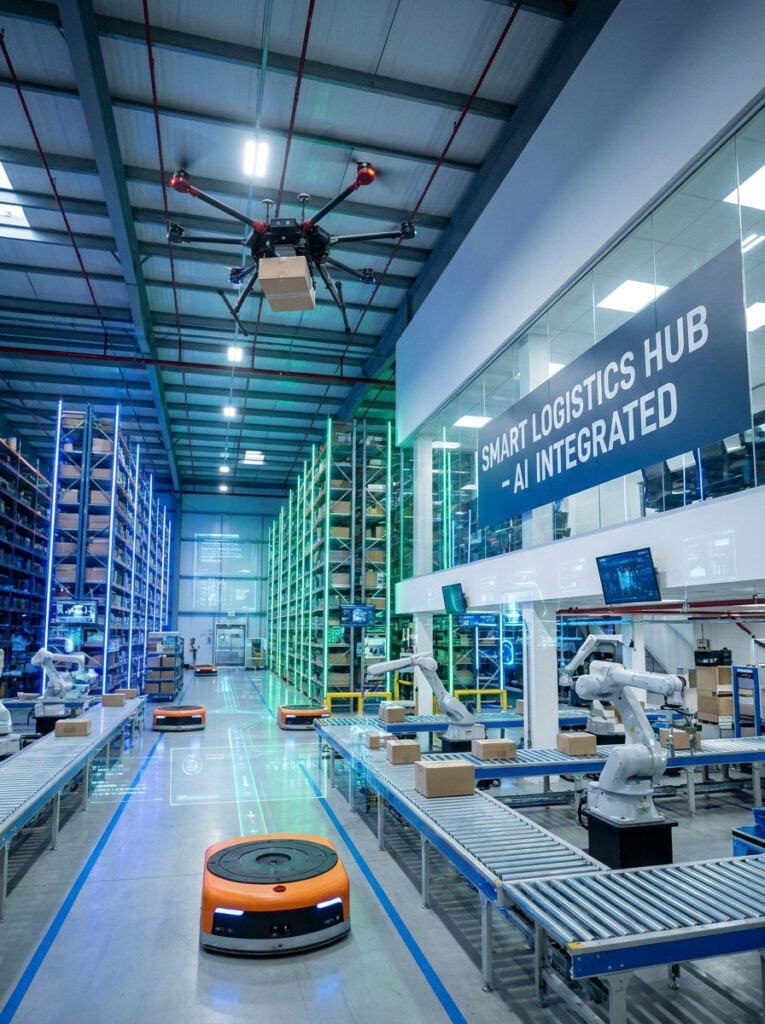
Large warehouses and industrial facilities are increasingly adopting drones for inventory monitoring, surveillance, and logistics management. Drone systems help companies automate repetitive operational tasks while improving efficiency and accuracy.
Drones can scan inventory shelves, monitor storage areas, and track warehouse activity in real time. This reduces manual workload while improving inventory visibility and operational control across large facilities.
Industrial applications of drones in India are expected to expand further as businesses integrate drones with robotics, AI systems, and smart warehouse infrastructure. The combination of automation and aerial monitoring is helping industries optimize supply chain operations and reduce operational inefficiencies.
10. Defense and Border Surveillance
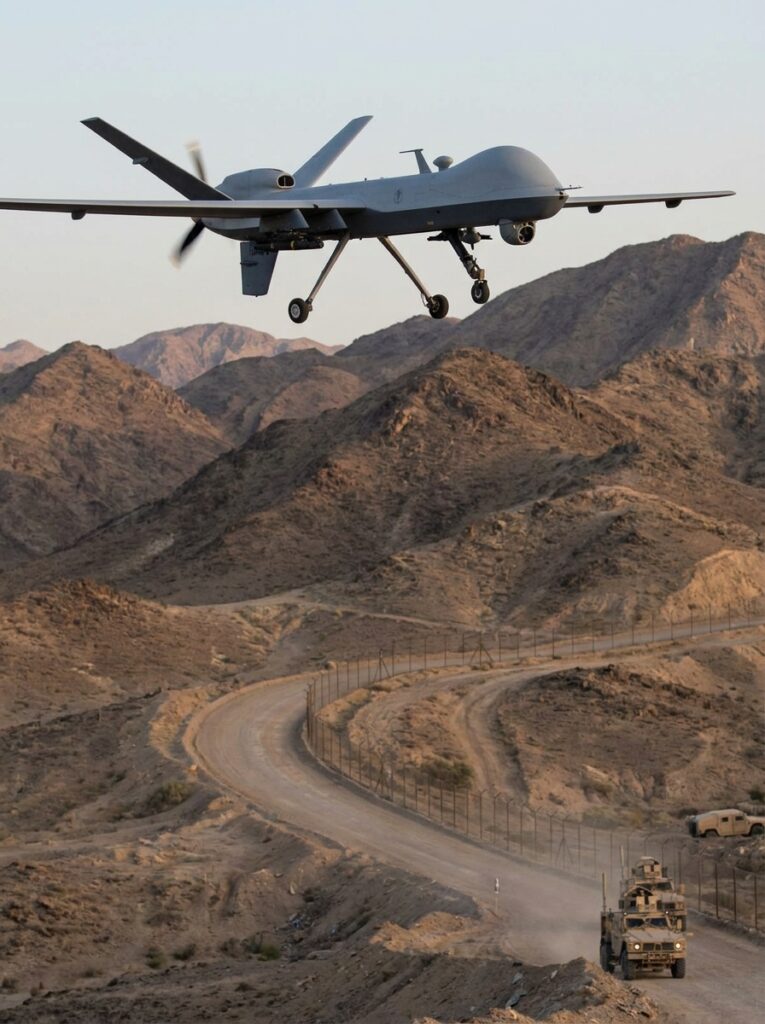
Defense and security remain among the most advanced industrial applications of drones in India. Security agencies and defense organizations use drones for surveillance, reconnaissance, tactical monitoring, and intelligence gathering operations.
Modern defense drones equipped with thermal imaging, AI analytics, and long-range communication systems provide improved situational awareness in difficult terrains and high-risk border regions. They allow security teams to monitor sensitive areas without exposing personnel to unnecessary danger.
Industrial drone technology in India is also supporting indigenous defense innovation as the country continues investing in advanced surveillance systems and domestic drone manufacturing capabilities.
The Future of Industrial Drone Applications in India
The future of industrial applications of drones in India looks extremely promising as industries continue adopting automation and intelligent monitoring systems. Advances in AI-powered drones, autonomous navigation, real-time analytics, and aerial mapping technologies are expected to accelerate enterprise adoption across multiple sectors.
Businesses investing in drone technology today are preparing for a future where automation, predictive monitoring, and data-driven decision-making become standard operational practices. Industrial drones are no longer experimental tools — they are becoming an essential part of modern industrial infrastructure.
Conclusion
Industrial applications of drones in India are rapidly transforming industries by improving operational efficiency, safety, and real-time data collection. From agriculture and mining to smart city surveillance and infrastructure inspection, drones are helping organizations modernize traditional processes across the country.
As drone technology continues evolving, its role in industrial operations will only become more important. Companies adopting industrial drones early are positioning themselves for a future driven by automation, intelligence, and connected infrastructure systems.