DJI Dock 3: The Future of Enterprise Drones
There’s a specific kind of inefficiency that most infrastructure and security teams have simply learned to live with. Someone has to physically show up, unpack a drone, fly a route, land it, pack it back up, and drive to the next site. Do that daily across dozens of towers, pipelines, or perimeter fences, and the labor cost quietly becomes bigger than the equipment cost ever was. DJI built the Dock 3 specifically to make that routine disappear — and having spent time with it at Dronevex, we think it’s one of the more genuinely useful enterprise products DJI has released in years.
What a "Drone in a Box" Actually Means
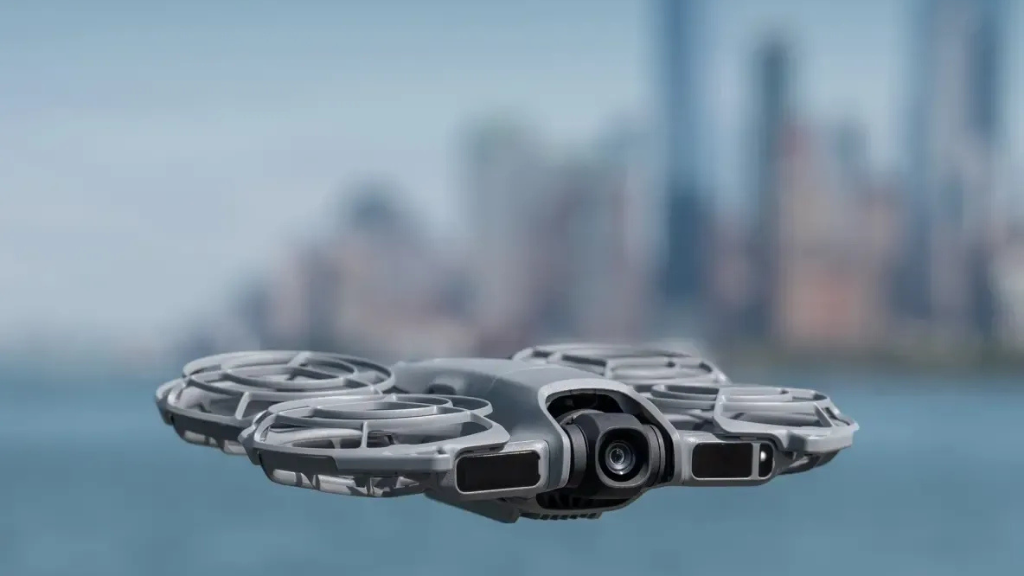
The idea sounds almost too simple: a weatherproof enclosure sits permanently at a site, houses a drone inside it, and launches that drone on a schedule or on command — no pilot required on location. The Dock 3 does exactly that, but the engineering underneath is what makes it worth taking seriously. It’s rated IP56 for dust and water resistance, keeps the drone climate-controlled through onboard heating and cooling, and operates reliably across a brutal temperature range of -30°C to 50°C. Whether the dock is sitting on a rooftop in Rajasthan summer or a hillside during monsoon season, the drone inside stays mission-ready. It pairs exclusively with two aircraft — the Matrice 4D and Matrice 4TD — each optimized for a different job. The 4D leans into high-resolution mapping and inspection, carrying a 4/3-inch wide camera alongside dual telephoto lenses for detailed, oblique image capture. The 4TD adds a radiometric thermal camera into that same package, which is what turns this system from a mapping tool into something capable of fire detection, thermal leak inspection, and search-and-rescue work. Both aircraft fly for up to 54 minutes per charge and hit speeds up to 47 mph, so a single dock can realistically cover a wide territory in one automated mission.
The Part That Actually Changes Daily Operations
Hardware aside, the real shift with Dock 3 is what happens once it’s installed and left alone. Through DJI FlightHub 2, missions get scheduled in advance or triggered remotely, and the drone handles the rest — launch, flight, data capture, return, and precision RTK-guided landing back into the dock for automatic recharging. There’s no need for someone standing there with a controller. A single operator sitting at a desk can now oversee multiple docks across multiple sites, watching live feeds and reviewing captured data as it comes in, instead of driving between locations all day.
For industries where a delay of even a few hours matters — power line faults, gas leaks, wildfire spread, or a security breach along a perimeter fence — that shift from “someone has to go look” to “the drone already looked” is the entire value proposition in one sentence.
Built for Places a Van Can't Always Reach
One genuinely new capability in this generation is vehicle-mounted deployment. Earlier docking stations were fixed installations — bolt it down, connect it to power, and it stays there permanently. The Dock 3 can now be mounted to a vehicle, which opens up a whole category of temporary or mobile use cases: disaster response teams setting up a forward operating post within hours, construction sites that shift location every few months, or public safety units that need a dock to travel with them rather than wait for them.
Connectivity is handled through DJI’s O4+ Enterprise transmission system, with a fixed-deployment configuration using a D-RTK 3 relay capable of extending video range out to roughly 25 kilometers. Add in a 4G cellular option for remote sites without reliable line-of-sight infrastructure, and the Dock 3 stays connected in places that would have been genuinely impractical for older systems.
Where This System Actually Gets Deployed
The use cases read like a checklist of jobs nobody enjoys doing manually. Energy companies use it for routine transmission line and substation inspections, catching faults before they become outages. Construction and infrastructure teams run it for progress mapping and structural checks across active sites. Public safety departments have adopted it for emergency response and disaster monitoring, since a dock positioned near a high-risk zone can be airborne within moments of an alert. Agricultural operations use the mapping-focused Matrice 4D pairing for crop health surveys across large tracts of land. And increasingly, security teams are using scheduled Dock 3 flights as a genuinely lower-cost alternative to round-the-clock human patrols along fences and boundary lines.
Security and Compliance Aren't an Afterthought
For enterprises hesitant about handing routine operations over to an automated aerial system, DJI built the data side with the same seriousness as the hardware. Transmission is encrypted end to end, FlightHub 2 supports ISO/IEC 27001-aligned data handling, and an on-premise deployment option exists for organizations that need mission data to stay entirely within their own network. Flight logs, battery health, and maintenance records are all captured automatically, which turns fleet management from a manual spreadsheet exercise into something the system tracks on its own.
Is Dock 3 the Right Move for Your Operation?
If your team is currently sending people out to fly manual inspection routes on a recurring schedule, the math on Dock 3 tends to work out quickly. The upfront investment is real, but so is the labor cost it replaces — and unlike a human crew, the dock doesn’t need overtime pay to run a 2 a.m. thermal check after a reported gas smell. It’s best suited to organizations with recurring aerial needs across fixed or semi-fixed locations: utilities, large industrial sites, public safety agencies, and infrastructure operators managing territory too large to patrol efficiently by hand.
Let's Talk About Automating Your Aerial Operations
Setting up a Dock 3 deployment involves more than just buying a box — site assessment, network setup, drone pairing, and FlightHub 2 configuration all need to be done right for the system to deliver on its promise. At Dronevex, we help enterprise teams plan and deploy Dock 3 installations end to end, from choosing between the Matrice 4D and 4TD to getting your first automated missions running reliably. Get in touch with the Dronevex team to see whether Dock 3 is the right fit for your site.