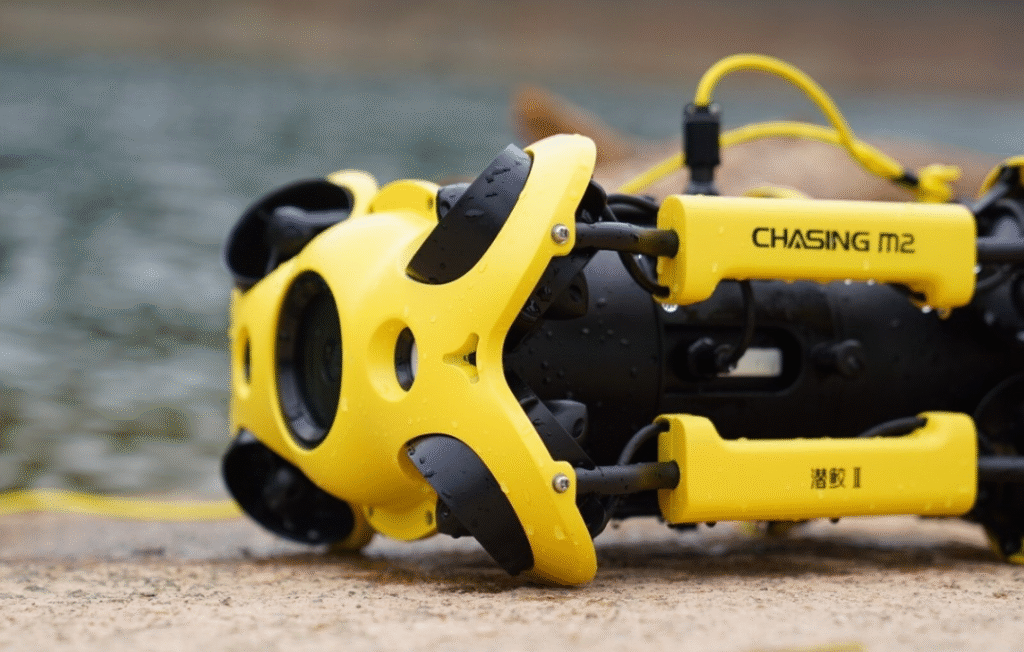
Underwater Drone Price in India: Models, Features & Buying Guide
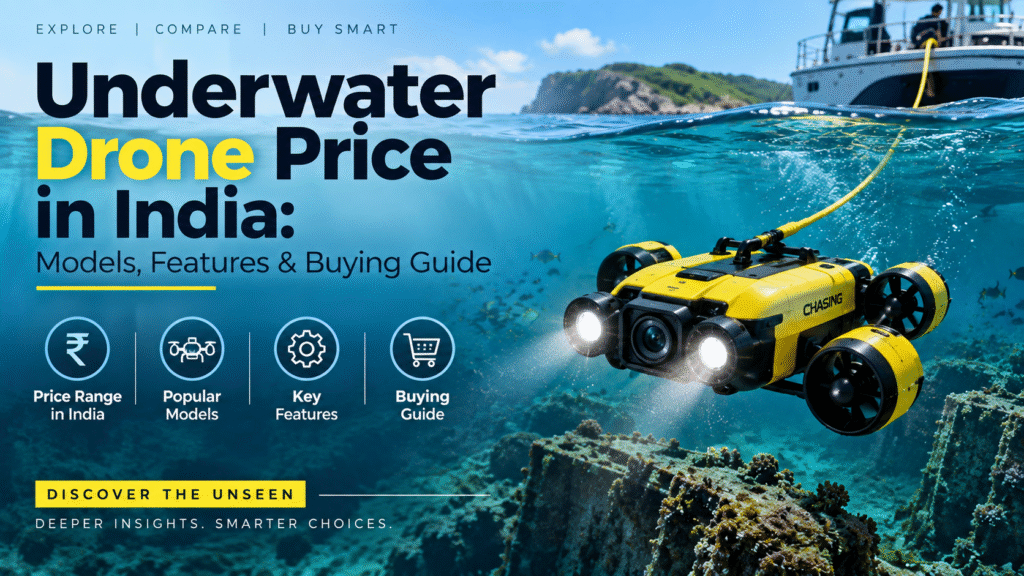
If you’ve been researching underwater drones lately, you’ve probably noticed something frustrating: the pricing information out there is scattered, vague, or just plain confusing. One site quotes a number that seems too good to be true, another jumps straight into specs without mentioning cost at all.
That’s the real challenge with searching for underwater drone price in India; there’s no single figure that fits every buyer, because no two underwater drones are built for the same job. A compact recreational model and a commercial-grade inspection ROV sit in completely different price brackets, and for good reason.
This guide breaks down what actually drives the cost, what to look at besides the price tag, and how to shortlist a drone that matches what you actually need it for.
What Exactly Is an Underwater Drone?
An underwater drone often called an underwater ROV, short for Remotely Operated Vehicle is a submersible unit you control from the surface, usually through a tether or a wireless link depending on the model.
Unlike the flying drones most people are familiar with, these are built to handle water pressure, sealed against leaks, and fitted with thrusters instead of rotors. Most come with an onboard camera, LED lights, and sensors that send live footage back to your screen while you’re piloting it.
People use them for things like:
- Marine and aquatic research
- Underwater photography and video
- Hull and ship inspection
- Dam, bridge and pipeline checks
- Fisheries and aquaculture monitoring
- Port and harbour surveys
Underwater Drone Price in India: What to Expect
There’s no getting around it, underwater drone prices in India vary quite a bit depending on what the unit is built to do.
On the lower end, compact recreational drones built for casual exploration or basic underwater filming start at around ₹1.3 lakh, moving upward from there depending on depth rating and camera quality.
Camera-focused ROVs built for serious photography or videography generally fall somewhere between ₹2 lakh and ₹3.5 lakh — you’re paying for sharper optics, steadier footage and a bit more depth range.
Professional-grade ROVs used for inspection, marine research or commercial operations typically start around ₹2.5 lakh and can run past ₹13 lakh, depending on thruster count, tether length and sensor payload. These cost more because they’re doing more: greater depth tolerance, tougher builds, and features recreational units simply don’t carry.
At the very top of the market, industrial and enterprise-grade systems built for offshore or heavy infrastructure work often run into several tens of lakhs, with pricing usually quoted only after a requirements discussion with the manufacturer.
These are indicative ranges based on current retail listings in India — actual pricing depends on the exact model, configuration, accessories and dealer markups, so always confirm current pricing directly with the seller before budgeting.
Rather than hunting for the cheapest underwater drone in India, work backwards from what you actually need it to do. A small saving upfront matters little if the model you pick can’t handle the depth or duration your project demands.
What Actually Affects the Price?
A handful of specifications quietly do most of the work in determining what you’ll pay.
Maximum operating depth: This is usually the single biggest price driver. Shallow-water units built for pools, lakes or coastal exploration cost less than ROVs engineered to survive real pressure at significant depths.
Camera quality: If the footage matters to you for content, documentation or inspection reports expect to pay more for 4K recording, low-light performance, stabilisation and real-time transmission.
Lighting: Water swallows light fast. Anything beyond a few metres down needs proper LED lighting to stay visible, and adjustable, high-output lighting adds to the cost.
Battery life: Longer runtimes mean fewer surface trips to recharge, which matters a lot for commercial jobs but also adds to the price of the unit.
Tether length: Many professional ROVs are tethered for power and data. Longer tethers, needed for deeper or farther operations, push the price up.
Navigation and control: Features like depth lock, heading control and telemetry make piloting easier and more precise; useful for detailed inspection work, and priced accordingly.
Underwater Drones vs Sending Down a Diver
Traditional underwater inspection usually means hiring divers, arranging safety equipment and blocking out time for preparation. An ROV lets you observe the same environment from the surface, often faster and with less coordination involved.
For dams, ship hulls, bridge piers or aquaculture cages, that can mean quicker turnaround and easier documentation footage you can review, share or archive without anyone getting wet. Worth factoring into the price conversation, since a drone’s value isn’t only about the number on the invoice.
How to Pick the Right One
Before you commit to a model, run through these questions:
- What depth do you actually need? Buy comfortably beyond your requirement, not exactly at it.
- What’s the primary use? Photography, research and industrial inspection each call for different specs.
- Is 4K necessary? For content or formal documentation, yes. For casual exploration, probably not.
- How long does each session run? Check battery life and whether spare batteries are available.
- Do you need a long tether? Deeper or more distant work usually does.
- What accessories will you need? Extra batteries, lights, robotic arms or storage cases all add to the total cost.
Where Underwater Drones Are Being Used in India
The use cases keep expanding. Researchers use them to study marine life without constant diver deployment. Infrastructure teams inspect submerged pipelines, dam walls and bridge foundations. Aquaculture operators check on fish cages and tanks visually. Maritime crews inspect hulls and propellers between dry-dock visits. And a growing number of creators use them purely for underwater photography and video work.
Final Word
Underwater drone price in India isn’t one number it’s a range shaped by depth rating, camera quality, lighting, battery, tether length and the accessories you’ll actually use. Instead of chasing the lowest price, match the drone to your real operating conditions.
If you’re trying to figure out which underwater drone actually fits your project, Dronevex is a good place to talk it through; explore the available underwater drones and robotic solutions, and get guidance based on what you’re planning to do with it.
Frequently Asked Questions
What is the price of an underwater drone in India?
It depends on depth rating, camera, battery, tether and features recreational models sit lower, professional ROVs cost considerably more.
Which underwater drone works best for professional use?
Look past the price tag — depth capability, camera quality, lighting, tether length and navigation features matter more for professional inspection work.
How deep can an underwater drone actually go?
It varies a lot by model. Recreational units are built for shallow water, while professional ROVs are engineered for much greater depths.
Do underwater drones record 4K video?
Many current models do. Always check the exact camera specs of the model you’re considering rather than assuming.
What's the difference between an underwater drone and an ROV?
Not much, underwater ROV is essentially the technical term for what most people call an underwater drone.
Can these be used for inspection work?
Yes, commonly for boats, dams, bridges, ports and aquaculture facilities, depending on the model’s depth and camera capabilities.