Unitree H1 vs Tesla Optimus: How Do They Actually Compare?
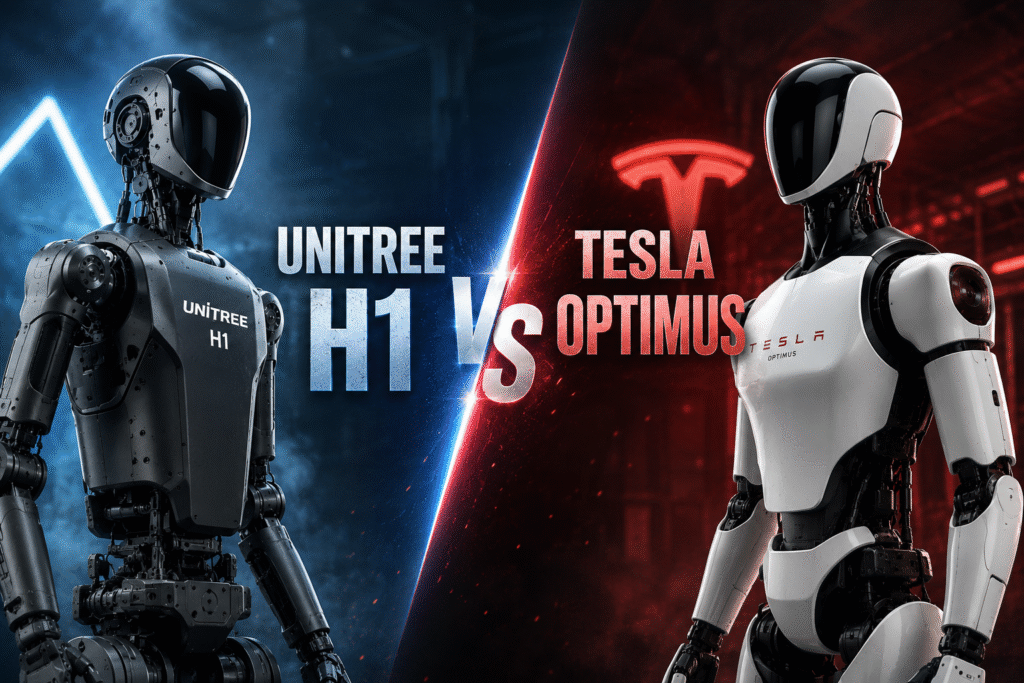
If you’ve spent any time following robotics news lately, you’ve probably noticed two names popping up over and over: Unitree H1 and Tesla Optimus. Both are humanoid robots, both walk on two legs, and both are supposedly on their way to changing how factories, warehouses, and maybe even homes get their work done. But if you actually look past the headlines, these two machines are chasing very different goals, built by companies with very different strengths.
So which one is better? Honestly, it depends on what you’re trying to do with it — and that’s not a cop-out answer, it’s the whole point of this comparison.
Two Companies, Two Philosophies
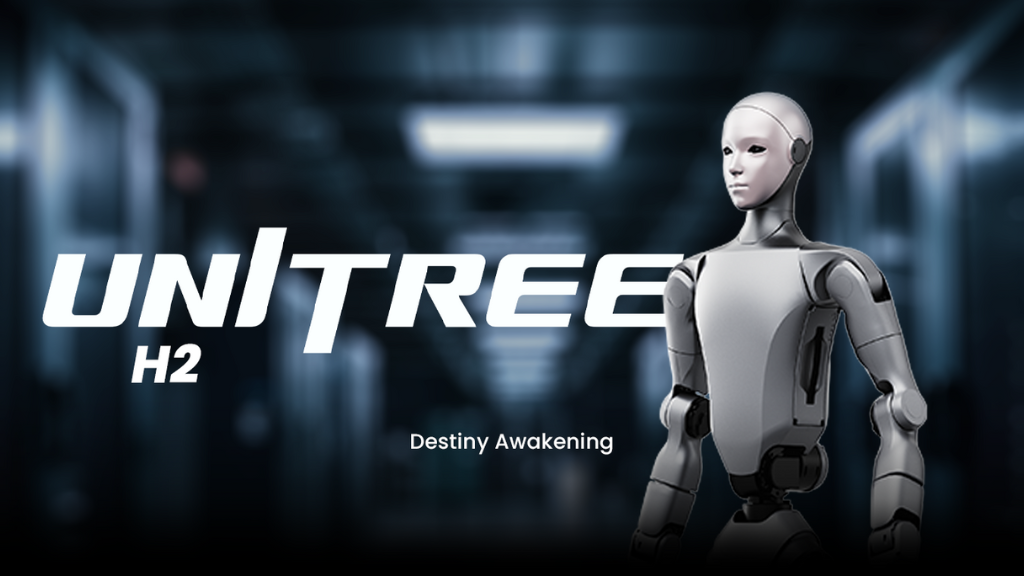
Unitree built its name on legged robots. Before H1 ever showed up, the company was already known in robotics circles for its quadruped “robot dogs,” and that background shows. H1 is, first and foremost, a mobility machine — something built to walk, run, and move through the world with a kind of physical confidence that’s hard to fake. Unitree sells it as a platform, meaning researchers, universities, and companies can actually buy one, tinker with it, and build their own applications on top of it.
Tesla is coming at this from a completely different angle. Optimus isn’t really a robotics company’s robot — it’s an AI company’s robot that happens to have arms and legs. Tesla’s pitch has always been about the software underneath: the same computer vision and neural network tech that powers its self-driving cars, repurposed to help a robot understand a factory floor, pick up a part, and figure out what to do with it. Elon Musk has talked about Optimus taking on the kind of work nobody wants — repetitive, dull, or flat-out dangerous jobs — and doing it at a scale only Tesla’s manufacturing muscle could pull off.
Neither approach is wrong. They’re just solving different problems in a different order.
Who's Faster on Their Feet?
If we’re talking pure physical performance, Unitree H1 currently has the edge, at least based on what’s been published and demonstrated. Standing about 1.8 meters tall and weighing in around 47 kilograms, H1 has clocked a moving speed of roughly 3.3 meters per second — call it around 12 km/h — with Unitree suggesting it could eventually push past 5 m/s. That’s fast for a bipedal robot. Balance alone is one of the toughest problems in robotics, and H1 has shown off running, jumping, and some genuinely impressive dynamic movement in its demo videos.
Optimus, by comparison, hasn’t really been sold on speed. Tesla’s demonstrations have leaned more toward controlled, methodical tasks — sorting objects, walking calmly across a stage, handling small components — rather than athletic feats. That’s not necessarily a weakness; it just reflects where Tesla has chosen to put its engineering effort so far. Whether Optimus catches up on raw mobility is anyone’s guess, but right now, if speed and agility are what you care about, H1 is winning that particular race.
Brains vs. Brawn
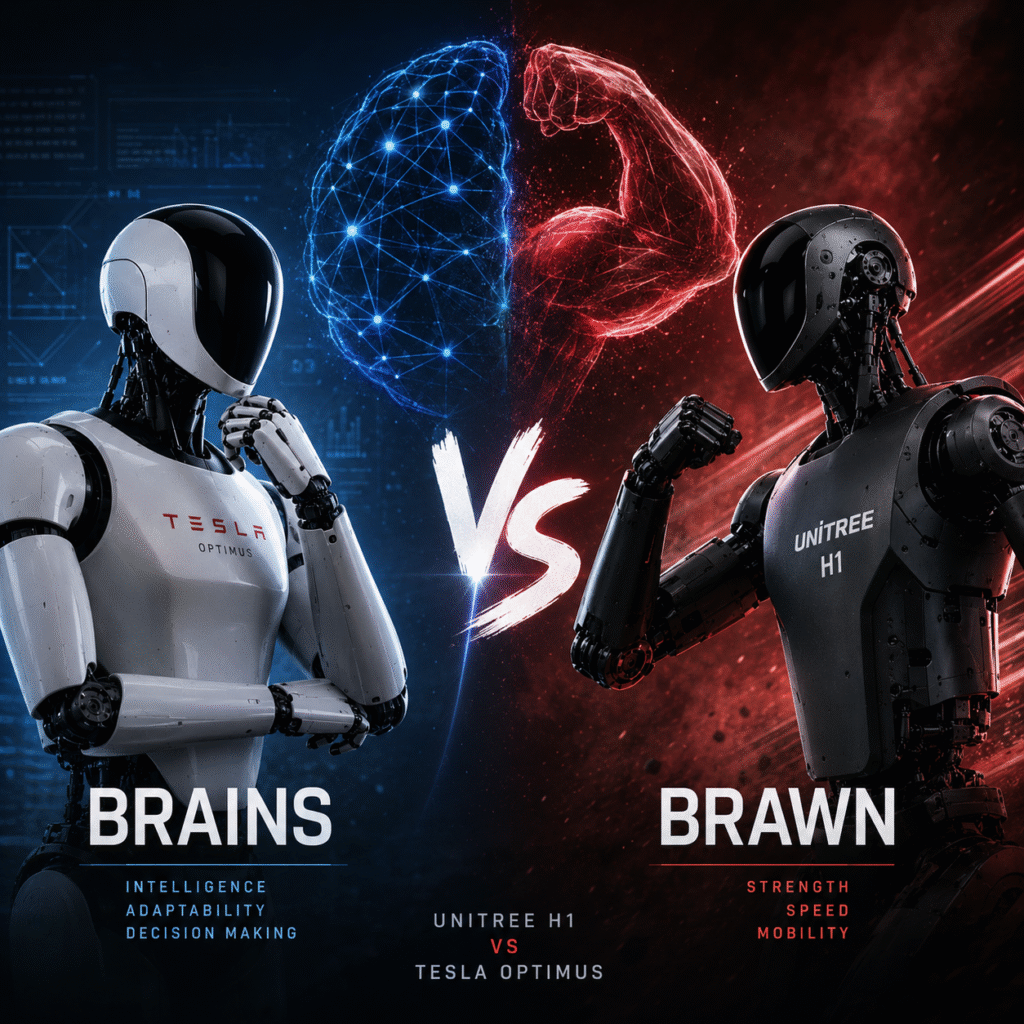
Here’s where things get more interesting, though. Optimus’s real bet isn’t on how fast it can walk — it’s on how smart it can be. Tesla is trying to take everything it’s learned from years of building self-driving systems and pour it into a robot that can actually understand its surroundings: recognize objects, plan a sequence of actions, and adjust on the fly without a human micromanaging every step. That’s an enormously harder problem than walking fast, and it’s the piece of the puzzle that could ultimately matter more than any spec sheet.
Unitree isn’t ignoring AI either — they’re clearly aware that raw mobility alone won’t be enough long-term. Company founder Wang Xingxing has even compared where the humanoid robotics industry is right now to the moment right before ChatGPT changed everything for language models, while being upfront that there’s still a long way to go on the software side. So this isn’t really “AI-focused Tesla vs. dumb-but-fast Unitree.” It’s more like both companies racing toward the same finish line — genuine embodied intelligence — just starting from opposite ends of the track.
What They're Actually Sensing
The two robots also see the world differently. H1 relies on 3D LiDAR paired with a depth camera to build a 360-degree picture of its surroundings, which is a fairly traditional robotics approach — lots of spatial data, precise distance measurements, solid for navigation. Optimus leans almost entirely on vision-based AI, the same camera-first philosophy Tesla uses in its cars instead of LiDAR. It’s a bet that better software can extract more meaning from cameras alone than a pile of extra sensors ever could. Which approach wins out is still an open question in robotics generally, not just for these two machines.
Where Might You Actually Use One?
For universities, labs, and robotics startups, H1 makes a lot of sense right now. It’s already out there, already documented, and already being used for research into navigation, human-robot interaction, and general automation experiments. If you want a robot you can actually get your hands on today and start building with, Unitree’s approach is the more practical one.
Optimus is aimed squarely at industry — Tesla talks about factory material handling, repetitive assembly work, warehouse logistics, and inspection tasks. But it’s worth being honest here: Optimus is still very much a work in progress, and Tesla’s own production timelines have shifted more than once. There’s a real difference between a robot nailing a demo on stage and one working a reliable eight-hour shift on an unpredictable factory floor, and Optimus hasn’t fully closed that gap yet.
So, Which One Wins?
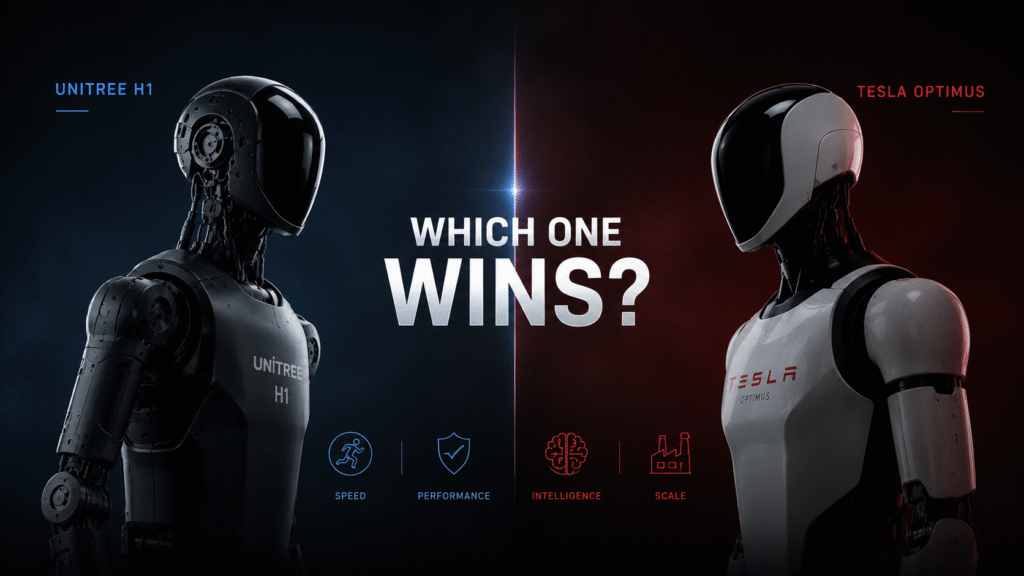
There isn’t a clean winner, and honestly, that’s kind of the whole story here. Unitree H1 is ahead when it comes to demonstrated, documented physical performance and accessibility — you can actually study its specs and, depending on your setup, work with the hardware. Tesla Optimus is playing a longer, riskier game, betting that AI smarts and manufacturing scale will eventually matter more than how fast a robot can sprint across a stage.
The humanoid robotics space is moving fast enough that whatever numbers exist today probably won’t hold for long — Tesla in particular has already revised Optimus’s hardware across multiple generations, and Unitree keeps pushing new capabilities of its own. Events like the 2026 World Robot Conference make it pretty clear this is a crowded, fast-moving field, with Unitree just one of many companies showing off what’s next.
Maybe the more useful question isn’t which robot “wins.” It’s how soon either of them stops being an impressive demo and starts being a machine businesses can actually rely on, day in and day out. That’s the gap both companies are racing to close — and right now, nobody’s fully there yet.
Cost is another piece of this puzzle that’s easy to overlook. Unitree has generally priced its robots within reach of research labs and smaller companies, which is part of why H1 has spread so fast through academia. Tesla’s pricing story is murkier — ambitious long-term targets tied to mass production that won’t mean much until that manufacturing scale actually exists.
At the end of the day, betting on one over the other feels premature. Give it another year or two, and this conversation will probably look completely different anyway.