One Technology, Three Environments: Air, Land and Underwater Robotics
Not long ago, robots were mostly a thing you saw in movies; clunky, fictional, a little far-fetched. That’s changed fast. Walk onto a construction site, a mine, a water treatment plant, or a solar farm today, and there’s a decent chance a robot is already doing part of the job: flying overhead, walking across uneven ground, or gliding beneath the surface of a reservoir nobody wants to send a diver into.
Robotics has outgrown the factory floor. It now moves through the sky, crosses terrain that would slow down a person on foot, and explores what’s happening underwater without anyone getting wet. Drones, four-legged ground robots, and underwater ROVs (remotely operated vehicles) have become genuinely useful tools for businesses that need to inspect, monitor, or measure something in a place that’s hard, slow, or risky for a human to reach directly.
What’s interesting is that these aren’t really three separate stories. They’re one story, told in three environments.
Air: A Better View From Above
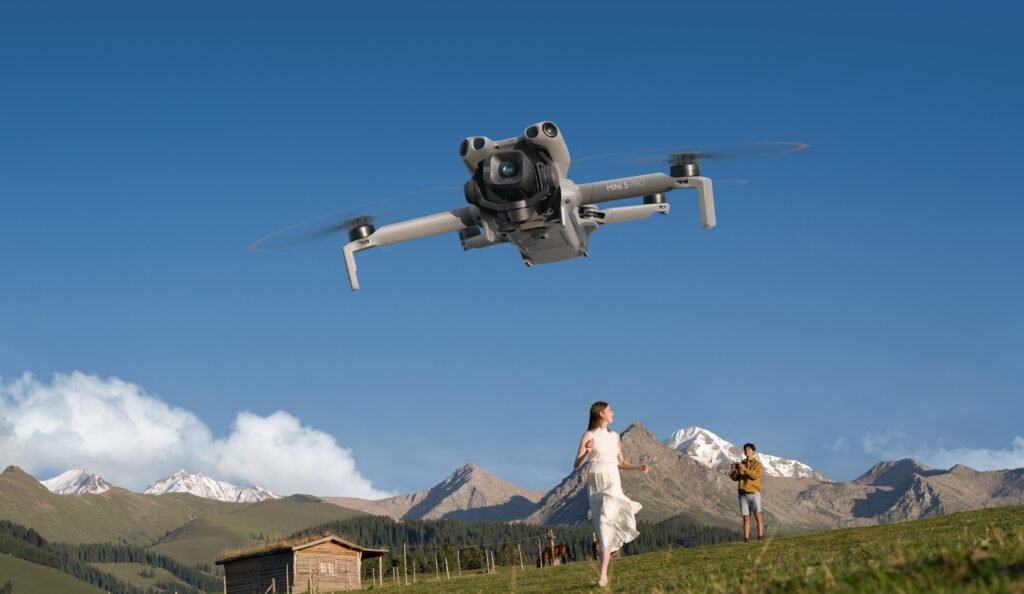
Aerial drones changed inspection work almost overnight. Jobs that used to mean renting a helicopter, putting up scaffolding, or hauling a crane onto site can often be handled now by a drone and one operator on the ground.
They’re used everywhere; construction, land surveying, agriculture, energy and utilities, mining, public safety, environmental work, telecoms, real estate. Anywhere someone needs eyes on something large, tall, or spread out, a drone tends to make sense.
Think about inspecting a large industrial roof or a high-voltage transmission line. Sending a crew up there is expensive and, more importantly, dangerous. A drone can fly the same route and bring back a clear picture without putting anyone at height.
And it’s not just photos. Thermal cameras mounted on drones can pick up temperature differences that hint at a failing component or a hot spot in equipment long before it becomes an obvious problem. That’s the real payoff of aerial robotics not the flying itself, but getting better information back faster, in a form people can actually act on.
Land: Going Where People Would Rather Not
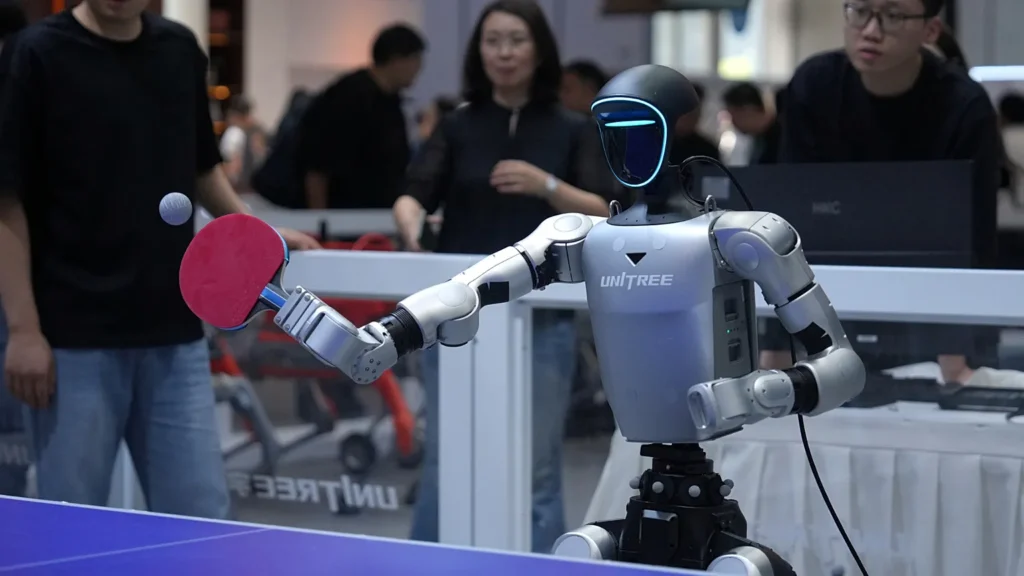
While drones cover the big picture from above, ground robots handle what’s happening closer to the ground literally.
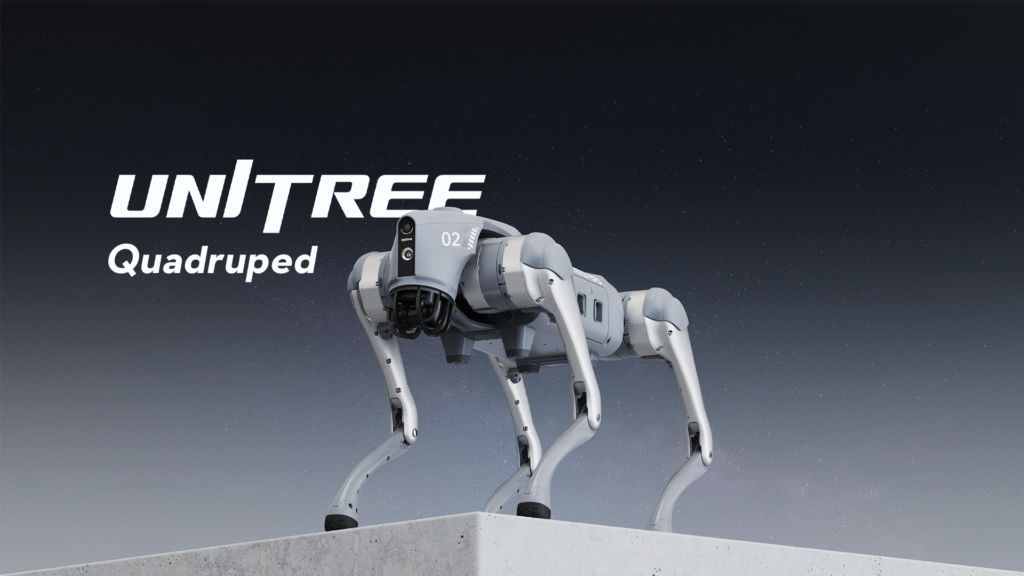
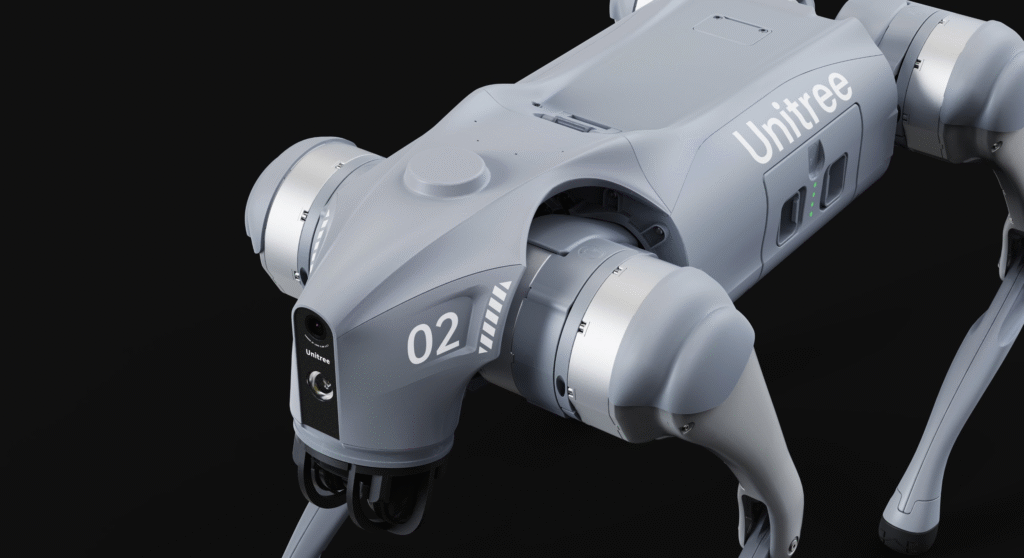
The newer generation of quadruped, or four-legged, robots is built to handle the kind of terrain that trips up wheels: stairs, rubble, uneven industrial floors, tight corridors. That mobility opens up applications like industrial inspections, facility monitoring, security patrols, hazardous-area checks, construction site walkthroughs, R&D work, and emergency response support.
Picture a sprawling industrial facility that needs to be checked regularly for leaks, wear, or safety issues. Instead of a technician walking the same hazardous route every single day, a robot can do it, collecting video and sensor readings as it goes.
That doesn’t mean people get pushed out of the picture. It usually means people move from standing in the hazard themselves to sitting somewhere safer, reviewing what the robot found and deciding what to do about it. The robot handles the exposure; the person handles the judgment. That pairing machine mobility plus human interpretation is arguably the most important shift happening in industrial automation right now.
Underwater: Making the Invisible Visible
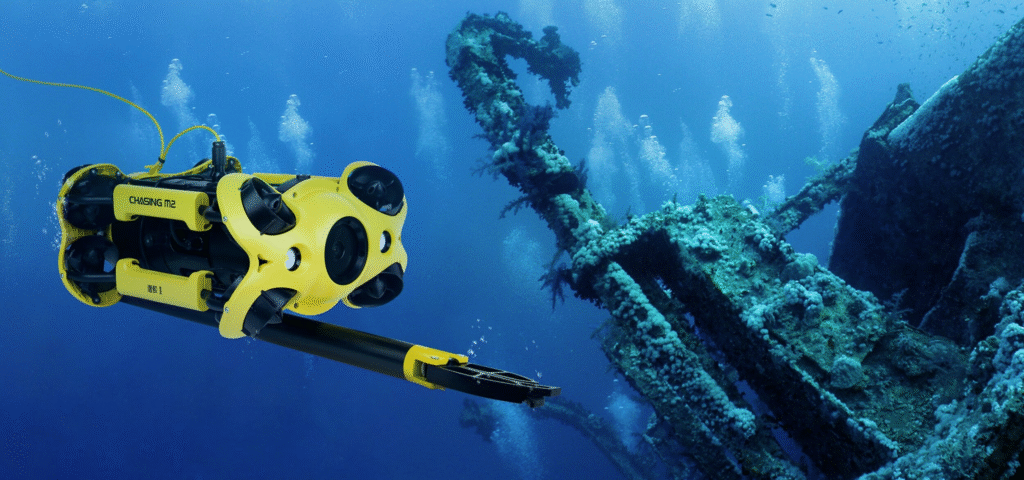
Water is its own kind of problem. Visibility can drop to almost nothing, conditions shift fast, and sending a diver down to inspect something can mean serious time, cost, and risk sometimes for a job that takes ten minutes once you’re actually there.
That’s exactly the gap underwater ROVs are filling. Operators can send a small vehicle down to explore, inspect, and record footage while staying safely on a boat or on shore the entire time.
These vehicles turn up in ship hull inspections, dam and reservoir checks, marine research, aquaculture, underwater infrastructure monitoring, port inspections, search-and-recovery work, and general environmental observation. A job that once required a dive team can now often start and sometimes end with an ROV pass. The footage tells the team what they’re actually dealing with before anyone commits to a more involved (and more expensive) response.
Underwater robotics isn’t really about exploration for its own sake. It’s about giving people a look at an environment that’s traditionally been almost impossible to monitor regularly.
Three Environments, One Underlying Idea
Air, land, and water robots don’t work the same way, but they’re solving the same basic problem: getting useful information out of places that are hard for people to reach safely or efficiently.
A drone looks down at a structure. A quadruped robot walks through a complicated facility. An ROV moves through the dark below a dam or a hull. Different machines, same job extending what a person can actually see and reach.
That’s the shift worth paying attention to. Businesses aren’t stuck picking one type of robot and building their whole approach around it. They can match the tool to the environment instead.
Building a Robotic Ecosystem, Not Just Buying a Robot
The next stage probably isn’t “which robot should we buy” it’s “which combination of robots fits this project.”
Take a large infrastructure build. A drone could map the site from above and track progress over time. A ground robot could handle close-up inspections in specific zones. If there’s submerged infrastructure involved; a foundation, a pipeline, a dock, an ROV could check conditions below the waterline.
Put those three together and you get a much fuller picture than any single platform could give on its own. That’s really what people mean when they talk about a “robotic ecosystem”: not one machine doing everything, but several machines, each suited to its environment, feeding information back to the same team.
Safety, Efficiency, and the Human Part That Doesn't Go Away
The biggest practical win here is exposure or rather, the lack of it. Working at height, in confined spaces, on unstable ground, or underwater all carry real risk. Robots let teams assess those environments remotely first, then decide whether a person actually needs to go in.
That’s not the same as automating everything. Interpreting what the robot found, weighing trade-offs, deciding what happens next, that’s still squarely human work, and it’s not going anywhere. What robotics changes is the physical part: less time spent gathering information in dangerous conditions, more time spent thinking about what that information means.
The upside adds up in fairly concrete ways: fewer people in hazardous spots, faster data collection, access to places that were previously a real hassle to reach, more frequent monitoring instead of occasional spot checks, better documentation, and often less downtime. How much of that a given business sees depends on the application, but the general direction is consistent.
The Data Matters as Much as the Robot
It’s easy to focus on the machine itself, but a lot of the real value shows up afterward, in the data it brings back images, video, thermal readings, location logs, sensor readings. That’s what lets a team spot a pattern, catch a slow-developing problem, or compare conditions across months instead of relying on a once-a-year manual check.
The robot is the platform. The information is what actually drives decisions.
Where This Is Heading
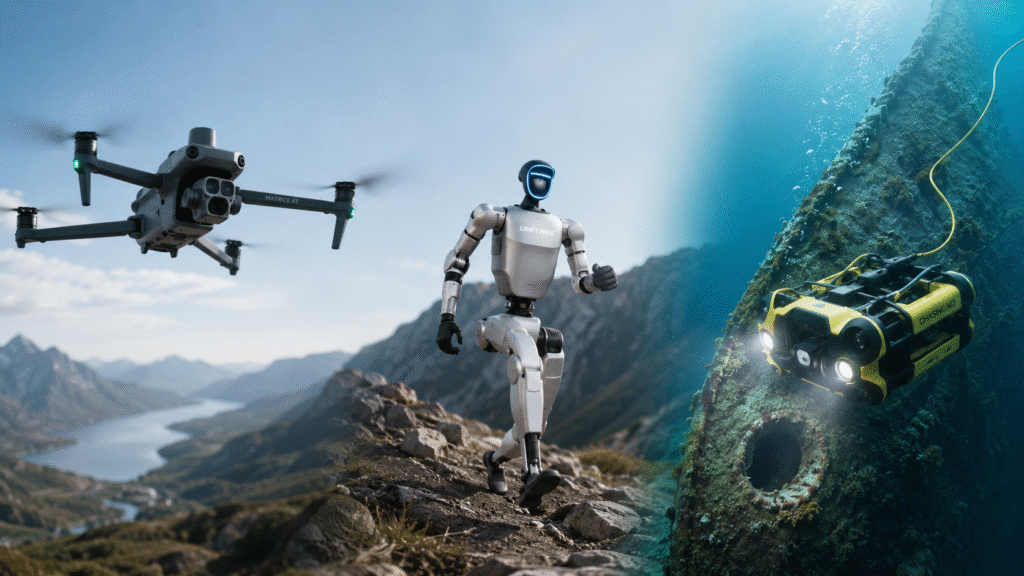
The old question was “do we need a drone?” The better question now is broader: what environment are we trying to understand, what do we need to know about it, how often, and which platform — air, land, or water — actually fits the job?
Sometimes the answer is one tool. Increasingly, the answer is a combination of all three, working together to give a fuller, more current picture of a site than any single machine could manage alone.
Robotics isn’t confined to the sky, the ground, or the water anymore. It’s all three at once and the businesses that figure out how to use each one where it fits best will end up with a real edge in visibility, safety, and decision-making.