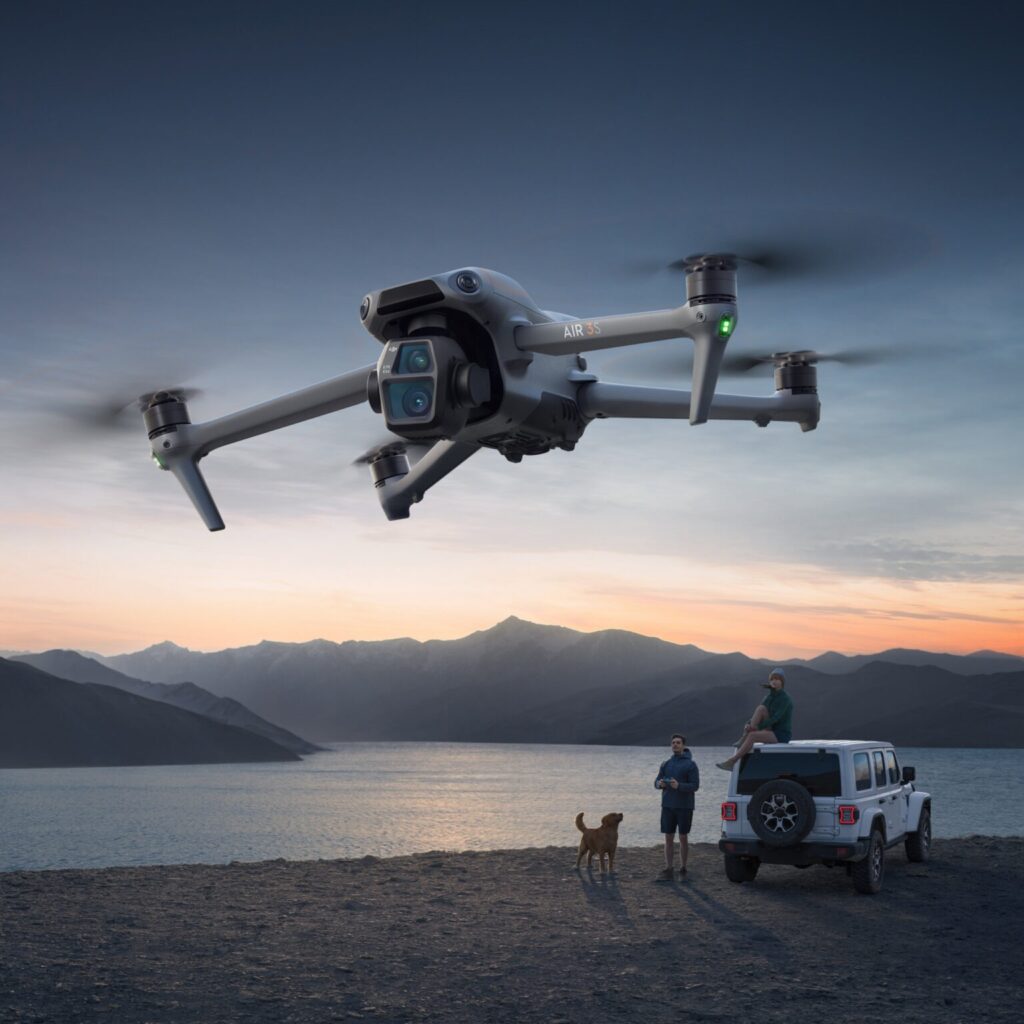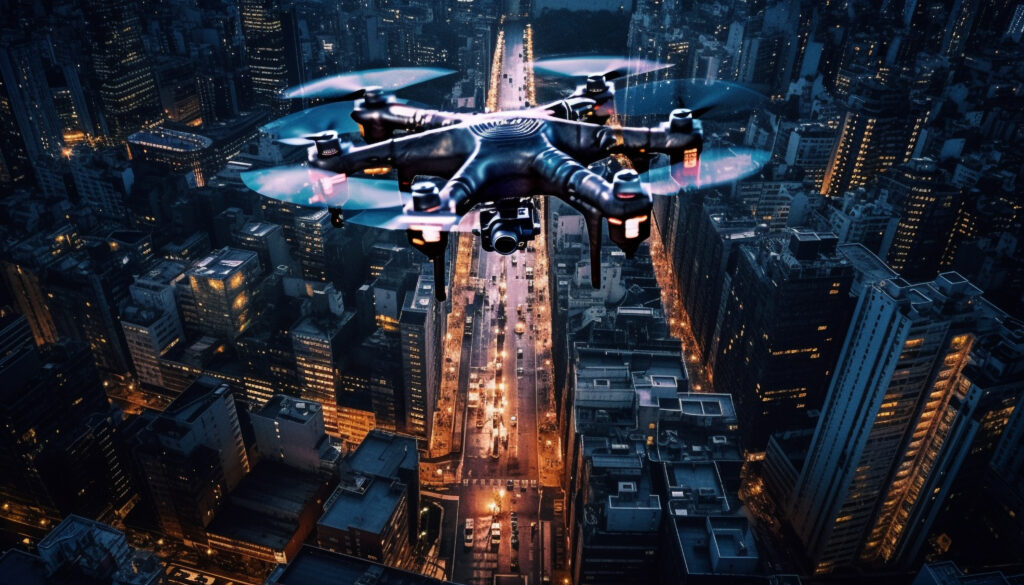
Smart city drones in India are transforming the way urban infrastructure is monitored, managed, and developed.
India’s cities are evolving at an incredible pace. New highways, metro systems, smart townships, commercial hubs, and residential projects are constantly reshaping urban landscapes. But as cities grow larger and more complex, managing infrastructure efficiently becomes a major challenge.
This is where drones are beginning to make a real impact.
What was once considered futuristic technology is now being actively used in urban planning, construction monitoring, infrastructure inspections, traffic management, and public safety operations. Drones are helping cities become smarter by providing faster access to real-time information and improving how authorities monitor and maintain urban environments.
As India continues investing in smart city development, drones are quickly becoming one of the most valuable technologies supporting this transformation.
The Growing Need for Smart Infrastructure Monitoring
Managing a modern city requires constant monitoring of roads, buildings, transportation systems, utilities, and public spaces. Traditional inspection methods often involve large teams, expensive equipment, and long operational timelines. In many cases, inspections can even disrupt traffic or public movement.
Smart City Drones simplify this entire process.
By capturing high-resolution aerial data in real time, drones allow authorities and businesses to monitor infrastructure more efficiently without causing major disruptions. They can access difficult locations, reduce manual risks, and deliver accurate information much faster than conventional methods. Smart city drones in India are helping governments and enterprises improve infrastructure monitoring with faster and more accurate aerial intelligence.
This combination of speed, safety, and efficiency is one of the biggest reasons drones are becoming essential in smart city operations.
Drones in Infrastructure Inspection
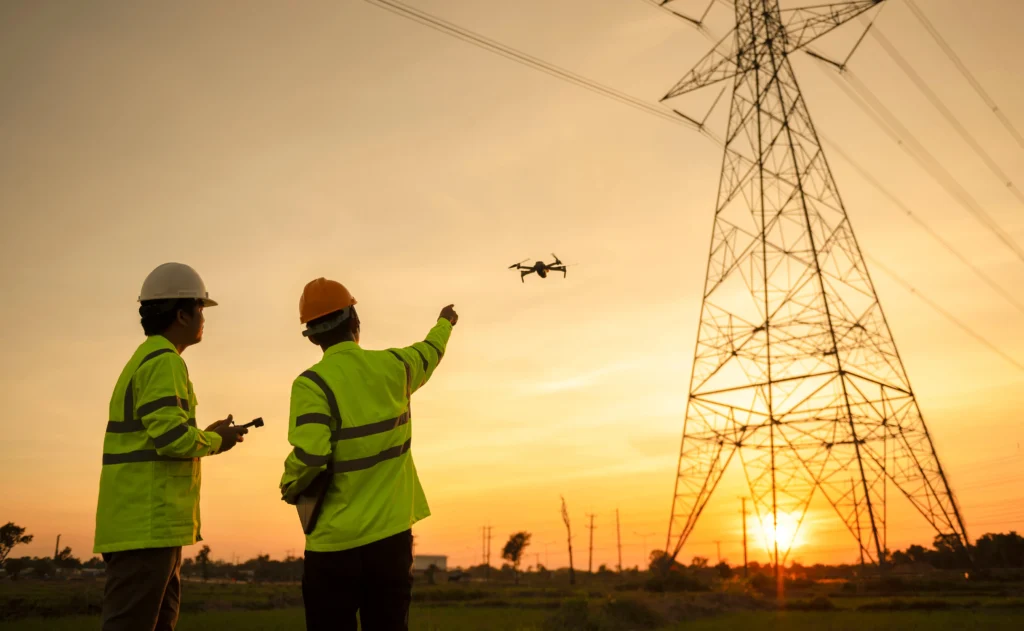
Infrastructure inspection is one of the most important applications of drones in urban environments. Bridges, flyovers, towers, power lines, and high-rise buildings require regular maintenance and monitoring to ensure public safety.
Traditionally, these inspections involved manual climbing, scaffolding, or shutting down certain operations temporarily. Drones now allow inspection teams to complete the same work faster and with far less risk.
Equipped with HD cameras and thermal sensors, drones can identify cracks, corrosion, heat leaks, or structural damage that may not be visible from the ground. This helps engineers detect problems early before they turn into costly repairs or safety hazards.
For rapidly growing Indian cities, predictive maintenance supported by drone technology can significantly improve infrastructure reliability.
Transforming Construction and Urban Development
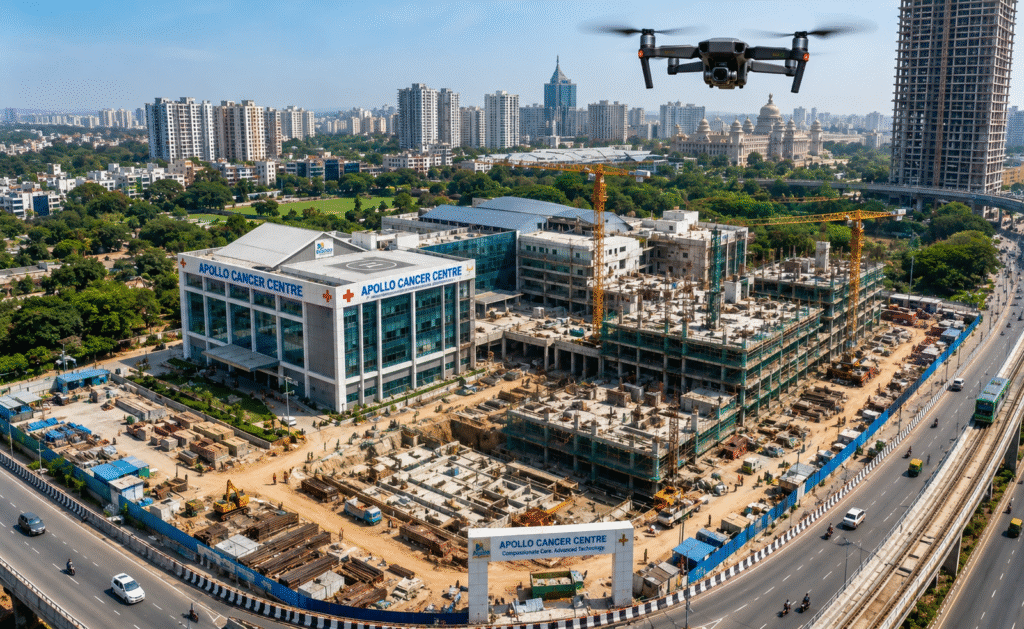
The construction sector has also embraced drones as part of modern project management. Large-scale projects such as metro rail development, highways, smart townships, and industrial parks require continuous monitoring throughout the construction process.
Drones provide project managers with a complete aerial view of construction sites, making it easier to track progress, compare development against original plans, and identify delays or operational issues.
Instead of relying entirely on manual reports, teams can now generate accurate visual updates in real time. This improves communication between stakeholders and helps decision-makers respond quickly to project challenges.
Drone mapping and surveying are also helping construction companies save both time and operational costs while improving overall project efficiency.
Improving Traffic Monitoring and Public Safety
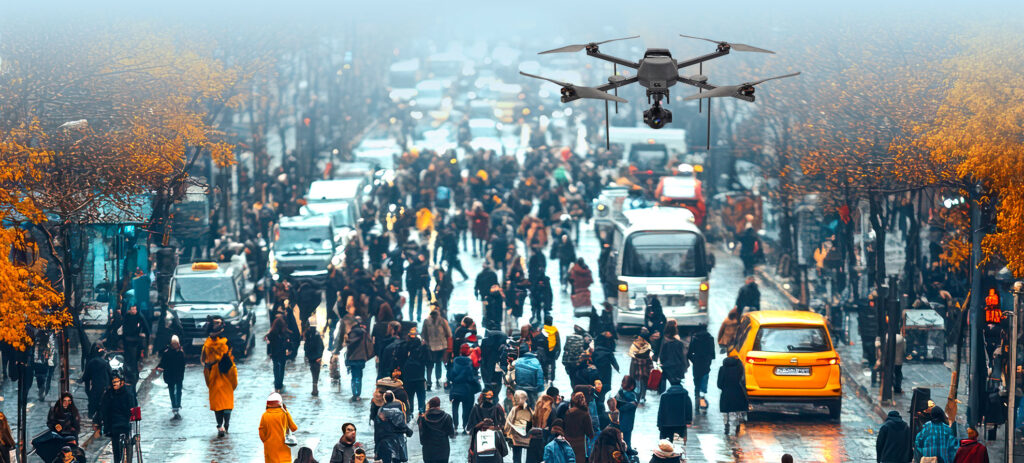
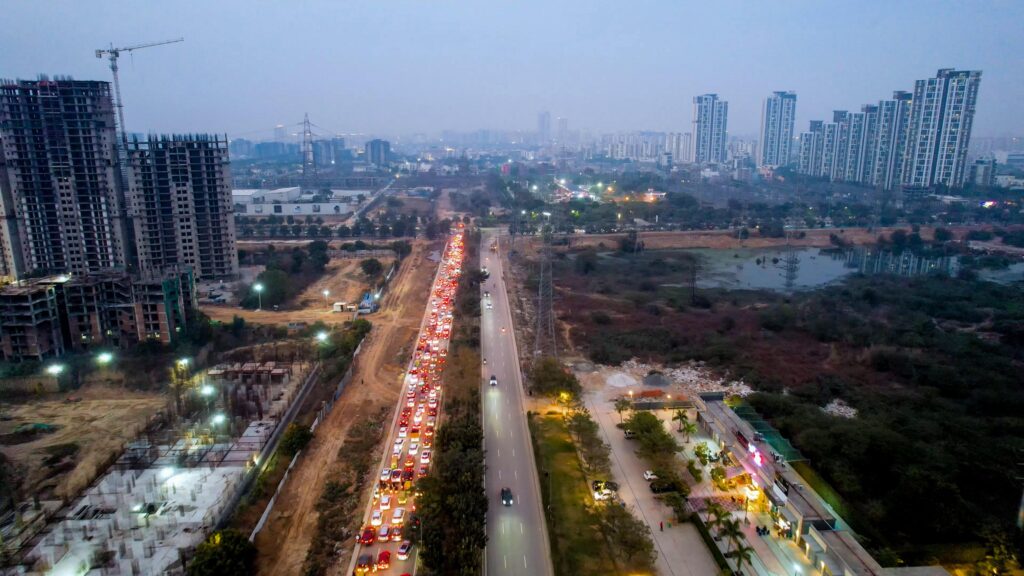
Traffic congestion continues to be a major issue in many Indian cities. Traditional surveillance systems such as CCTV cameras offer limited visibility and often struggle to cover large or dynamic urban areas effectively.
Drones add an entirely new layer of flexibility to traffic management.
Authorities can deploy drones during festivals, public gatherings, emergencies, or high-traffic situations to monitor congestion, identify accidents, and coordinate response teams more efficiently. Their aerial perspective allows officials to understand traffic movement across wider regions in real time.
Apart from traffic control, drones are increasingly being used for public safety and surveillance operations. Smart cities are exploring drone-based monitoring systems for crowd management, industrial security, and emergency response support.
As drone technology becomes more advanced, autonomous surveillance systems may eventually become a common feature in urban security infrastructure.
Urban Mapping and Smart City Planning
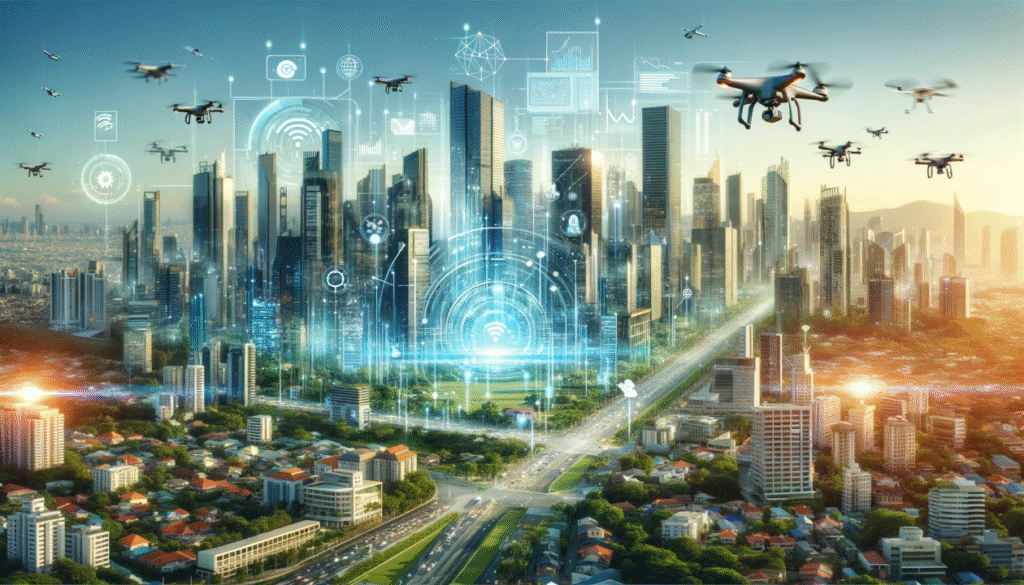
One of the most powerful advantages of drones is their ability to generate accurate aerial maps and 3D models of cities.
Urban planners can use drone-generated data to analyze land usage, monitor expansion patterns, and improve future development planning. Compared to traditional land surveying methods, drone surveys are significantly faster and more efficient.
This technology is helping governments and planning authorities make better decisions regarding transportation systems, water management, zoning, and infrastructure expansion.
In many smart city projects, drones are already contributing to the creation of digital twins and GIS-based urban management systems that improve long-term planning capabilities.
The Role of AI in Modern Drone Technology
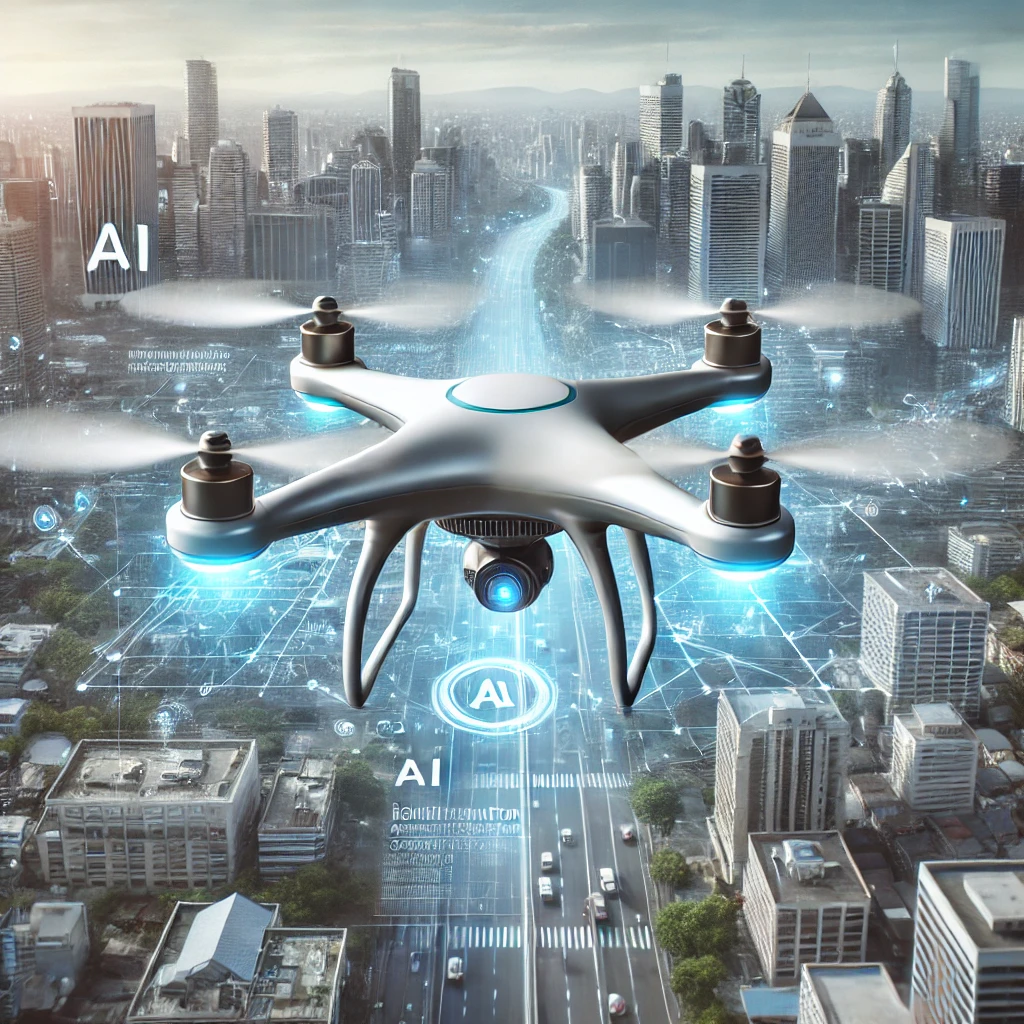
Modern drones are evolving beyond simple remote-controlled flying devices. Artificial intelligence is now playing a major role in making drone systems smarter and more autonomous.
AI-powered drones can analyze traffic patterns, detect unusual activities, automate inspections, and identify infrastructure defects without requiring constant manual supervision.
This integration of AI and drone technology is opening new possibilities for predictive urban management. Instead of reacting to problems after they occur, cities can begin using real-time drone intelligence to prevent issues before they escalate.
The combination of drones, AI, and smart infrastructure systems will likely define the future of urban management in the coming years.
Challenges Slowing Drone Adoption
Despite their growing importance, drone adoption in smart city infrastructure still faces several challenges. Regulatory approvals, privacy concerns, weather conditions, and operational limitations continue to influence how drones are deployed across different sectors.
There is also an increasing need for skilled drone operators and better integration between drone systems and existing urban infrastructure technologies.
However, India’s drone ecosystem is growing rapidly, supported by government initiatives, rising investments, and expanding enterprise adoption across industries.
As regulations become clearer and technology continues to improve, drone usage in smart city operations is expected to increase significantly.
Conclusion
Drones are no longer limited to photography or experimental projects. They are becoming practical tools that help cities operate more efficiently, safely, and intelligently. As technology evolves, smart city drones in India will become a critical part of intelligent urban infrastructure and public safety systems.
From infrastructure inspections and construction monitoring to traffic management and urban planning, drones are transforming how smart cities function. Their ability to provide real-time aerial intelligence makes them incredibly valuable in modern urban environments where speed and accuracy matter more than ever.
As India continues building smarter and more connected cities, drones will play an increasingly important role in shaping the future of urban infrastructure.
FAQs
How are drones used in smart cities?
Drones are used in smart cities for infrastructure inspections, traffic monitoring, construction tracking, urban mapping, public safety surveillance, and disaster management. They help authorities collect real-time aerial data quickly and efficiently.
Why are drones important for urban infrastructure management?
Drones improve the speed, safety, and accuracy of infrastructure monitoring. Instead of relying entirely on manual inspections, cities can use drones to monitor roads, bridges, buildings, and utilities while reducing operational risks and costs.
Can drones help reduce traffic congestion in cities?
Yes. Drones provide real-time aerial visibility of traffic movement, helping authorities identify congestion points, accidents, and traffic bottlenecks faster. This allows quicker traffic management decisions and better emergency response coordination.
How do drones support construction projects in smart cities?
Construction companies use drones to monitor project progress, conduct aerial surveys, create site maps, and improve project planning. Drone technology helps teams track development more accurately while saving time and resources.
Are drones used for disaster management in urban areas?
Absolutely. Drones are increasingly used during floods, fires, and emergency situations to assess damage, monitor affected areas, and support rescue operations. Their aerial perspective helps emergency teams respond more efficiently.
What role does AI play in drone technology?
AI-powered drones can analyze data automatically, detect unusual activities, identify infrastructure defects, and assist with autonomous navigation. Combining AI with drones makes urban monitoring smarter and more efficient.
Are drones legal for smart city operations in India?
Yes, drones are legal in India when operated according to DGCA regulations. Government agencies and enterprises using drones for smart city applications must follow approved operational and safety guidelines.
What industries benefit the most from smart city drone technology?
Industries such as construction, transportation, utilities, infrastructure management, security, telecommunications, and urban planning benefit significantly from drone-based monitoring and inspection solutions.
What are the biggest advantages of using drones in cities?
Some major advantages include:
- Faster inspections
- Improved safety
- Real-time monitoring
- Reduced operational costs
- Better data accuracy
- Access to hard-to-reach areas
These benefits make drones highly valuable for modern urban management.
What is the future of drones in smart cities?
The future of drones in smart cities is expected to include autonomous inspections, AI-powered traffic analysis, smart surveillance systems, and integrated urban management platforms. As technology advances, drones will become an essential part of intelligent city infrastructure.