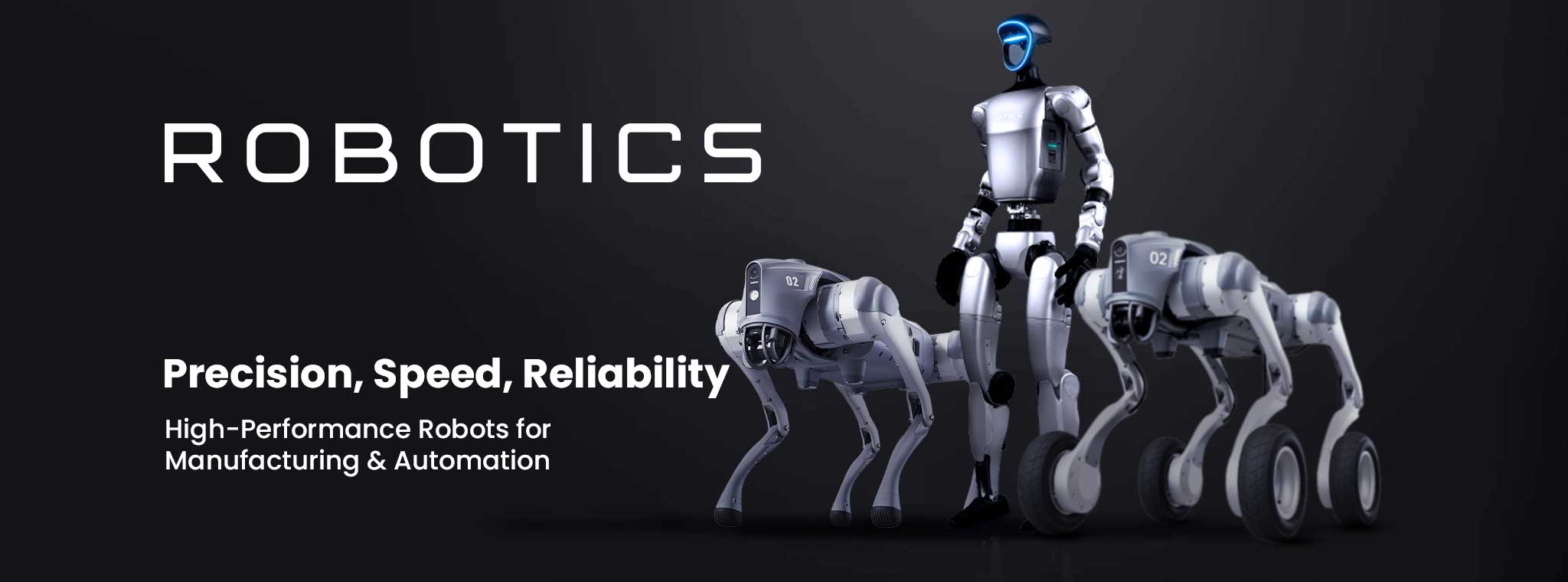
Quadruped Robots | Humanoid Robots
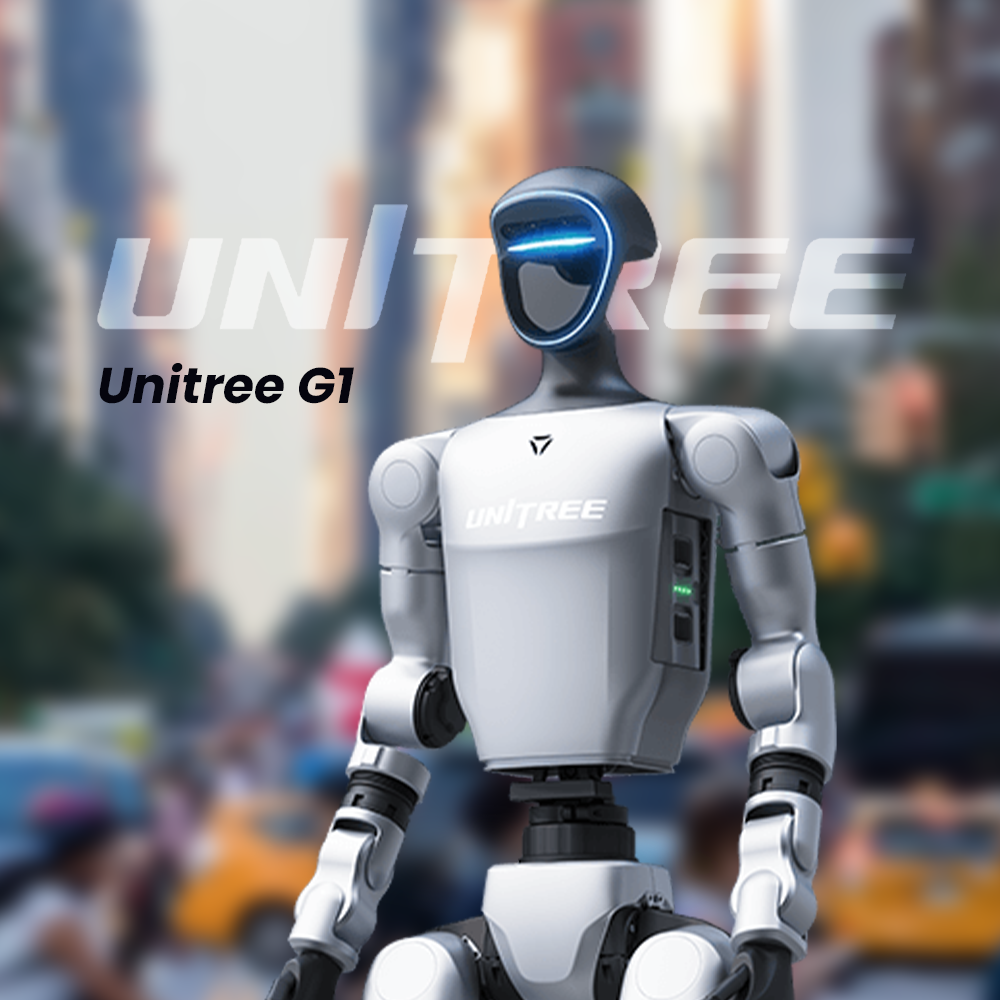
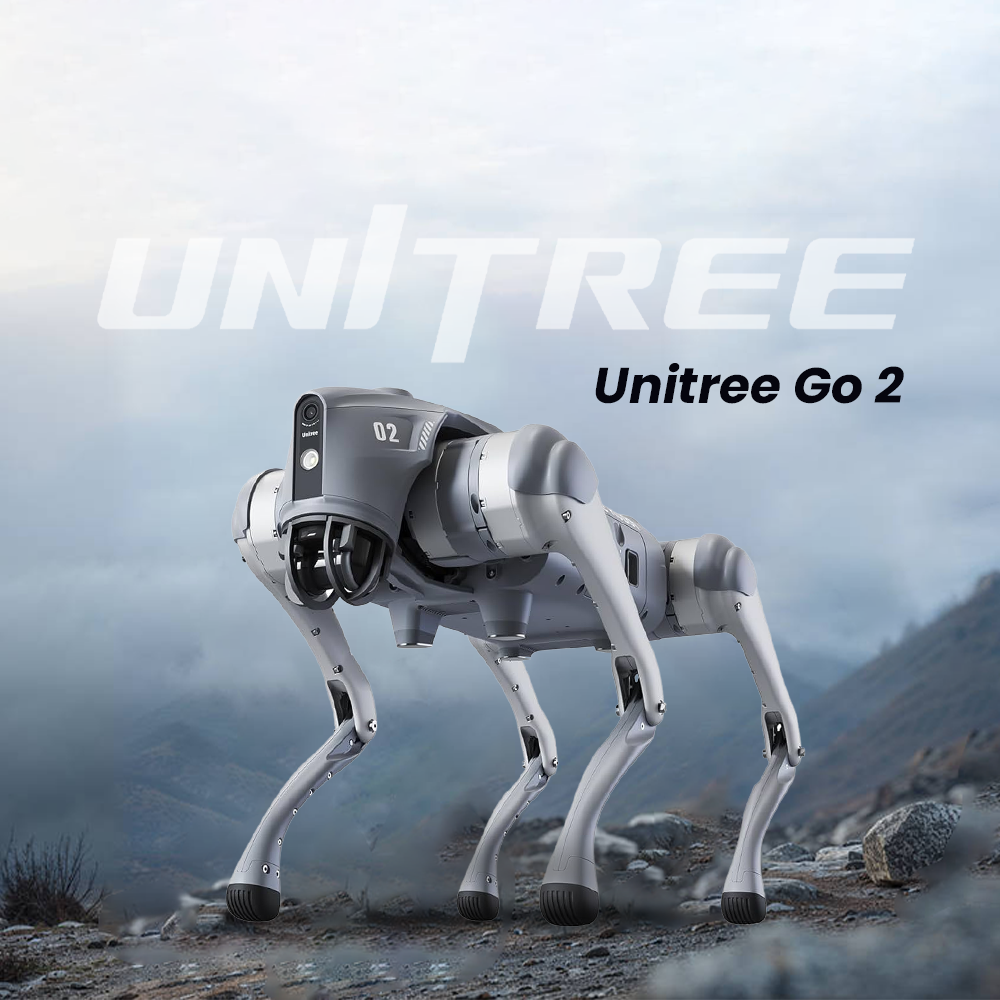
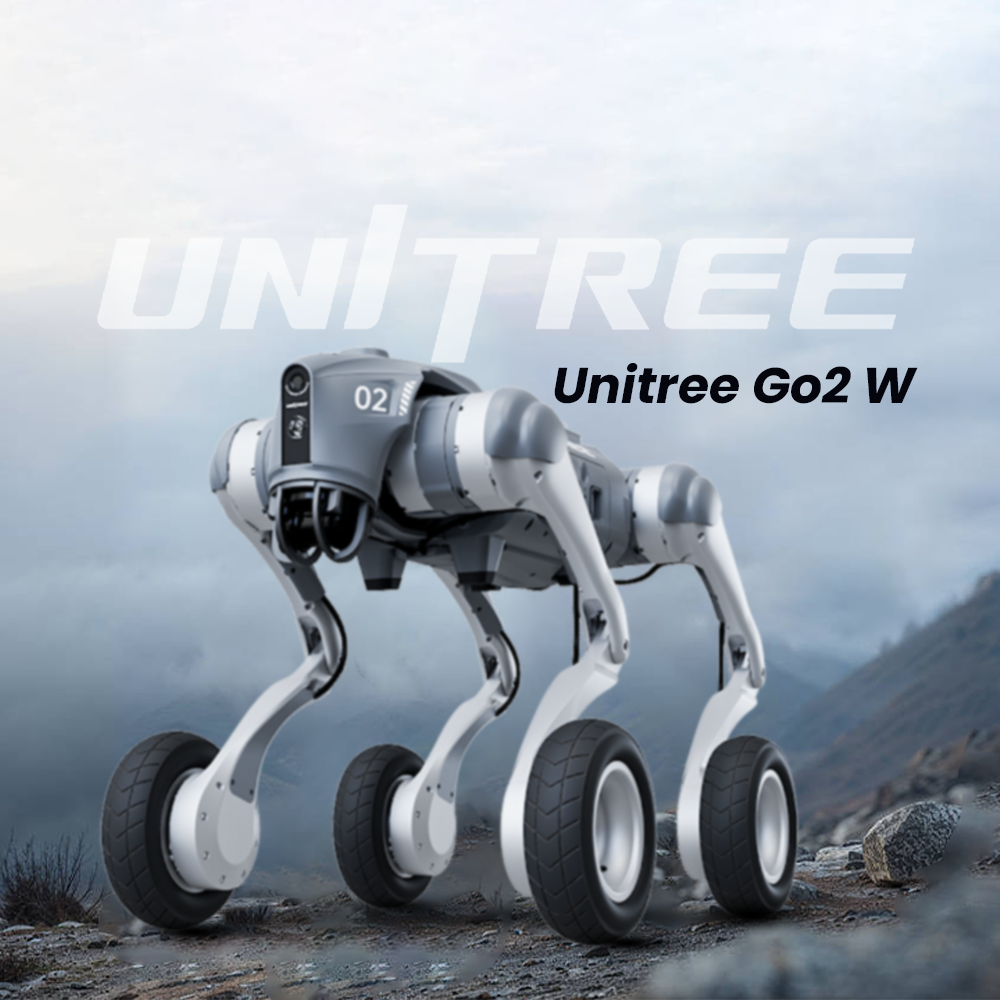
DroneVex is at the forefront of next-generation robotics, specializing in both Advanced quadruped and humanoid robots designed to navigate, interact, and perform in real-world environments. Our quadruped robots, inspired by the agility and stability of four-legged animals, are built for rugged terrain and complex operational scenarios—perfect for inspection, security, and disaster response. In parallel, our humanoid robots bring lifelike movement and intuitive human-machine interaction to industries ranging from customer service to research and education. Whether it’s walking, running, climbing, or communicating, DroneVex robots combine advanced AI with mechanical precision to push the boundaries of autonomous mobility and intelligence.
Robots
Robots are programmable machines designed to perform tasks automatically or with varying levels of human control. By combining mechanical engineering, artificial intelligence (AI), computer vision, machine learning, advanced sensors, and sophisticated software, modern robots can perceive their environment, process information, and execute actions with exceptional precision. From manufacturing plants and hospitals to warehouses, research laboratories, and homes, robots have become an essential part of modern industry and everyday life.
The field of robotics has evolved significantly over the past few decades. What began as simple industrial machines performing repetitive tasks has expanded into intelligent robotic systems capable of navigating complex environments, collaborating with humans, and making data-driven decisions. As technology continues to advance, robots are becoming more adaptable, efficient, and capable of solving real-world challenges across a wide range of industries.
What Are Robots?
A robot is an automated machine that can sense its environment, process information, and perform physical or digital tasks. Robots may operate autonomously using artificial intelligence or semi-autonomously under human supervision. Depending on their design and purpose, robots can move on wheels, tracks, legs, or robotic arms, while others remain stationary to perform highly specialized operations.
Modern robots integrate hardware and software into a unified system. Cameras, LiDAR, ultrasonic sensors, GPS, force sensors, and inertial measurement units (IMUs) provide environmental awareness, while onboard processors analyze this information to make intelligent decisions. The result is a robotic system capable of performing tasks safely, accurately, and efficiently.
Key Components of a Robot
Every robot consists of several core components that work together to enable intelligent operation.
Sensors
Sensors collect information about the surrounding environment. They help robots detect obstacles, measure distances, recognize objects, monitor movement, and understand changing conditions.
Controllers
The controller acts as the robot’s central processing unit, interpreting sensor data and executing programmed instructions. Modern controllers often integrate AI algorithms for intelligent decision-making.
Actuators
Actuators convert electrical energy into physical movement. Electric motors, hydraulic systems, and pneumatic mechanisms allow robots to move their arms, legs, wheels, or other components with precision.
Power System
Robots are powered through rechargeable batteries, electrical connections, or specialized power sources depending on their application. Efficient power management directly affects operating time and performance.
Software and Artificial Intelligence
Advanced software enables robots to plan movements, recognize patterns, avoid obstacles, and learn from experience. AI-powered robots continuously improve their performance by analyzing data and adapting to new situations.
Types of Robots
The robotics industry includes a wide variety of robotic systems designed for different applications.
Industrial Robots
Industrial robots are widely used in manufacturing for assembly, welding, painting, packaging, material handling, and quality inspection. Their speed, accuracy, and reliability make them indispensable in modern production facilities.
Humanoid Robots
Humanoid robots are designed with a human-like body structure consisting of a head, torso, arms, and legs. They are used in research, healthcare, customer service, education, and human-robot interaction studies.
Quadruped Robots
Quadruped robots, commonly known as robot dogs, use four legs to navigate uneven terrain, climb stairs, and maintain stability. They are deployed for industrial inspections, security patrols, emergency response, and infrastructure monitoring.
Mobile Robots
Mobile robots navigate autonomously through warehouses, hospitals, offices, and logistics centers. They transport materials, optimize workflows, and improve operational efficiency.
Service Robots
Service robots assist people in commercial and domestic environments by performing cleaning, delivery, reception, healthcare support, and hospitality services.
Autonomous Robots
Autonomous robots operate with minimal human intervention by combining artificial intelligence, navigation systems, and advanced sensors to complete complex missions independently.
Applications of Robots
Robots continue to transform industries through intelligent automation and improved operational efficiency.
Manufacturing
Robots increase productivity by performing repetitive tasks with exceptional consistency. They improve product quality, reduce downtime, and enhance workplace safety by handling hazardous operations.
Healthcare
Hospitals use robots for surgical assistance, rehabilitation, medication delivery, patient monitoring, and laboratory automation. Healthcare robots support medical professionals while improving patient care.
Logistics and Warehousing
Warehouses rely on robots for inventory management, order fulfillment, pallet transportation, and automated sorting. These systems reduce operational costs while increasing delivery speed.
Agriculture
Agricultural robots assist with planting, harvesting, crop monitoring, irrigation, and precision farming. AI-powered robotics helps farmers maximize productivity while reducing resource consumption.
Construction
Construction robots perform surveying, inspection, bricklaying, and site monitoring, improving efficiency while reducing risks in hazardous environments.
Education and Research
Educational institutions use robots to teach programming, robotics, engineering, and artificial intelligence. Researchers utilize robotic platforms to develop new technologies and explore human-machine collaboration.
Security and Inspection
Robots conduct inspections in hazardous environments such as power plants, pipelines, offshore facilities, mines, and disaster zones where human access may be dangerous.
Benefits of Robotics
The widespread adoption of robotics provides numerous advantages across industries.
Improved operational efficiency
Increased productivity
Higher precision and consistency
Reduced workplace accidents
Lower long-term operational costs
Continuous 24/7 operation
Enhanced quality control
Better data collection and analysis
Increased workplace safety
Greater scalability for growing businesses
These benefits enable organizations to improve performance while allowing employees to focus on higher-value responsibilities.
Emerging Technologies in Robotics
Modern robotics continues to evolve through innovations in artificial intelligence, machine learning, computer vision, edge computing, 5G connectivity, cloud robotics, and collaborative automation. These technologies allow robots to process information faster, learn from experience, and interact more naturally with people.
Collaborative robots, or cobots, are increasingly designed to work safely alongside humans without extensive safety barriers. Improvements in battery technology and lightweight materials are also expanding the capabilities of mobile and humanoid robots.
The Future of Robotics
The future of robotics is driven by continuous advances in AI, sensing technologies, and autonomous systems. Robots are expected to become more intelligent, adaptable, and capable of operating in dynamic real-world environments with minimal supervision.
Future robotic systems will play a larger role in manufacturing, healthcare, logistics, agriculture, construction, defense, scientific research, space exploration, and everyday life. As human-robot collaboration becomes more common, robotics will continue to reshape industries by improving productivity, safety, and innovation.
Why Robotics Matters
Robotics is more than automation—it is a foundation for the next generation of intelligent technologies. By combining precision engineering with advanced software and artificial intelligence, robots are helping solve complex challenges across industries while improving efficiency, safety, and quality of life.
As organizations increasingly adopt robotic solutions, the role of robots will continue to expand, driving innovation, supporting skilled professionals, and creating smarter, more connected workplaces for the future.
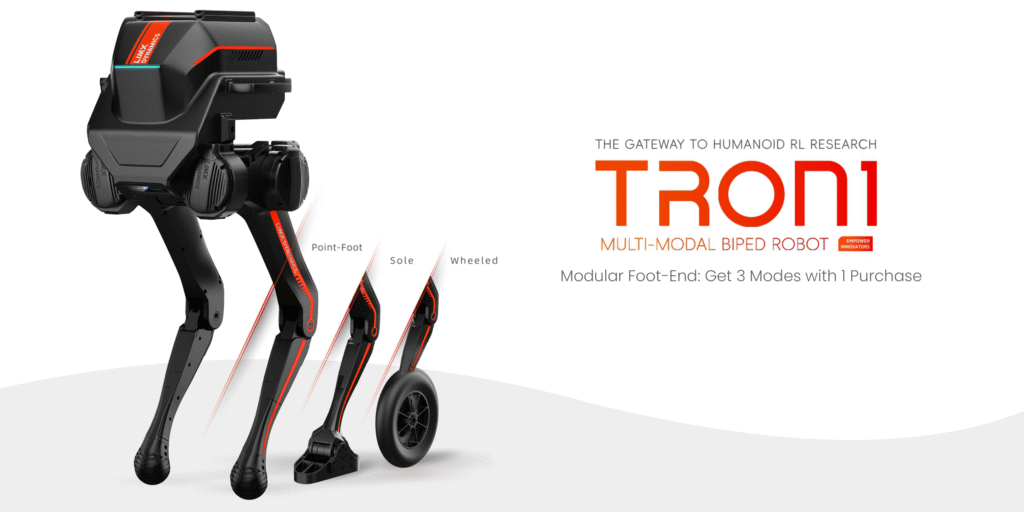
TRON1 Multi-Modal Biped Robot
Humanoid Robots
Humanoid robots are intelligent robotic systems designed to replicate certain physical characteristics and movements of the human body. Typically featuring a head, torso, two arms, and two legs, these robots are developed to operate efficiently in environments built for people. By combining advanced artificial intelligence (AI) with modern robotics, humanoid robots can perform a wide range of tasks that require mobility, object manipulation, communication, and decision-making.
The rapid advancement of robotics, machine learning, computer vision, and sensor technology has significantly expanded the capabilities of modern humanoid robots. Today, they are used in research laboratories, industrial facilities, healthcare, education, and customer service, where human-like interaction and adaptability are essential.
What Are Humanoid Robots?
A humanoid robot is a robot whose structure is modeled after the human body. While some humanoid robots are designed primarily for research and development, others are built for practical applications such as assisting workers, interacting with customers, supporting healthcare professionals, or conducting scientific experiments.
Modern humanoid robots integrate multiple technologies, including artificial intelligence, depth cameras, LiDAR, force sensors, inertial measurement units (IMUs), speech recognition, and advanced robotic actuators. These systems enable robots to perceive their surroundings, maintain balance, recognize objects, interpret spoken language, and perform precise physical movements.
Key Features
Most advanced humanoid robots incorporate several core technologies that enhance their functionality and versatility:
Human-inspired body design with articulated joints
AI-powered perception and intelligent decision-making
Computer vision for object and facial recognition
Speech recognition and natural language processing (NLP)
Autonomous navigation and obstacle avoidance
Precision robotic hands for grasping and object manipulation
Real-time environmental sensing
Wireless connectivity for software updates and remote monitoring
The combination of these technologies allows humanoid robots to safely interact with people while performing increasingly complex tasks with greater autonomy.
Applications of Humanoid Robots
Healthcare
In healthcare, humanoid robots assist with patient care, rehabilitation, medication delivery, hospital logistics, and elderly support. They help reduce repetitive workloads while improving operational efficiency.
Manufacturing
Within manufacturing, humanoid robots perform assembly, quality inspection, material handling, and warehouse operations. Their human-like form allows them to work effectively in environments originally designed for people.
Education and Research
Universities and research institutions use humanoid robots to advance studies in artificial intelligence, robotics, autonomous systems, and human-robot interaction. They also serve as valuable educational platforms for engineering and computer science students.
Customer Service and Hospitality
Hotels, airports, museums, retail stores, and corporate facilities deploy humanoid robots to welcome visitors, answer questions, provide directions, and deliver interactive customer experiences.
Advantages of Humanoid Robots
Humanoid robots offer numerous advantages across industrial and commercial applications. Their human-like structure enables them to work within existing infrastructure without requiring significant workplace modifications. They improve productivity, enhance workplace safety, perform repetitive tasks with high accuracy, and support human workers in physically demanding or hazardous environments.
As artificial intelligence continues to evolve, humanoid robots are becoming increasingly capable of learning from experience, adapting to changing environments, and collaborating effectively with humans.
The Future of Humanoid Robotics
The future of humanoid robotics is driven by continuous innovation in artificial intelligence, robotics, battery technology, computer vision, edge computing, and advanced sensors. Future generations of humanoid robots are expected to become more autonomous, energy-efficient, and capable of performing increasingly sophisticated real-world tasks.
As adoption continues to grow, humanoid robots are expected to play an important role in manufacturing, healthcare, logistics, education, scientific research, public services, and home assistance. Their ongoing development represents a major milestone in the evolution of intelligent robotics, enabling closer collaboration between humans and machines across a wide range of industries.