DJI Osmo 360 II Captures LandSpace's Rocket Launch in Stunning 8K/60fps
Try filming a rocket launch and you’ll quickly understand why it’s one of the hardest things you can point a camera at. The subject goes from sitting perfectly still to disappearing into the sky in a matter of seconds. There’s blinding light, punishing vibration, and a backdrop that changes by the moment. Pick the wrong angle and you’ve missed the shot entirely — there’s no second take.
DJI just gave the world a pretty compelling answer to that problem, and it did it by not relying on a single camera at all.
A Rocket, a Dozen Cameras, and One Very Busy Day
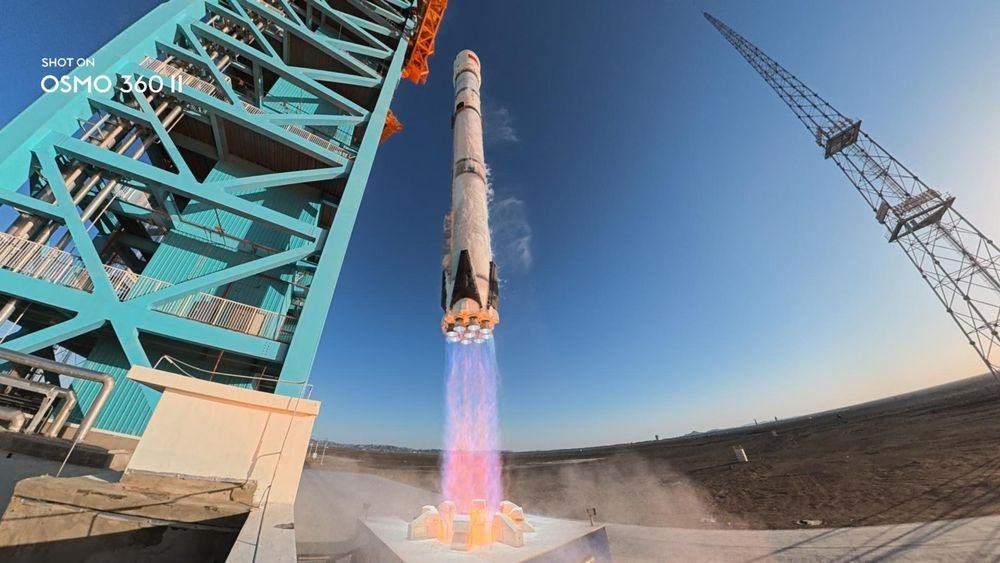
On August 19, 2026, Chinese aerospace company LandSpace launched its Zhuque-3 rocket on its second flight — a reusable vehicle built for orbital missions and recovery. The launch, flight, and return took roughly nine minutes start to finish, and DJI equipment was rolling for all of it.
Twelve Osmo Action 6 cameras rode along on the rocket itself, bolted on to capture the mission from the inside out. That’s a genuinely tough assignment for what’s essentially a consumer action camera — during re-entry, some of those units reportedly endured temperatures near 500°C. That they kept recording through that kind of abuse says a lot about how far action camera hardware has come.
But the onboard cameras were just one piece of a much bigger picture.
The Osmo 360 II Takes In the Whole Scene
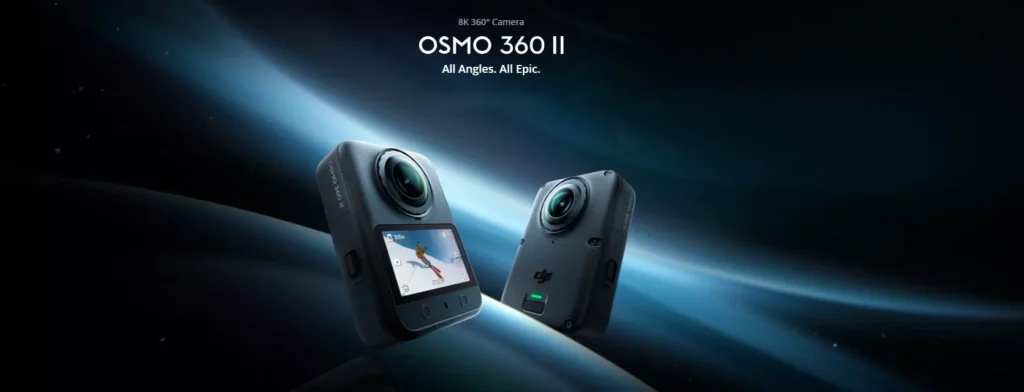
Stationed on the ground, DJI’s yet-to-be-released Osmo 360 II handled the panoramic view, shooting the entire launch in native 8K at 60 frames per second. That’s the headline number, and it’s a big one — but the more interesting part is what it actually changes about how you shoot something like this.
A camera operator filming a launch the traditional way has to guess where the action is going and frame for it in advance. Guess wrong, even slightly, and you’re left cropping a wide shot or missing the moment altogether. A 360-degree camera sidesteps that problem by recording everything around it at once. Nobody has to decide where to point the lens, because the lens is effectively pointing everywhere.
That flips the whole workflow. Instead of asking “where should the camera be aimed right now,” the question becomes “which piece of everything we recorded do we want to show.” That decision gets made later, in the edit, with the benefit of hindsight — which is a much easier position to be creative from than guessing in real time with a rocket about to leave the pad.
The 8K resolution keeps detail intact even when you’re cropping into a small slice of that 360-degree sphere, and 60fps helps smooth out motion that would otherwise blur during something as fast as a launch. DJI says the camera can also shoot 2x slow motion at full 8K, plus lean on AI frame interpolation afterward for even more slow-motion flexibility in post.
It Wasn't Working Alone
What makes this story more than “DJI made a camera with a big spec sheet” is that the Osmo 360 II was one part of a coordinated setup, not the whole show. Alongside it on launch day:
- Mavic 4 Pro – aerial coverage from above the launch site
- Matrice 4TD – thermal imaging, picking up heat signatures a normal lens can’t see
- Osmo Pocket 4P – handheld footage, close and human-scale
- Osmo Action 6 (x12) – mounted directly to the rocket for the ride itself
- Osmo 360 II – the wide, everything-at-once panoramic layer
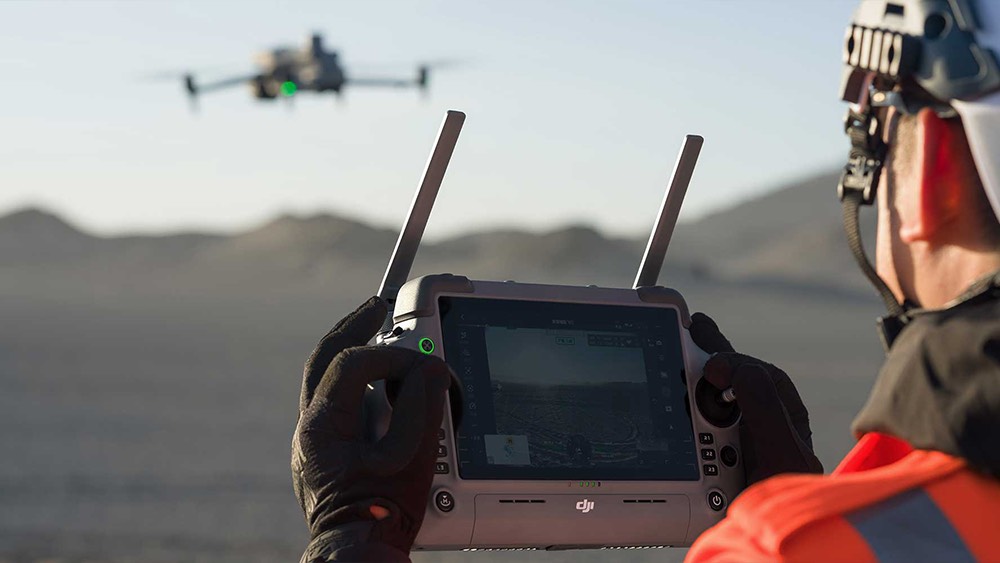
Each device was doing a job the others couldn’t. The drone got height. The thermal camera got information that’s invisible to the naked eye. The handheld camera got intimacy. The action cameras went along for a trip nothing else could survive. And the 360 camera tied the whole environment together into something you can revisit and reframe long after the smoke has cleared.
That’s really the shift worth paying attention to here imaging isn’t a single-device decision anymore. It’s an ecosystem, and different tools are being layered on top of each other to build a more complete record than any one camera could produce alone.
Why This Matters Beyond Rocket Science
Most of us aren’t filming orbital launches, but the same logic applies to far more ordinary jobs. Think about documenting a construction site, an industrial facility, or an infrastructure project. A single camera captures one narrow slice of what’s happening. A 360-degree camera captures the whole worksite at once, which matters a lot when the footage will later be reviewed by someone who wasn’t standing there — a project manager, an inspector, a client, an insurer.
The same idea extends into events, tourism, real estate walkthroughs, safety audits, training material, and research documentation. Anywhere “what did the whole space look like at this moment” matters, capturing everything beats guessing what to point at.
Pair that with a drone for the aerial view and a thermal camera for anything heat-related, and you end up with a documentation setup that reduces how often someone has to physically go back to a site just to check something that should’ve been recorded the first time.
What's Next for the Osmo 360 II
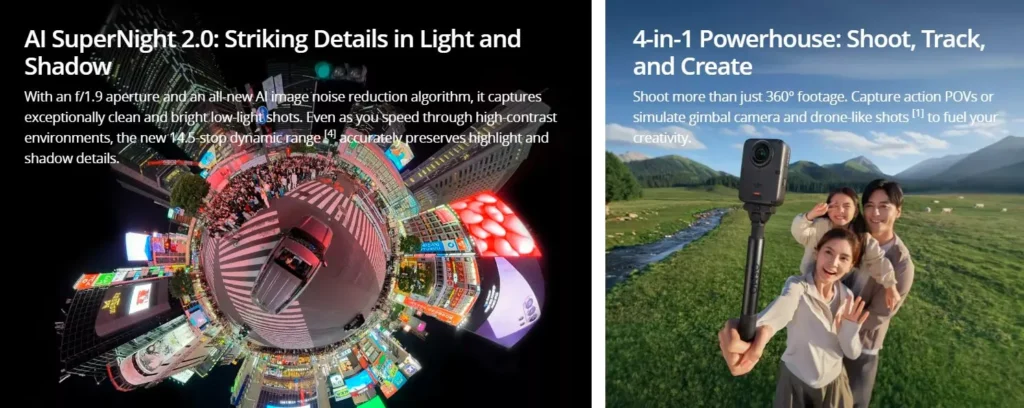
Beyond the raw specs, DJI lists up to 14.5 stops of dynamic range, an AI SuperNight 2.0 low-light mode, tougher lens protection, and a Spotlight Follow subject-tracking mode for the Osmo 360 II, all improvements over the original Osmo 360, which already offered native 8K panoramic capture before this second-generation model pushed the frame rate up to 60fps.
DJI is expected to formally showcase the camera at IFA 2026 in Berlin, running September 4–8, where it’s listed among the company’s featured new products for the show.
The Takeaway
The Zhuque-3 launch wasn’t really a story about one impressive camera. It was a demonstration of what happens when several purpose-built imaging tools work together instead of asking one device to do everything. Drones bring altitude, thermal cameras reveal what’s otherwise invisible, handheld rigs capture human moments, action cameras go where nothing else can survive, and a 360-degree camera holds the whole scene together for editing later.
If you’re weighing which of DJI’s tools actually fits your project whether that’s an inspection drone, a thermal platform, or a way to document a complex site from every angle Dronevex can help you match the right combination of hardware to what you’re actually trying to capture.
Frequently Asked Questions
What is the DJI Osmo 360 II?
It’s DJI’s upcoming second-generation 360-degree camera, capable of native 8K video at 60 frames per second, with 2x slow motion at full 8K resolution and AI-assisted frame interpolation for extra slow-motion options in editing.
What rocket did DJI's cameras film?
LandSpace’s Zhuque-3, a reusable orbital rocket, during its second flight on August 19, 2026. The mission included launch, flight, and a successful return over roughly nine minutes.
How did the onboard cameras survive the heat of re-entry?
Twelve Osmo Action 6 cameras were mounted directly on the rocket and kept recording despite conditions that reportedly reached around 500°C during re-entry — an extreme test for consumer-grade hardware.
Why use a 360-degree camera instead of a regular camera for an event like this?
Because you don’t have to guess where to aim it. A 360-degree camera records the entire surrounding scene at once, so editors can choose the best angle afterward instead of hoping the operator framed it correctly in the moment.
What other DJI products were used during the launch?
The Mavic 4 Pro handled aerial shots, the Matrice 4TD captured thermal imagery, and the Osmo Pocket 4P provided handheld ground-level footage — alongside the Osmo 360 II and the rocket-mounted Osmo Action 6 units.
Can businesses use this kind of multi-camera setup outside of aerospace?
Yes — the same combination of aerial, thermal, handheld, and 360-degree imaging applies well to construction monitoring, infrastructure inspection, industrial documentation, real estate, training, and safety reviews.