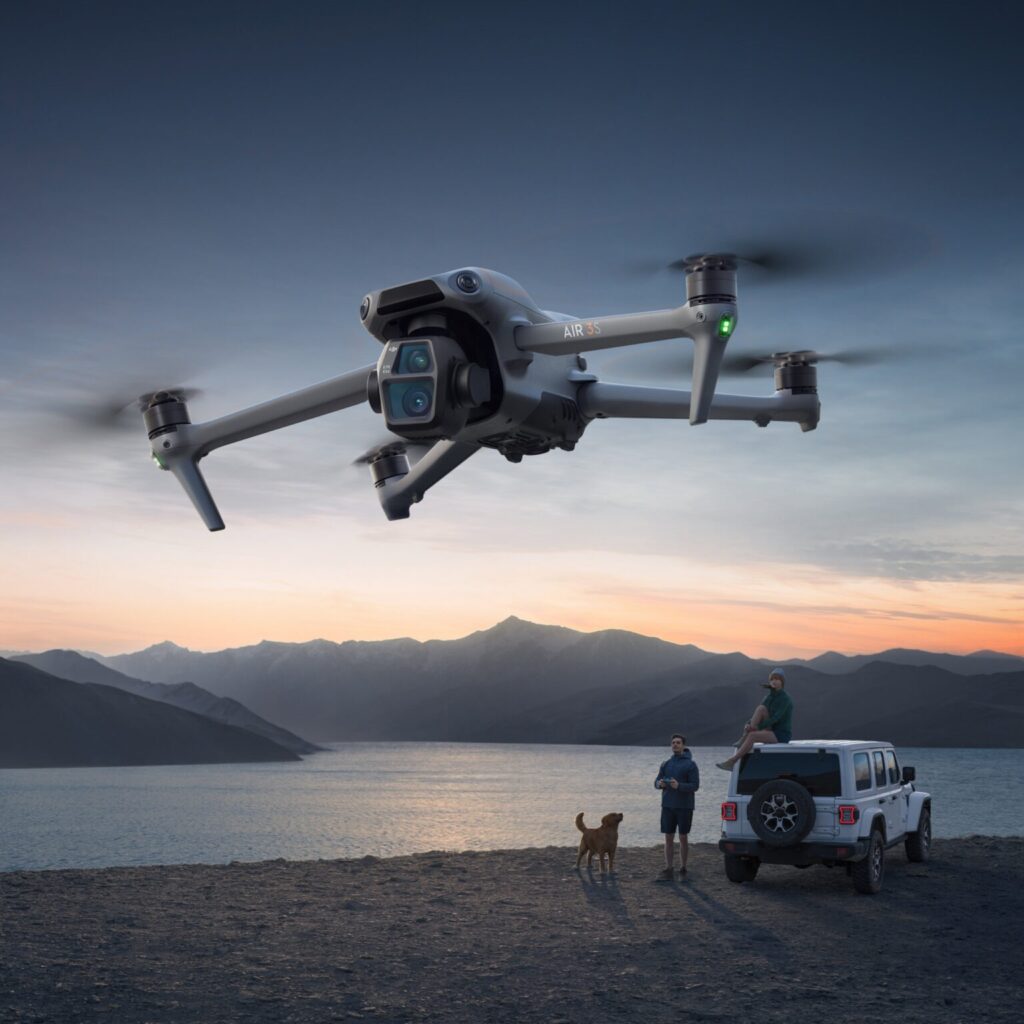
Industrial inspections have traditionally been expensive, time consuming, and in many cases, dangerous for human workers. From climbing massive telecom towers and inspecting high voltage power lines to monitoring oil pipelines and industrial plants, inspections often involve operational risks, manpower challenges, and long downtimes. However, the rapid rise of AI powered drones is now redefining how industries across India approach inspection and monitoring operations.
Over the last few years, drones have evolved far beyond aerial photography. Today’s intelligent drones combine artificial intelligence, computer vision, thermal imaging, automation, and real time data analytics to perform inspections with greater speed, accuracy, and safety than traditional methods. Across sectors like infrastructure, energy, construction, agriculture, telecom, mining, and manufacturing, Indian industries are increasingly adopting AI enabled drone technology to improve operational efficiency and reduce costs.
As India accelerates toward smart infrastructure and digital transformation, AI powered drones are becoming a critical part of industrial operations.
The Evolution of Industrial Inspections
Traditional industrial inspections often rely heavily on manual labor. Workers are required to physically access difficult or hazardous locations to identify structural damage, corrosion, overheating, or operational failures. This process is not only slow but also exposes workers to significant safety risks.
In industries such as power transmission, oil and gas, telecom, and large scale infrastructure, even a small inspection delay can result in operational disruptions and financial losses. Human inspections can also miss minor defects that later develop into critical failures.
AI powered drones are solving these problems by automating inspection workflows and collecting highly accurate aerial data in real time.
Unlike conventional drones that simply capture photos or videos, AI enabled drones can intelligently analyze data, identify anomalies, detect faults, and generate inspection reports automatically.
What Makes AI-Powered Drones Different?
Artificial intelligence transforms drones from simple flying cameras into intelligent inspection systems.
Modern industrial drones use AI algorithms combined with advanced sensors to analyze visual and thermal data during flight. These drones can detect cracks, corrosion, overheating components, gas leaks, structural weaknesses, vegetation interference, and equipment failures with remarkable precision.
Some AI drones can even compare current inspection data with previous records to identify changes or deterioration over time. This predictive analysis helps industries detect issues before they become major operational failures.
Key technologies commonly used in AI powered inspection drones include:
- Computer Vision
- Machine Learning
- Thermal Imaging
- LiDAR Mapping
- Real-Time Object Detection
- Autonomous Flight Systems
- Predictive Maintenance Analytics
- Digital Twin Integration
Together, these technologies create a powerful ecosystem that significantly improves industrial inspection capabilities.
AI Drones in Power Line and Energy Inspections
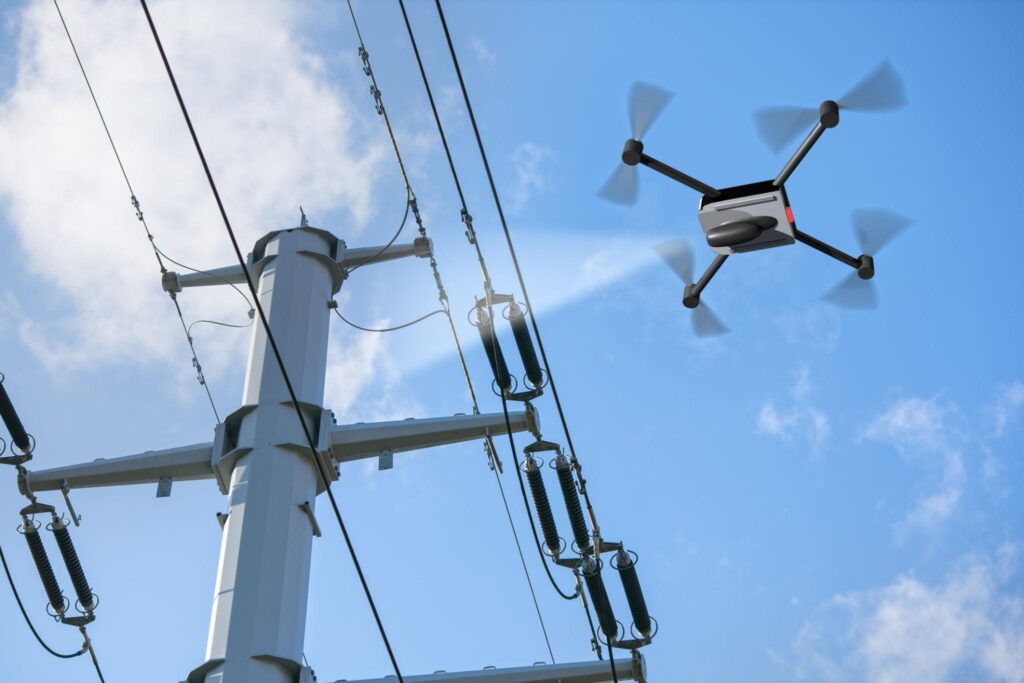
India’s rapidly expanding power infrastructure requires constant monitoring and maintenance. Inspecting transmission lines, substations, wind turbines, and solar farms manually is both difficult and risky.
AI powered drones are now widely used to inspect electrical infrastructure safely and efficiently.
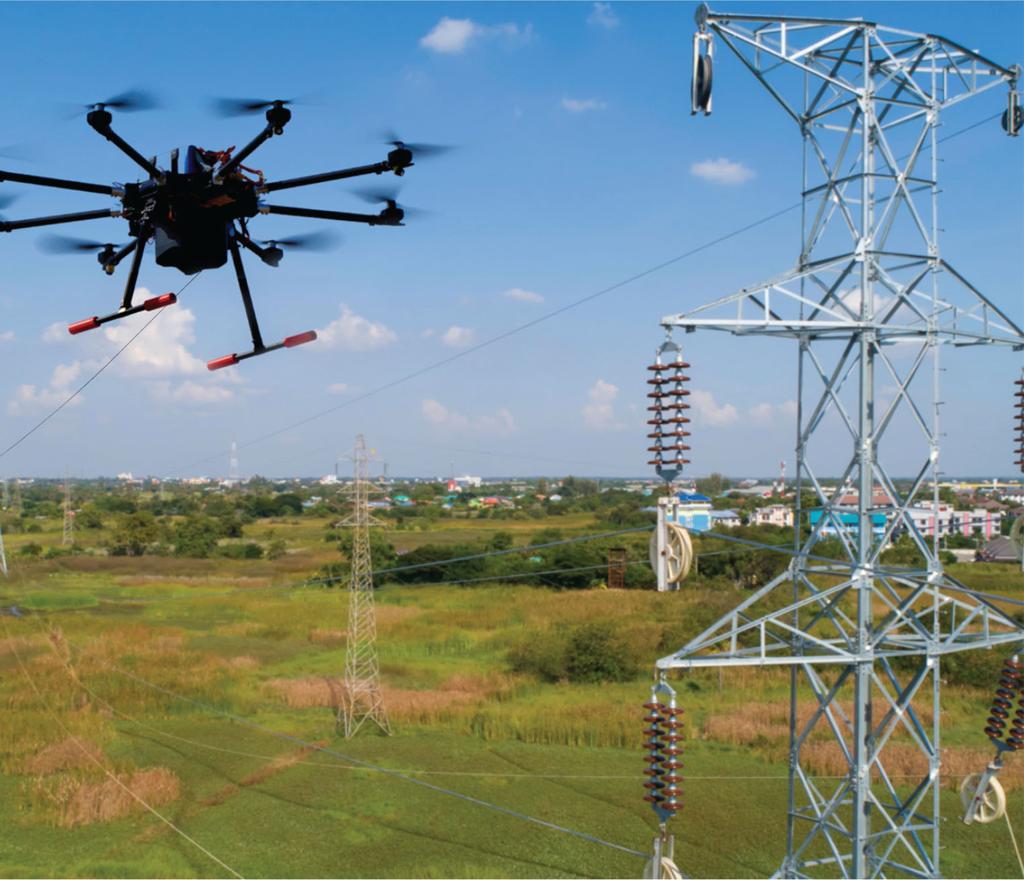
Using thermal cameras and AI analysis, drones can identify overheating transformers, damaged insulators, loose connections, and vegetation encroachment near power lines. Instead of sending technicians to dangerous high voltage environments, operators can complete inspections remotely within a fraction of the time.
In solar farms, AI drones can quickly scan thousands of panels to detect faulty or underperforming modules. This improves maintenance efficiency and helps maximize energy production.
Wind turbine inspections have also become significantly faster with autonomous drone systems capable of identifying blade damage and structural wear without shutting down operations for extended periods.
Revolutionizing Telecom Tower Inspections
India has one of the world’s largest telecom infrastructures, with hundreds of thousands of towers spread across urban and remote regions.
Traditional telecom tower inspections require technicians to climb tall structures manually, which can be hazardous and time intensive. AI powered drones are changing this process completely.
High resolution drones equipped with computer vision systems can inspect tower structures, antennas, wiring, and mounting equipment in minutes. AI software automatically detects rust, alignment issues, cable damage, and structural weaknesses.
This not only improves worker safety but also reduces inspection costs and minimizes service downtime for telecom operators.
As India continues expanding 5G infrastructure, drone based telecom inspections are expected to become even more critical.
Infrastructure and Construction Monitoring
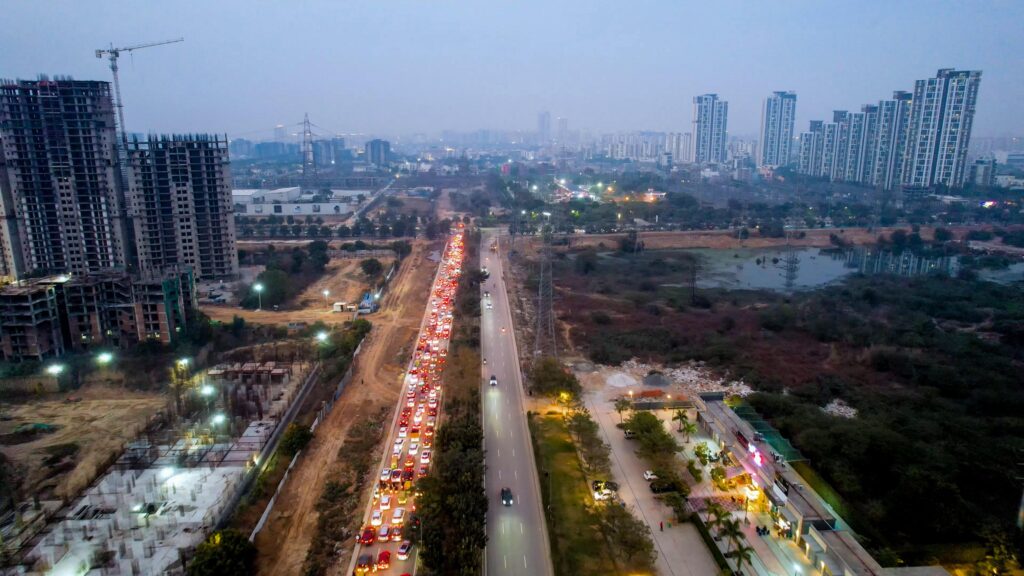
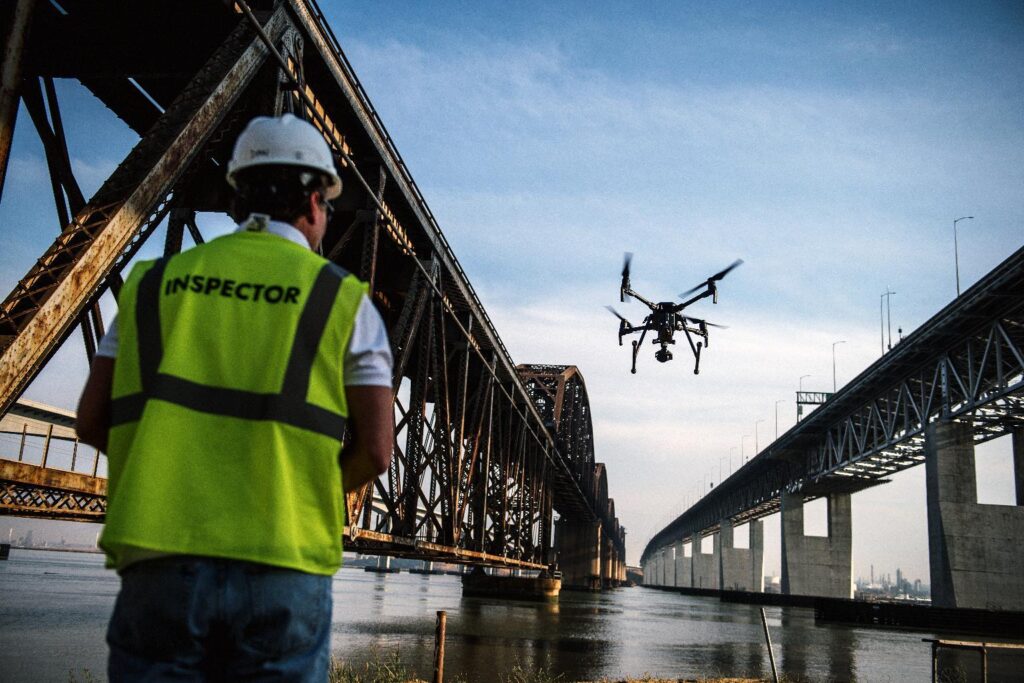
Large infrastructure projects involve continuous inspection and monitoring throughout the construction lifecycle. Roads, bridges, railways, airports, metro systems, and smart city projects require accurate progress tracking and structural assessments.
AI-powered drones help project teams monitor sites efficiently through automated aerial surveys and intelligent analytics.
Construction companies now use drones to:
- Track project progress
- Monitor material movement
- Generate 3D maps and digital models
- Detect structural defects
- Improve site safety
- Measure stockpile volumes
- Analyze construction efficiency
AI software can compare site progress against project timelines and identify delays or inconsistencies automatically. This enables faster decision-making and better project management.
For bridge and infrastructure inspections, drones eliminate the need for expensive scaffolding or road closures while improving inspection precision.
Oil, Gas, and Pipeline Inspections
The oil and gas sector depends heavily on continuous monitoring of pipelines, refineries, storage facilities, and offshore infrastructure.
AI powered drones equipped with thermal imaging and gas detection sensors can quickly inspect large areas for leaks, corrosion, overheating, or structural anomalies.
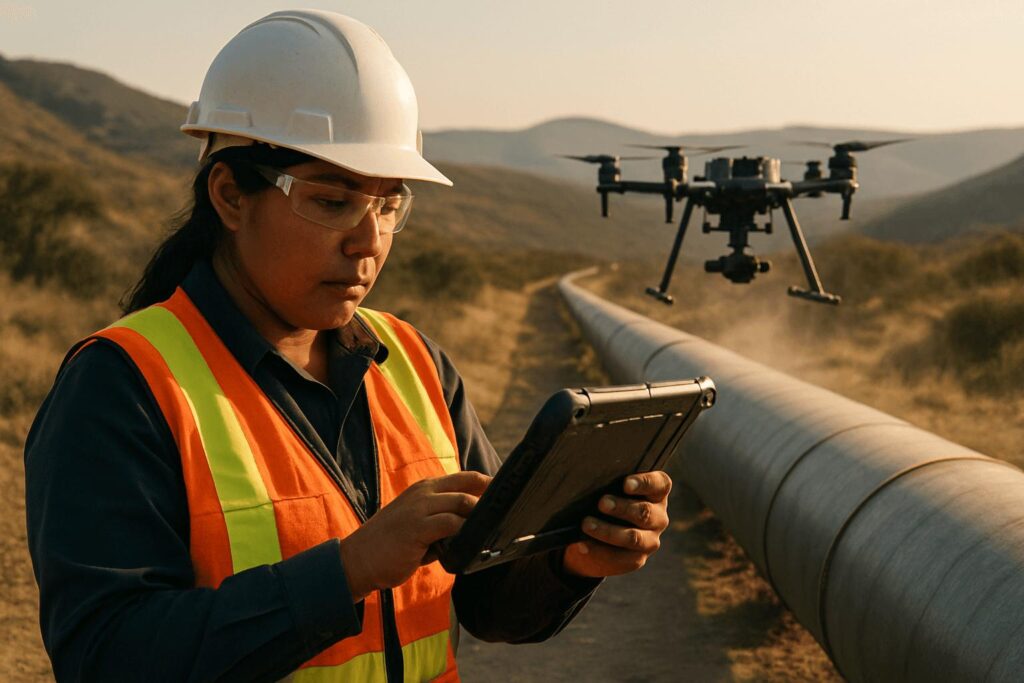
Pipeline inspections that once required extensive manpower and days of fieldwork can now be completed within hours using autonomous drone systems.
These drones can operate in difficult terrains, hazardous environments, and remote locations where human inspections are challenging or dangerous.
The combination of AI analysis and real time aerial intelligence significantly improves operational safety while reducing inspection costs.
Predictive Maintenance Through AI Analytics
One of the biggest advantages of AI powered drone inspections is predictive maintenance.
Traditional inspections are usually reactive, meaning problems are addressed only after failures occur. AI changes this approach completely.
Using historical data, machine learning models, and continuous monitoring, AI drones can predict equipment failures before they happen.
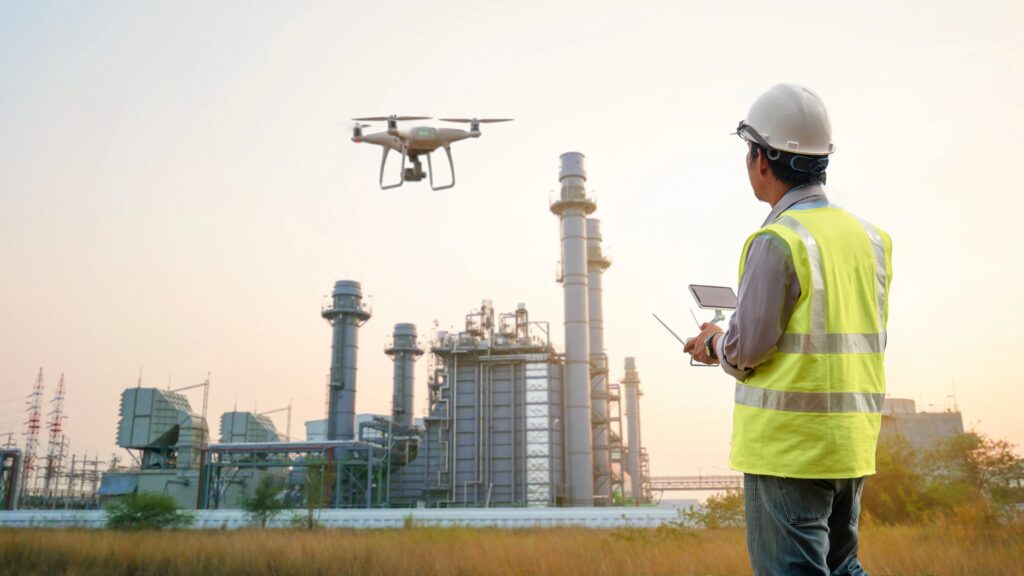
For example, drones inspecting industrial plants can identify abnormal heat patterns, structural fatigue, or equipment degradation early enough to prevent costly shutdowns.
Predictive maintenance reduces downtime, extends equipment lifespan, and improves overall operational efficiency.
For industries operating at large scale, this can result in substantial long term savings.
Improving Worker Safety
Industrial environments often expose workers to hazardous conditions, including heights, confined spaces, toxic environments, and high-voltage equipment.
AI-powered drones reduce the need for human exposure during inspections.
Instead of sending personnel into dangerous locations, operators can deploy autonomous drones to perform inspections remotely and safely.
This has become especially important in industries such as mining, energy, oil and gas, and heavy manufacturing where inspection risks are significantly higher.
The Role of AI Drones in Smart India Initiatives
India is rapidly investing in smart infrastructure, digital transformation, and industrial modernization. Government initiatives supporting drone technology and AI adoption are accelerating innovation across sectors.
The rise of drone startups, improved drone regulations, and increasing enterprise adoption are creating a strong ecosystem for industrial drone applications.
AI-powered drones are expected to play a major role in:
- Smart city development
- Infrastructure modernization
- Renewable energy management
- Railway inspections
- Highway monitoring
- Urban planning
- Disaster response systems
- Environmental monitoring
As drone regulations continue evolving and AI technology becomes more advanced, industrial drone operations in India will likely become mainstream across both public and private sectors.
Challenges Facing AI Drone Adoption
Despite the rapid growth, several challenges still exist.
High end AI drone systems can require significant initial investment, especially for advanced industrial applications. Skilled drone operators and data analysts are also in growing demand.
Data security, airspace regulations, weather limitations, and operational permissions remain important considerations for large-scale deployments.
However, as technology becomes more affordable and regulations continue improving, adoption barriers are gradually decreasing.
The Future of AI-Powered Industrial Drones
The future of industrial inspections is increasingly autonomous.
Next-generation AI drones will likely feature:
- Fully autonomous inspection missions
- Real-time AI decision-making
- Advanced swarm drone operations
- Enhanced predictive analytics
- Faster cloud-based processing
- Integration with IoT and smart infrastructure systems
- AI-generated digital twins for industrial assets
As industries continue seeking faster, safer, and more cost-effective inspection methods, AI-powered drones will become essential operational tools rather than optional technologies.
India’s industrial landscape is entering a new era where intelligent aerial systems are transforming how infrastructure is monitored, maintained, and managed.
Conclusion
AI-powered drones are fundamentally changing industrial inspections across India. By combining aerial mobility with artificial intelligence, these systems deliver faster inspections, improved safety, reduced operational costs, and highly accurate analytics.
From power lines and telecom towers to construction sites and oil pipelines, industries are embracing drone technology to modernize operations and improve efficiency.
As AI technology advances and drone adoption accelerates, industrial inspections in India will continue becoming smarter, safer, and increasingly autonomous. Businesses that adopt these technologies early will gain a significant competitive advantage in the rapidly evolving industrial ecosystem.