
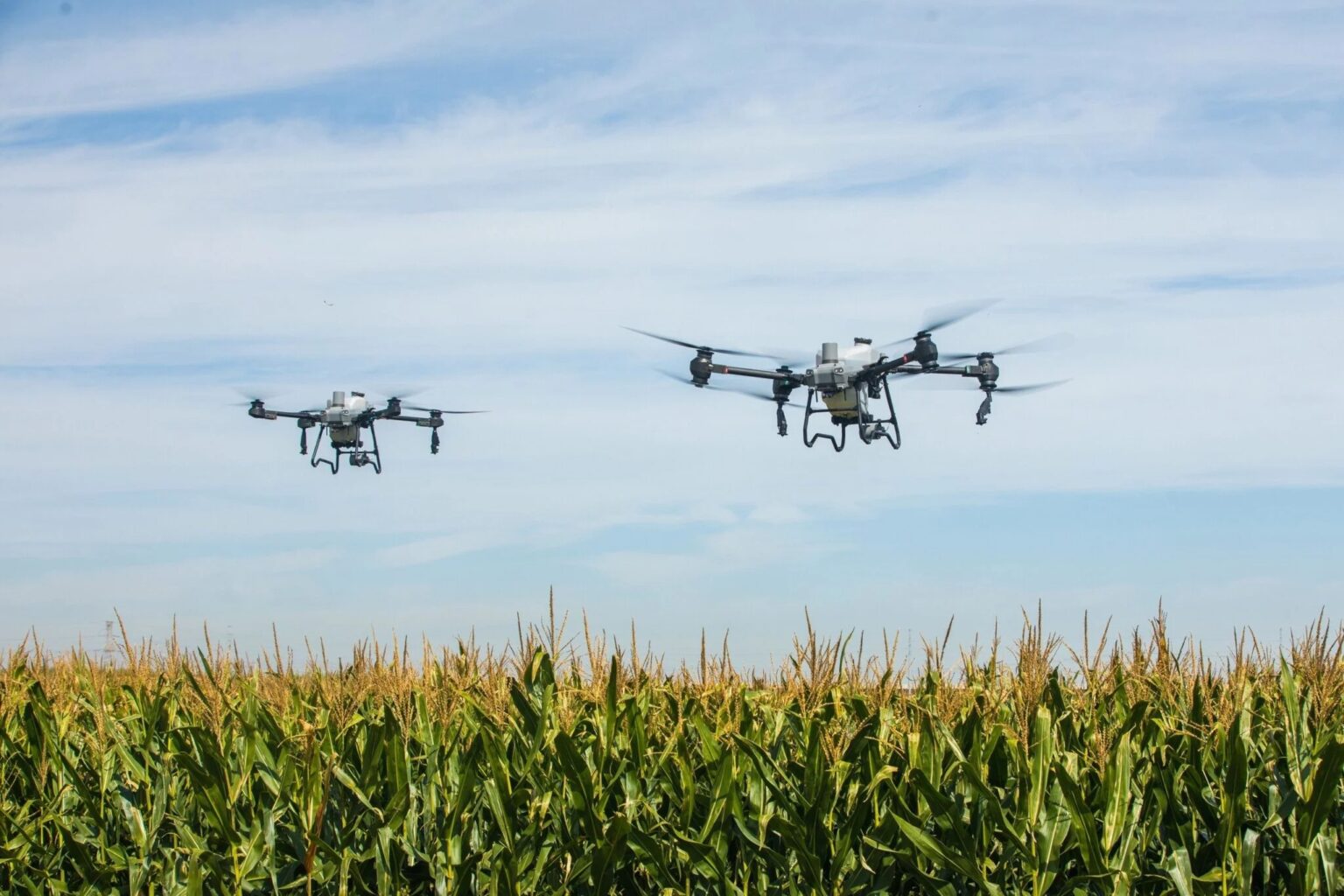
If you’ve driven through the farmlands of Punjab, Andhra Pradesh, or Maharashtra recently, you may have noticed something new hovering over the crops. Not a bird. Not a helicopter. A drone flying in precise lines, spraying pesticide in minutes over fields that would take a team of farm workers an entire day to cover.
This isn’t a pilot program or a future possibility. Agriculture drones are already working across India, changing how farmers manage their land, protect their crops, and make decisions about the season ahead.
And the numbers back it up. India has over 150 million hectares of cultivated land. Crop losses due to pest infestation, improper irrigation, and delayed action run into tens of thousands of crores every year. Agriculture drones are beginning to change that equation not by replacing the farmer, but by giving them tools that were never available before.
What Exactly Is an Agriculture Drone?
An agriculture drone is an unmanned aerial vehicle (UAV) purpose built for farming tasks. Unlike the consumer drones used for photography or recreation, agriculture drones are engineered for endurance, payload capacity, and precision designed to operate in open fields under Indian sun and seasonal conditions.
Depending on the model, an agriculture drone can be equipped with:
- Spraying systems for pesticides, herbicides, and fertilizers
- Multispectral cameras that capture plant health data invisible to the human eye
- RTK (Real Time Kinematic) GPS for centimeter level precision over large fields
- AI powered obstacle avoidance so it can operate safely around trees, power lines, and farm structures
- Terrain following technology that adjusts spray height automatically as the land changes
Together, these capabilities turn a drone into something closer to a precision farming platform than a simple aerial vehicle.
The Real Problems Agriculture Drones Are Solving in India
To understand why drones matter for Indian agriculture, it helps to understand the challenges farmers face that have gone unsolved for decades.
Labor Shortages During Critical Windows
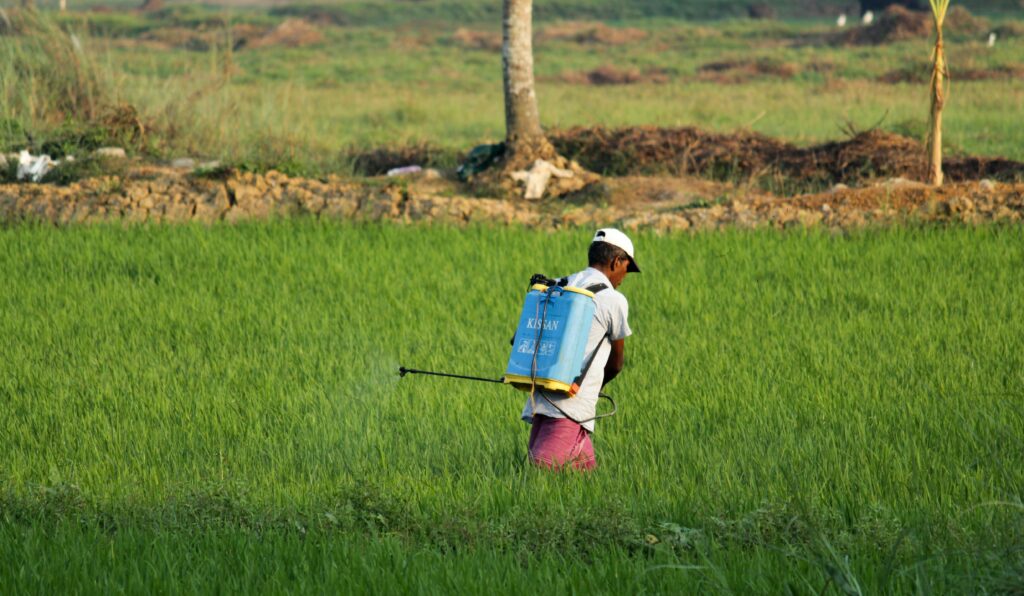
Spraying pesticides or fertilizers manually requires a large workforce and it needs to happen within a narrow window when the crop is at a specific growth stage or when pests first appear. Rural labour availability has been declining steadily, and hiring seasonal workers has become both expensive and unreliable. A single agriculture drone can cover 10 to 15 acres per hour, doing in an afternoon what a manual team takes days to accomplish.
Pesticide Overuse and Farmer Health Risks
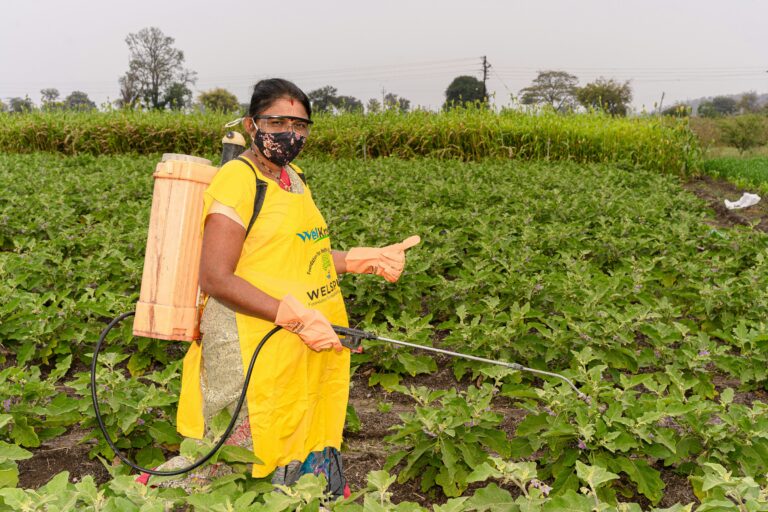
Manual spraying is imprecise. Workers apply more than necessary out of caution, creating chemical runoff that damages soil health and water sources over time. It also exposes farmers and farm workers to chemicals directly a serious health risk that has led to illness and hospitalizations across the country. Drone spraying reduces chemical usage by 30 – 40% compared to manual methods, applying only where and what is needed, and keeping the operator completely clear of the chemicals.
Invisible Crop Stress Until It's Too Late
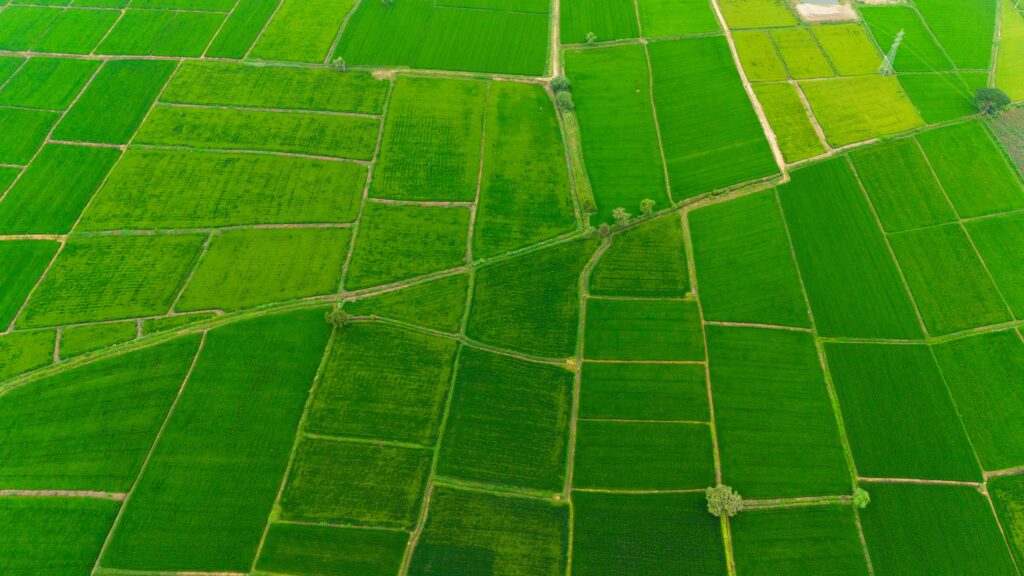
By the time a farmer walking their field notices that part of a crop is stressed, diseased, or pest-affected, the damage is often already severe. Multispectral cameras on agriculture drones detect plant stress weeks before it’s visible to the human eye by measuring how plants reflect and absorb light across wavelengths that humans can’t see. This gives farmers time to act, rather than react.
Key Use Cases: What Agriculture Drones Actually Do
Precision Crop Spraying
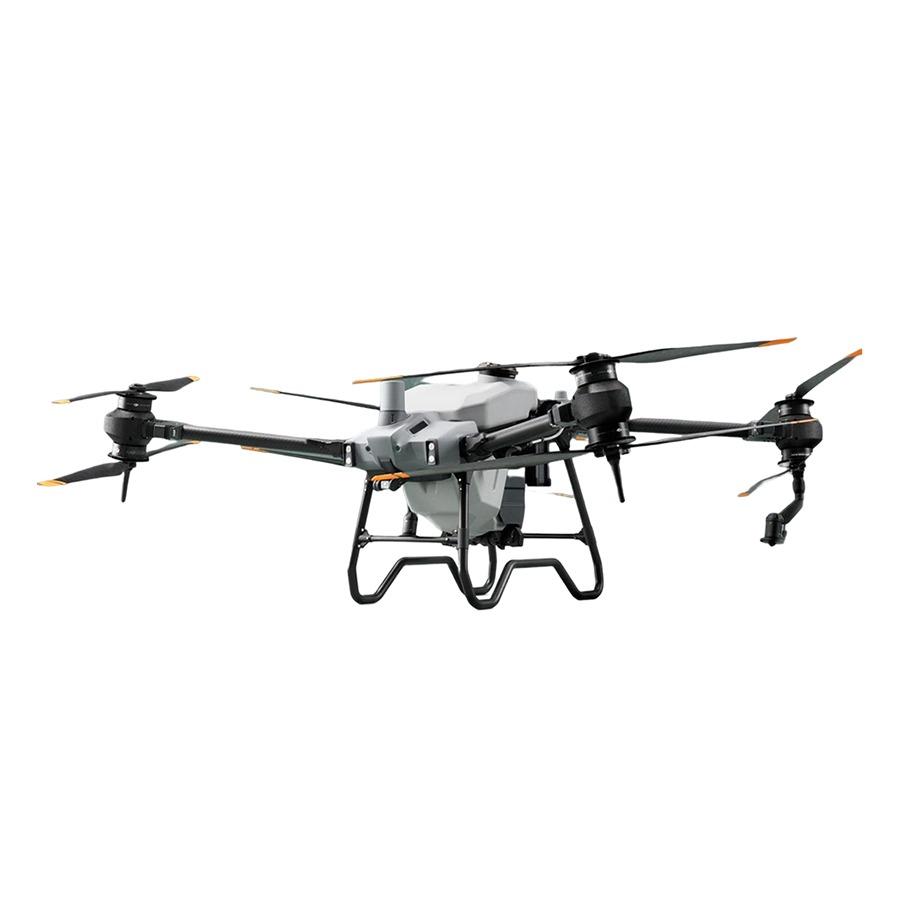
A spraying drone like the DJI AGRAS T40 carries up to 40 liters of liquid payload and uses an active phased array radar to detect and avoid obstacles in real time. It follows pre-planned flight paths with centimeter level GPS accuracy, ensuring every row is covered and nothing is missed or double sprayed, at a consistent rate that manual spraying simply can’t match.
Crop Health Monitoring, NDVI Mapping & Soil Analysis
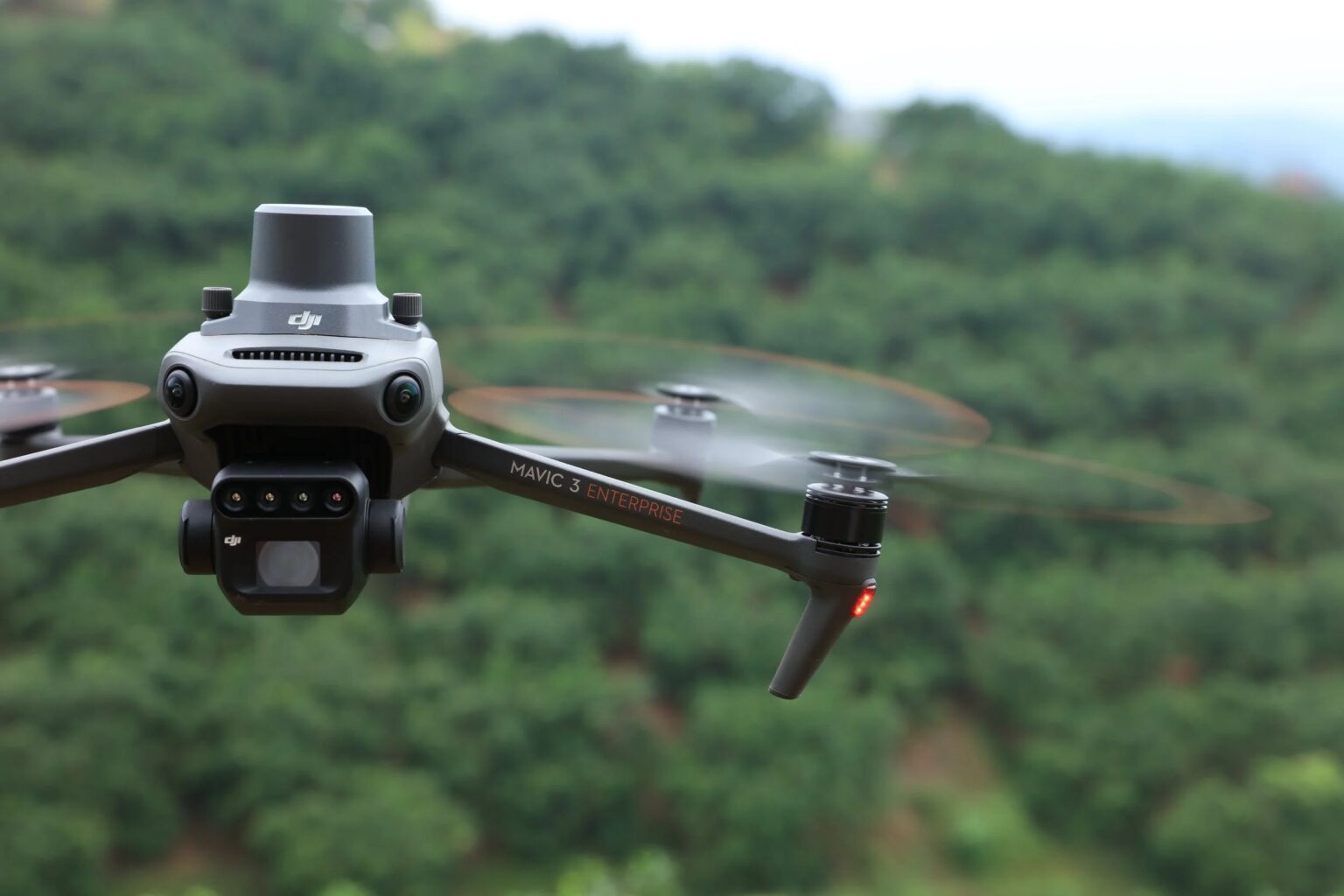
The DJI Mavic 3 Multispectral produces NDVI maps showing exactly which crop zones are healthy, stressed, or at risk colour coded and ready to act on. The same thermal and multispectral imaging detects waterlogging, under irrigation, and soil degradation. A 100 acre farm can be fully surveyed in under 30 minutes.
Seeding and Fertiliser Broadcasting
The AGRAS T40 can be configured with a spreader attachment to broadcast granular seeds or solid fertilizers across a field useful for direct seeding in paddy fields or cover crop applications where ground equipment would be too heavy or slow.
Field Mapping and 3D Terrain Modelling
Agriculture drones with RTK GPS generate highly accurate field maps for planning automated flight paths. This data also supports drainage planning, access road design, and land record compliance giving you a precise picture of your land before any mission begins.
The Agriculture Drones Available at Dronevex
At Dronevex, we carry two of the most capable agriculture drone systems available in India today. Both are from DJI’s professional agriculture line and are suited for different farming scales and requirements.
DJI AGRAS T40: High Volume Spraying at Scale
The AGRAS T40 is built for large scale farming operations where coverage speed and payload matter most. With a 40 liter spray tank and a 50 liter spreading hopper, it handles both liquid and granular applications in a single platform.
- 40 – liter liquid tank and 50 – liter solid spreading hopper
- Active phased array radar for real time terrain following and obstacle avoidance
- Dual atomised spraying system for even droplet distribution
- Covers up to 43 acres per hour under optimal conditions
- Supports automated mission planning with precise route execution
- Coaxial twin rotors for stable flight even in moderate wind
The T40 is the right choice for commercial farms, FPO operations, or any operation where you’re regularly covering large areas and need a spraying system that can keep up with the scale of work.
DJI Mavic 3 Multispectral: Precision Crop Intelligence
The Mavic 3 Multispectral is not a spraying drone, it’s a data collection drone. It’s designed for farmers, agronomists, and agribusinesses who want to understand their crop at a deeper level than visual inspection allows.
- Integrated RGB + 4 channel multispectral camera system
- Captures Green, Red, Red Edge, and Near Infrared bands for comprehensive NDVI analysis
- Built-in RTK module for centimeter level accuracy
- Mechanical shutter for sharp imagery at high speeds
- Compatible with DJI Terra software for automated mapping and data processing
- Foldable, portable design survey ready in minutes
This is the drone for progressive farmers and agricultural consultants who want to move from guessing to knowing to make every crop management decision based on real field data.
How India Is Adopting Agriculture Drones
India’s government has been actively pushing drone adoption in agriculture. The SMAM Kisan Drone Scheme offers subsidies of up to ₹5 lakh for SC/ST farmers, women, and small/marginal farmers purchasing agriculture drones. FPOs (Farmer Producer Organization) can access up to 75% subsidies on drone purchases for centrally managed spraying operations.
The DGCA (Directorate General of Civil Aviation) has laid out a specific regulatory framework for agriculture drones, including RPAS (Remotely Piloted Aircraft Systems) certification requirements, Digital Sky platform approvals, and green zone permissions for agricultural use. While the regulatory process adds steps, it also provides a structured path for legitimate commercial drone operations which is good for the industry’s long term growth.
States like Andhra Pradesh, Telangana, and Haryana are already seeing significant agriculture drone activity both through government programs and private Agri-drone service providers. The model of Drone as a Service (DaaS), where a drone operator covers a farmer’s fields for a per acre fee, is growing quickly as an alternative to individual ownership.
Does the Investment Make Financial Sense?
This is the question every farmer and agribusiness operator asks before committing to a drone purchase, and it deserves a direct answer.
For individual farm use, the financial case depends on farm size. At smaller scales, drone-as-a-service is often more economical. But for farms above 50 acres, or for agribusinesses and FPOs operating across multiple farms, ownership starts to deliver clear returns through labour cost savings, chemical reduction, and improved yield outcomes.
A drone operator offering spraying services at ₹400 – 500 per acre can recover the cost of a mid range agriculture drone in a single season with consistent bookings. The drone’s operational life, with proper maintenance, runs several years, meaning the return over time is significant.
Beyond direct cost savings, the harder to quantify benefit is better decisions. Knowing where your crop is stressed, applying the right inputs at the right time, and avoiding both under-treatment and over treatment adds up to meaningfully better outcomes season over season.
Who Should Be Looking at Agriculture Drones Right Now?
Agriculture drones are relevant for a wider range of people than most expect:
- Large Farm Owners (50+ acres): Operational ownership makes financial sense. A spraying drone pays for itself quickly in labour savings alone.
- Farmer Producer Organization(FPOs): Centralized drone ownership with shared access across member farms is a well tested model that’s already working across India.
- Agri-Input Companies and Dealers: Demonstrating products via precision application and building loyalty through better outcomes is a natural extension of existing business models.
- Drone Service Entrepreneurs: Agriculture drone operations are one of the most viable drone business models in India, with consistent demand during crop seasons.
- Agronomists and Agricultural Consultants: The Mavic 3 Multispectral offers a level of crop intelligence that transforms field consultancy from observation based to data driven.
- State and Cooperative Farm Programs: Government agricultural programs are actively seeking drone adoption partners and equipment suppliers across India.
The moment we’re in is not unlike the early days of mechanized farming in India. Tractors were once a novelty, then a competitive advantage, and now a baseline expectation for anyone farming at scale. Agriculture drones are on that same trajectory earlier in the curve, which means the farmers who move now gain more than just technology. They gain time.
Time to act on crop stress before it spreads. Time to cover more land with less labour. Time to make decisions based on data, not just experience and instinct.
Explore Agriculture Drones at Dronevex
At Dronevex, we carry the DJI AGRAS T40 and DJI Mavic 3 Multispectral, two of the most advanced agriculture drone systems available in India. Whether you’re looking to start a drone spraying operation, improve crop monitoring on your farm, or explore how precision Agri-tech fits into your business, our team can walk you through the options.
Visit dronevex.in/agriculture-drones to explore the full range.